

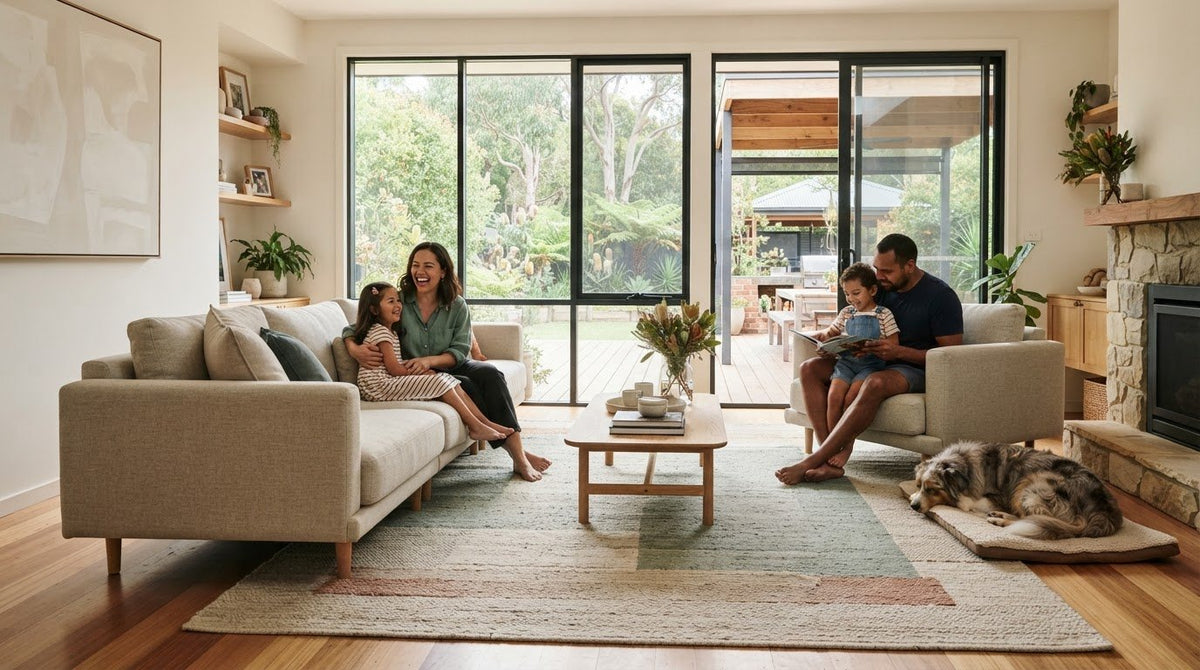
The plushest rug may not be the most practical choice for a living room filled with kids, pets and everyday foot traffic. If you’re looking for family friendly living room rug ideas 2026, the best fit isn’t just about colour or softness. It should suit the way your household actually uses the space.
Spills, muddy paws and busy walkways can make rug shopping feel like a choice between a welcoming look and easy care. A well-chosen rug can help define the living area and make it feel more comfortable, while the right material and construction can better match your routine.
In this guide, compare practical options, from wool rugs with a soft feel to low-profile flatweave styles for high-traffic areas. You’ll also find colour, size and placement tips to help the room feel balanced. Whether your living room opens onto an outdoor area or doubles as the family’s main hangout, use these ideas to weigh up the trade-offs and choose a rug that feels right at home.
Key Takeaways
- Compare five distinct family friendly living room rug ideas 2026, from subtle patterns to round shapes, against your household’s needs.
- Check a rug’s care instructions and construction before choosing. The right fit depends on how your family uses the room.
- Measure the seating area and mark the rug footprint before deciding whether the front furniture legs should sit on the rug.
- Match the rug’s shape and placement to your furniture layout to help the living room feel balanced and easy to use.
- Use a final checklist of routines, style, care and dimensions to narrow your options. There isn’t one best rug for every family.
Family-friendly living room rug ideas for 2026: start with how your household lives
A family living room needs to feel comfortable and work for everyday activities, from relaxing and play to spending time together. A rug can help connect the seating area, but the right choice depends on how the room is used, not just how it looks in a styled photo.
Spills, pets, floor play, visitors and regular foot traffic all affect what may suit your household. Treat these family friendly living room rug ideas 2026 as options to compare, not a one-size-fits-all answer. Start with your routine, then weigh up appearance, material, construction and care instructions.
Let your household’s daily routine guide your choice, then find a style that feels at home in your living room.
Match the rug idea to your family’s everyday routine
Start by listing what happens in the room. Is it mainly for putting your feet up, or does it also host floor play, shared meals and entertaining? Consider whether pets pass through, how often visitors come over and where people walk most. These details help you compare rug ideas against the practical demands of your space.
- Note the room’s main activities, from quiet evenings to playtime.
- Identify busy walkways, pet routes and the spots where people gather.
- Write down care needs separately from the colours and textures you like.
Keeping practical needs and appearance on separate lists makes comparisons clearer. You can then look for a rug that suits the room’s feel while checking whether its care guidance fits your household.
Choose a living room look that feels lived-in
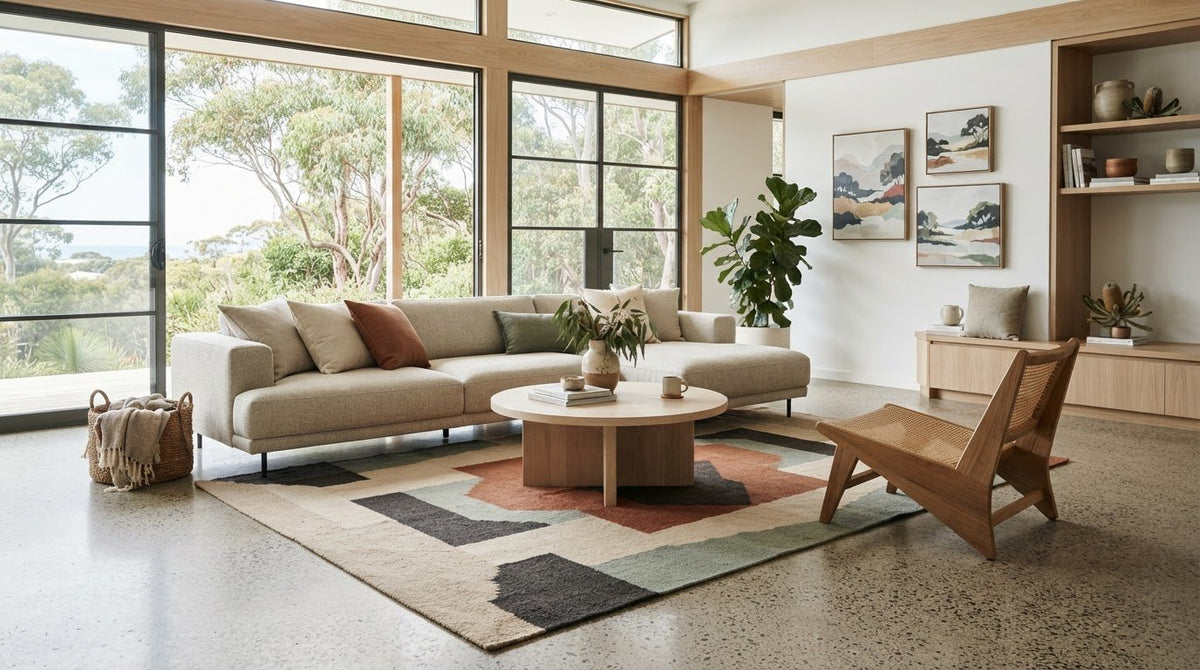
Warm neutrals can create a relaxed base, while a gentle pattern or tactile texture adds interest without making the rug the room’s only focal point. Consider your existing upholstery, flooring and wall colours. A rug can echo a tone already in the room or provide a considered contrast.
For a broader introduction to types of rug construction, explore how different carpet forms and materials are made. Use that background alongside the care information for the rug you’re considering, as construction and upkeep vary.
Trends can offer inspiration, but your living room should still feel like yours. If the space opens onto an outdoor area or is used by the whole family, choose a look that sits comfortably with your home and daily habits. Once you’ve settled on the mood, compare specific rug styles and their trade-offs.
Five family-friendly living room rug ideas to compare by look and feel
Once you know how the room is used, compare rug styles by the atmosphere they create and the care they may need. A low-profile weave, a soft wool rug or a round shape can each suit a different living room. The best choice depends on your furniture, household routines and the care instructions for the individual rug.
Use this comparison to narrow down the family friendly living room rug ideas 2026 worth exploring. Care needs vary by material and construction, so check each rug’s details rather than assuming all rugs in a style behave the same way.
| Rug idea | Visual effect | May suit | Care consideration |
|---|---|---|---|
| Flatweave | Neat, low-profile finish | Shared spaces with regular foot traffic | Check the care instructions and floor suitability |
| Wool rug | Soft, natural texture | Households seeking a cosy feel | Follow the stated care guidance, especially for spills |
| Natural-fibre look | Textured, earthy character | Rooms that suit a relaxed, organic style | Care needs depend on the fibre |
| Subtle pattern | Gentle visual detail | Rooms needing interest without a bold focal point | Pattern may make everyday marks less noticeable, but doesn’t prevent stains |
| Round rug | Curved, softer outline | A smaller seating nook or a room with angular furniture | Check the dimensions against the seating layout |
Flatweave and patterned rugs for busy shared spaces
A flatweave has no upright pile, giving it a thin, dense profile. It may be worth considering for a shared room where chairs move and people pass through. A subtle pattern can make small marks less visually prominent, but it won’t make a rug stain-proof. Check the care label and whether the construction suits your family’s activities.
Cozy Rugs offers flatweave and modern rugs to compare by style. Read the product details for each option before deciding how it may fit your household and floor.
Wool, natural-fibre and round rug ideas
A wool rug has a soft, resilient feel, though spills still need to be handled according to the product instructions. If wool is on your shortlist, read this wool rug guide for more selection pointers. Natural-fibre styles, such as jute or sisal, bring texture, but care requirements differ by fibre. The Sierra Club’s overview of non-toxic and greenest rug materials offers further reading on material considerations.
A round rug can define a compact seating nook or soften a layout dominated by straight lines. Check its dimensions against the chairs and table so the shape feels connected to the furniture. To compare available styles, explore Cozy Rugs’ rug range.
Which living room rug material and construction suit your family?
Material and construction affect how a rug feels underfoot, how it sits in the room and what care it needs. When considering family friendly living room rug ideas 2026, compare these details with your household’s routines rather than assuming one fibre or style works for every home. Product descriptions and care instructions are the best places to check what applies to a particular rug.
What to weigh up when comparing rug fibres
A wool rug offers a soft, resilient feel. Wool fibres contain lanolin, a natural wax that can help resist stains, but this doesn’t make a rug stain-proof or remove the need to follow care guidance. If you’re considering wool, read the wool rug guide for more detail.
Natural-fibre rugs can bring visible texture and an organic feel, but care needs vary by fibre and construction. For a closer look at natural options, see this natural rugs guide. Before choosing, check the fibre details, care label and manufacturer’s guidance. If spills, pets or frequent use are part of your routine, look for specific care advice rather than relying on broad claims about a material.
Compare each option using the same questions:
- What fibres and construction does the product description specify?
- What care instructions are provided, including guidance for spills?
- Does the rug’s feel and upkeep suit the way your family uses the room?
Pile height, texture and family comfort
A flatweave is a low-profile rug with no upright pile. Pile rugs have fibres that stand above the backing, and their height and texture can change how soft or cushioned they feel. Neither construction is automatically right for every family. Consider whether comfort, furniture movement or the way you clean the room matters most in your space.
In a frequently used living area, compare a flatweave if you prefer a lower profile. A pile rug may appeal if a softer feel underfoot is a priority. Check the specific rug’s care instructions and think about how its surface will work with children playing, pets moving through and people walking between the lounge and other areas of the home. The practical choice is the one whose feel and care requirements match your household, not simply the one with the lowest or highest pile.
How to size and place a family-friendly living room rug
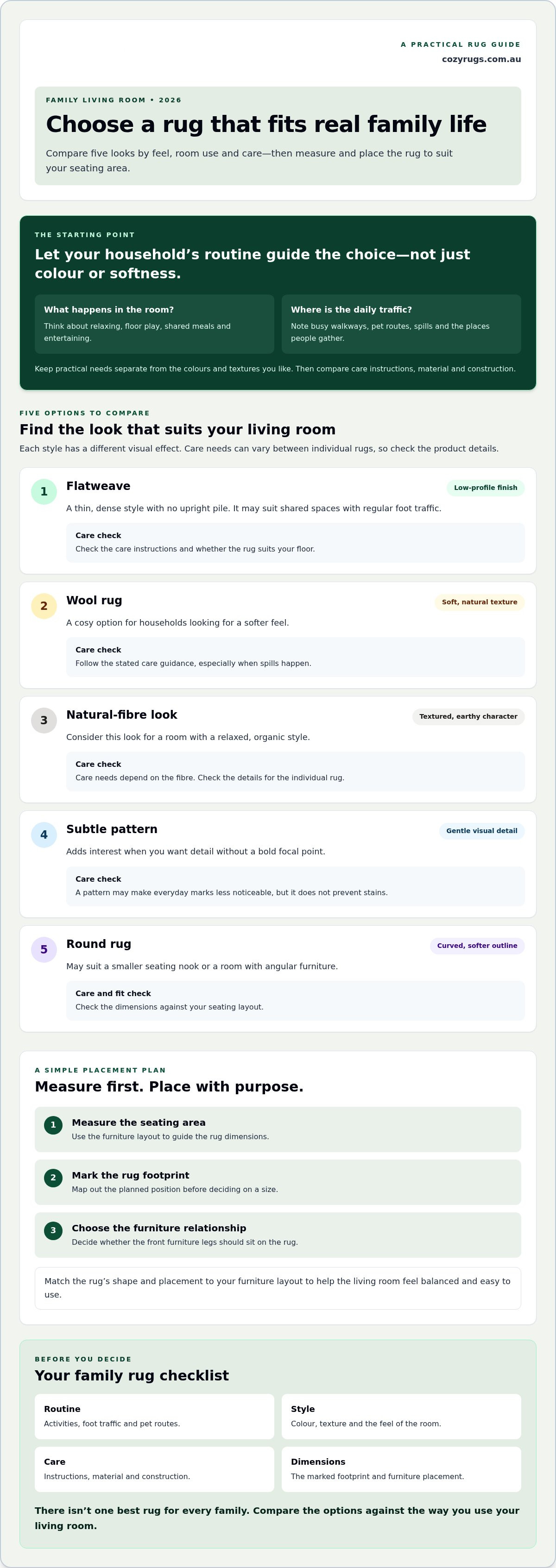
A rug can help bring a sofa, chairs and coffee table together, but a balanced layout starts with measuring the seating area, not simply the whole room. Before choosing a size, consider how people move through the space, where children play and which furniture needs to stay easy to reach.
Try this simple sequence:
- Measure the seating group. Record the area occupied by the sofa, chairs and coffee table, including the space people need to sit and move around them.
- Mark a proposed rug footprint. Use painter’s tape on the floor to outline the shape and position. This helps you judge the rug’s edges before selecting a size.
- Check furniture placement. Decide whether the front legs of the sofa and chairs will sit on the rug, or whether the rug will be centred within the seating area.
Measure the seating area before choosing a size
Room dimensions are useful, but they don’t show how the rug will relate to your furniture. Measure the seating group and use tape to test the outline against the sofa, chairs and coffee table. Walk around the marked area and check how it looks from the main viewpoints. Then compare your measurements with the retailer’s current size options rather than assuming a particular dimension will be available.
For more measuring and layout guidance, use this Australian rug size guide.
Place the rug around furniture and family walkways
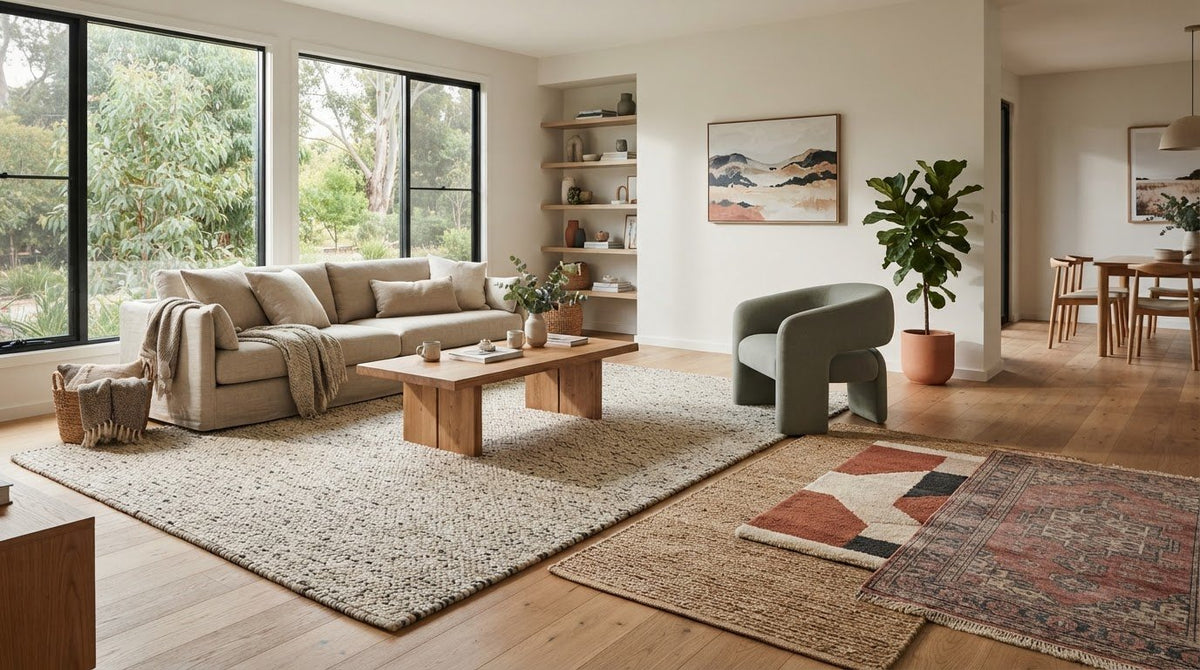
Putting the front legs of the main seating on the rug can visually connect separate pieces of furniture. Alternatively, centring the rug within the seating area makes it a defined feature, with furniture placed around it. Either approach can work. Check how the arrangement feels and functions in your room.
Before settling on a layout, check door clearance, key walkways and access to frequently used furniture. Leave room for doors to open freely, keep paths clear between the lounge and other areas, and consider play zones or chairs that move often. If your home flows to an outdoor area, check the route to that doorway too.
If the rug needs extra grip, consider a non-slip underlay where appropriate, following the rug manufacturer’s and flooring guidance. Once you’ve tested the footprint and furniture positions, browse rugs by size to compare options that suit your layout.
Choose your family living room rug and make the next step easy
There’s no single rug that suits every family. The right choice balances how you use your living room with the look and feel you want. A few final checks can help you move from comparing family friendly living room rug ideas 2026 to choosing an option that feels right for your home.
A simple checklist before choosing a rug
Before settling on a style, check the details that matter in everyday use:
- Household routines: Think about play, pets, visitors and the busiest parts of the room.
- Material and construction: Confirm the listed fibres and rug construction, and make sure they suit your preferences.
- Care guidance: Read the product’s care instructions so you know how to approach routine upkeep and spills.
- Colour and pattern: Consider how the rug will sit alongside your existing upholstery, flooring and wall colours.
- Size and placement: Check the dimensions against your measurements and test that the layout works with furniture, doors and walkways.
These checks help you compare options on more than appearance alone. A rug may look appealing online, but its listed care requirements, size or placement may not suit the way your family uses the room. If one detail doesn’t fit, return to your shortlist and compare another style rather than trying to force a choice.
Get help comparing styles for your home
Unsure whether a colour, size or style will work with your furnishings? Cozy Rugs offers a free design consultation to help shoppers consider those choices. Having your measurements and a sense of the room’s colours and furniture arrangement ready can make the conversation more useful.
Cozy Rugs ships rugs Australia-wide. Check the relevant product and delivery information for the details that apply to your order. Take time to compare care guidance, dimensions and placement, then choose the option that fits your home and routine. For another look at available styles, explore rugs for your living room.
Choose a rug that fits your family’s real life
The best family friendly living room rug ideas 2026 start with how your household uses the space. Think about everyday activity, then compare a rug’s material, construction and care instructions before deciding which style feels right. A subtle pattern, wool texture or low-profile flatweave may each suit different homes and routines.
Measure the seating area and test the rug footprint before choosing a size. Check how it sits with your furniture, doors and walkways, too. These practical steps can help you find a rug that looks at home and works for the people who use the room every day.
Cozy Rugs offers natural, modern, traditional, wool, round and flatweave rugs, with Australia-wide shipping. If you’d like help weighing up colour, size or style, a free design consultation is available. Explore rugs for your living room and take the next step towards a welcoming space that suits your household.
Frequently Asked Questions
Are wool rugs a good choice for a family living room?
A wool rug can suit a family living room if its feel, construction and care needs match your household. Wool fibres contain lanolin, a natural wax that can help resist stains, but this doesn’t make a rug stain-proof. Check the product’s care guidance before choosing, and consider how children, pets and daily activity affect the room. A wool rug may be appealing for comfort, but its upkeep should work for your routine too.
What type of rug is easiest to live with in a busy living room?
There’s no single best rug for every busy household. A flatweave has a low profile and no upright pile, while other constructions offer a different feel underfoot. Compare the material, care instructions and planned placement with your family’s routines. Check the details for the individual rug rather than assuming a particular fibre or pattern is easy to clean. Think about where people walk, where pets settle and how the living room is used each day.
How do I choose the right rug size for a family living room?
Start by measuring the seating area and the furniture you want the rug to connect. Mark the proposed rug edges on the floor, then check that doors, walkways and regularly moved furniture still work comfortably. A rug size guide can help you plan the layout, but confirm the retailer’s current dimensions before choosing. This practical step shows how the rug will sit with your furniture, rather than relying on room dimensions alone.
Are patterned rugs better for homes with children or pets?
A pattern may make everyday marks less noticeable than a plain surface, but it won’t prevent stains or replace suitable care. Choose a design that works with your existing furniture, then check the rug’s material and care instructions. Consider where children play, where pets pass through and how the room is used. A pattern is a styling preference, but the product’s care guidance remains essential when deciding whether a particular rug suits your household.
Is a flatweave rug suitable for a family living room?
A flatweave is a low-profile rug with no upright pile, so it’s one construction to consider for a frequently used living room. Whether it suits your family depends on the specific rug’s material, care guidance and intended placement, as well as your floor surface and household needs. Check the product details and consider whether you’d prefer a flatter feel underfoot or the softer, plusher feel of a pile rug.
How can I stop a living room rug from slipping or moving?
Consider an anti-slip pad or suitable non-slip underlay, checking that it’s appropriate for both the rug and your floor. Follow the pad and flooring manufacturers’ instructions, and make sure the rug lies flat in the areas your family walks most. If it continues to shift, reassess its placement and whether the underlay suits both surfaces. Regularly checking the rug’s position can help you spot movement before it becomes a tripping concern.
Can I put a rug under a coffee table and the front legs of the sofa?
Yes, placing a rug under the coffee table and the front legs of nearby seating is one way to visually connect the living room arrangement. Measure the seating group first, then mark the proposed rug edges on the floor to preview the layout. Check that the rug doesn’t obstruct walkways or doors, and consider any furniture you move regularly. This lets you judge whether the placement feels balanced and remains practical for daily use.

Leave a comment
This site is protected by hCaptcha and the hCaptcha Privacy Policy and Terms of Service apply.