

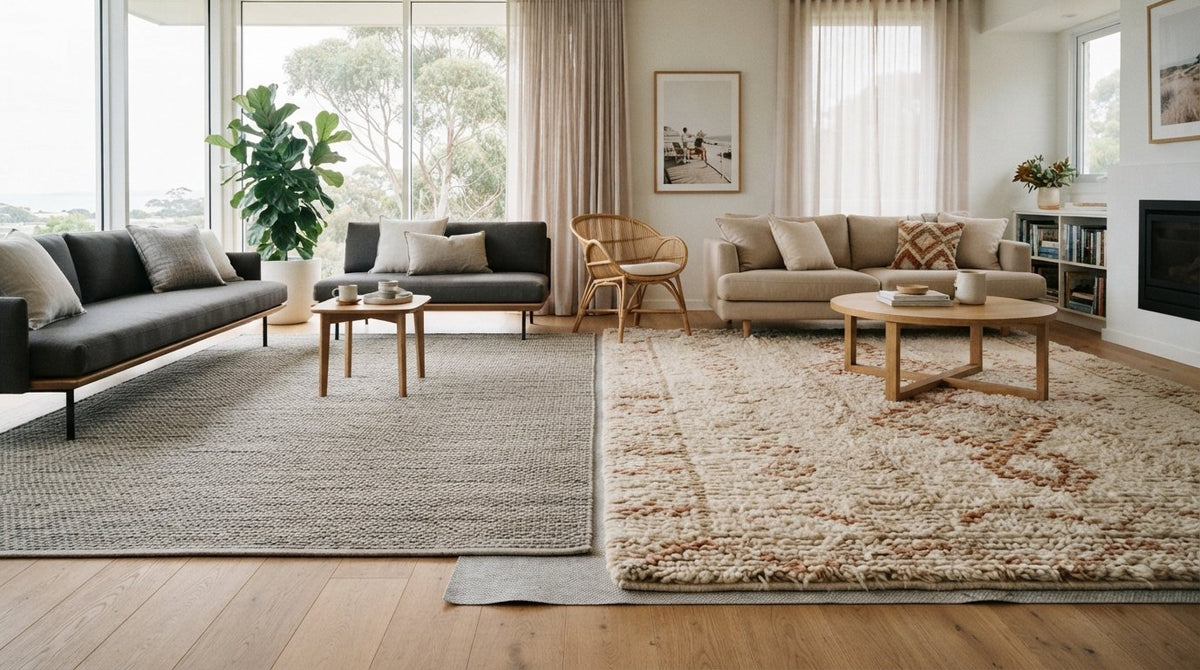
The most effortlessly stylish floor covering on your mood board might actually be the quickest to show wear once everyday life takes over. When weighing up castlery rugs vs wool area rugs, it is completely natural to feel torn between curated modern catalogue trends and time-tested natural fibres. You want a living space that feels calm and welcoming, but you also worry about blended piles matting flat under heavy foot traffic, trapping summer heat, or staining permanently after unexpected pet messes and food spills.
You don't have to sacrifice long-term durability just to achieve a fresh, contemporary aesthetic. In this guide, we compare design trends, material longevity, and practical living performance so you can pick the right floor covering for your space. Ahead, you'll discover how each material manages seasonal thermal regulation, routine stain cleaning, and structural bounce-back under real Australian household conditions.
Key Takeaways
- Comparing castlery rugs vs wool area rugs reveals how curated synthetic blends differ from traditional pure fleece floor coverings in everyday durability and texture.
- Natural wool fibres feature built-in crimp and protective lanolin, which resist liquid spills and prevent the visible traffic lane effect in busy family rooms.
- Wool naturally supports seasonal thermal regulation, keeping living spaces comfortable over hard floors during hot Australian summers and crisp winter mornings.
- Routine maintenance and pairing your rug with a quality non-slip underlay will stop gradual slipping while protecting your floorboards and carpet underneath.
- Choosing the right weave, from a durable low-profile flatweave to a dense tufted pile, ensures your chosen piece anchors open-plan living areas neatly.
Castlery Rugs vs Wool Area Rugs: Key Differences Explained
Selecting the right centrepiece for your living room often boils down to a clash of priorities. In the debate over castlery rugs vs wool area rugs, the core distinction lies between design-led furniture coordination and material-first craftsmanship. While curated furniture retailers create pieces designed to match specific seasonal sofas, dedicated floor coverings focus on structural longevity, yarn resilience, and how fibres respond underfoot over time.
Brand Aesthetic vs Material-First Craftsmanship
Furniture brands excel at visual styling. Their floor coverings echo popular minimalist silhouettes, making an online lounge setting look immediately cohesive. However, these pieces often rely on lightweight machine-loomed foundations. In contrast, specialist floor coverings prioritise knot count, pile density, and woven backings. A beautifully styled room quickly loses its charm if the rug underneath compresses into a lifeless mat after six months of active family foot traffic.
Fibre Breakdown: Synthetic Blends vs 100% Pure Wool
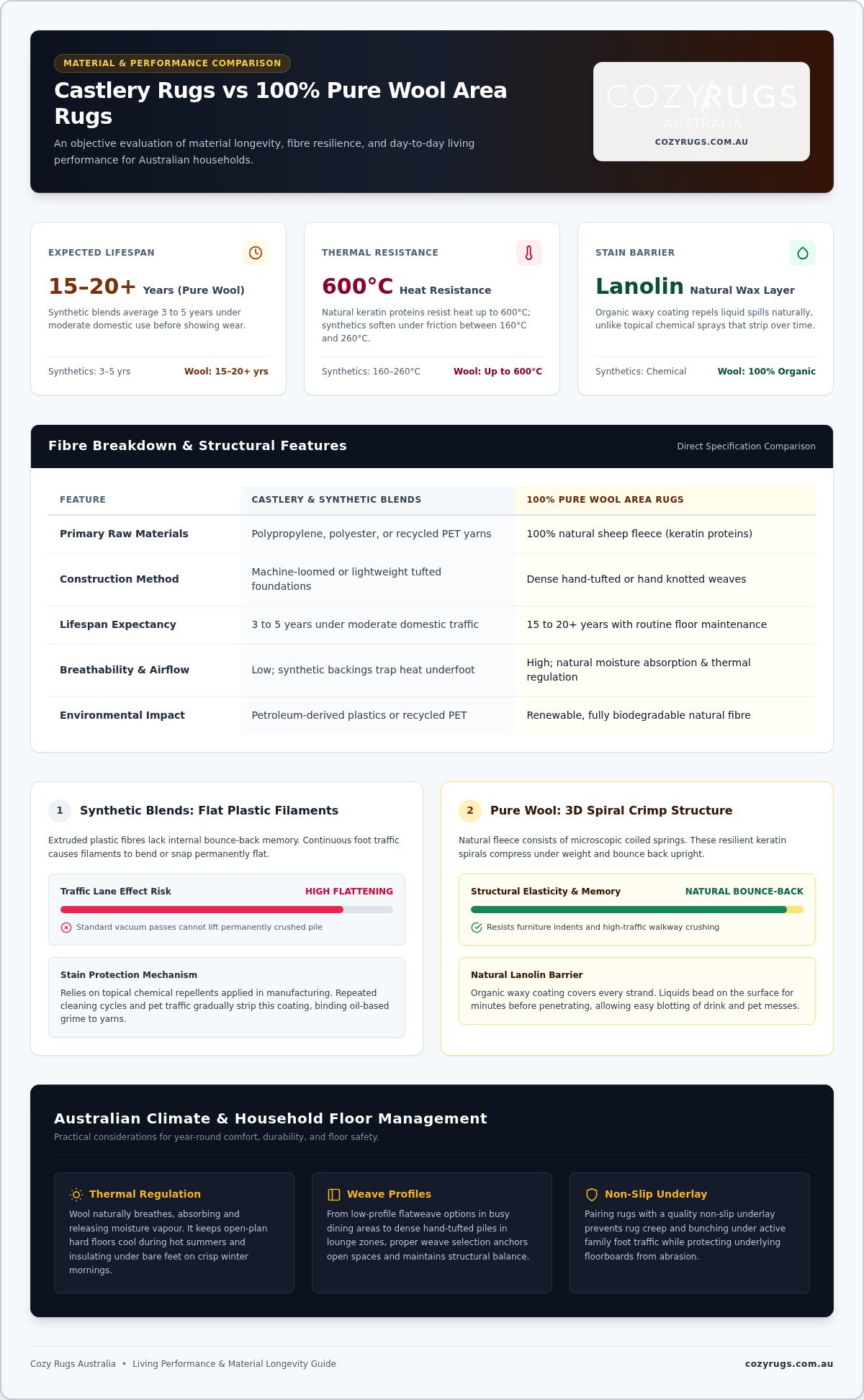
The physical composition of your rug determines everything from tactile comfort to stain resistance. Many mass-market designs blend polyester, polypropylene, or recycled PET yarns. While these materials capture sharp patterns effectively, they are essentially extruded plastics that soften under friction at temperatures between 160°C and 260°C. By comparison, an authentic wool rug consists of natural keratin proteins. These crimped coils hold structural memory, resist surface heat up to 600°C, and provide lasting cushion under bare feet.
| Feature | Castlery & Synthetic Blends | 100% Pure Wool Area Rugs |
|---|---|---|
| Primary Materials | Polypropylene, polyester, or blended fleece | 100% natural sheep fleece |
| Construction | Machine-loomed or lightweight tufted | Dense hand-tufted or hand knotted |
| Expected Lifespan | 3 to 5 years under moderate domestic use | 15 to 20+ years with routine care |
| Breathability | Low; synthetic backings trap heat | High; natural vapour absorption |
| Eco-Friendliness | Petroleum-derived plastics or recycled PET | Renewable, fully biodegradable fibre |
Durability and Daily Wear in Busy Australian Homes
Modern Australian open-plan living demands a lot from floor textiles. Sliding terrace doors, playful pets, and regular gatherings mean main walkways absorb constant pressure. Evaluating castlery rugs vs wool area rugs under these conditions exposes how differing raw materials stand up to real daily friction.
Resisting the Traffic Lane Effect and Pile Crushing
Heavy foot paths between the kitchen and lounge create noticeable track marks over time. In synthetic blends, continuous compression causes the plastic filaments to snap or bend permanently flat, creating a dull traffic lane effect that standard vacuuming cannot lift. In contrast, pure sheep fleece possesses a microscopic three-dimensional spiral crimp. This coiled structure acts like thousands of miniature springs, bouncing upright after heavy footfalls or beneath solid dining chairs.
Weighing up daily performance involves clear trade-offs between convenience and longevity:
- Synthetic Designer Pieces: Lightweight and simple to reposition, yet susceptible to permanent pile crushing and static build-up over several years.
- Natural Wool Coverings: Substantial underfoot weight, natural resistance to furniture indents, and superior structural elasticity across bustling family zones.
Natural Protection with Lanolin vs Synthetic Fibre Treatments
Living room rugs inevitably face tipped drinks, snack crumbs, and muddy dog paws. Raw fleece retains trace amounts of lanolin, an organic waxy barrier that coats each individual strand. Because lanolin naturally repels moisture, everyday spills form beads on the surface rather than soaking straight into the core, giving you valuable minutes to blot messes away.
Conversely, synthetic fabrics rely on topical chemical repellents applied during manufacturing. Repeated spot cleaning, pet traffic, and routine vacuum passes strip these surface coatings over time, leaving untreated synthetic yarns prone to bonding with oil-based grime. Pure fleece maintains its defence permanently, keeping busy shared rooms fresh year after year. If you are comparing textures for a bustling household, explore Cozy Rugs' curated natural collections to find weaves that handle daily wear with ease.
Year-Round Comfort, Thermal Regulation, and Australian Climate Suitability
Modern Australian homes often combine high ceilings, expansive glass sliding doors, and hard flooring like engineered timber, porcelain tiles, or polished concrete. While these surfaces create a clean architectural line, they readily transfer seasonal temperatures. Evaluating castlery rugs vs wool area rugs through a climate lens highlights how fibre structure directly influences everyday indoor comfort.
Thermal Regulation: Natural Breathability Across Changing Seasons
Our local climate frequently swings between sweltering summer afternoons and crisp winter mornings, creating tricky indoor temperature shifts. Wool fibres excel at year-round thermal regulation due to millions of microscopic air pockets formed by their natural crimp. These tiny air pockets act as an insulating buffer against chilly subfloors in July, yet allow continuous airflow during sticky February heatwaves.
According to technical data from Australian Wool Innovation, sheep's wool can absorb up to 30% of its dry weight in airborne moisture vapour without feeling damp or clammy underfoot. It then releases that moisture back into the room once ambient indoor humidity drops. Synthetic fibres like polypropylene or polyester cannot absorb moisture this way, which often results in a warm, slick surface during muggy weather. For homes seeking breathable comfort through every season, exploring authentic natural rugs provides an effortless way to balance indoor conditions.
Acoustic Dampening and Underfoot Softness on Timber and Concrete
Open-plan living zones are notorious for harsh acoustic bounce. Televisions, kitchen clatter, and running children create unwanted noise when sound waves reverberate off bare walls and uncarpeted floors. Thin, flat synthetic floor coverings offer minimal sound absorption because their lightweight backings lack structural bulk.
Dense wool piles act as natural acoustic buffers. The thick, interlocking fleece traps sound waves, significantly reducing hollow room echo and creating a calmer, more welcoming domestic space. Beyond muffling footsteps, this substantial cushion provides a gentle landing pad for toddlers learning to walk and pets resting on cold floors, turning hard living spaces into cozy family retreats.
Maintenance, Cleaning, and Floor Protection Guide
Routine care directly influences how your floor covering ages. In the comparison between castlery rugs vs wool area rugs, each material calls for a distinct maintenance approach to protect both the pile surface and the floor underneath. Clear routines make everyday living stress-free while extending the life of your textile investment.
Spot Cleaning Everyday Spills and Long-Term Care
Messes happen quickly in active homes. When coffee, wine, or pet messes hit the floor, follow a disciplined four-step routine:
- Blot immediately: Press a clean, white cotton towel firmly over the spill without scrubbing. Rubbing forces liquids deep between underlying backing threads.
- Dilute gently: Dab the outer edges inward using lukewarm water mixed with a drop of wool-safe, pH-neutral liquid soap.
- Avoid harsh spot treatments: Chemical aerosol sprays strip the organic waxy lanolin shield from fleece and cause discolouration rings on synthetic prints.
- Deep dry extraction: Arrange periodic dry cleaning every 18 to 24 months to draw out embedded grit without soaking internal backing adhesives.
Preventing Rug Creep with a Non-Slip Underlay
Hard surfaces like timber floorboards and polished tiles create friction against coarse rug backings. Without proper insulation, constant micro-movement causes rug creep, leading to crooked placements and dangerous slip hazards. Installing a breathable non-slip underlay or specialised anti-slip pad cushions every step, prevents grit from grinding into fine timber finishes, and stops base textiles from shifting out of position under active feet.
Applying the Hard Over Soft Rule for Carpeted Rooms
Layering an area rug over wall-to-wall carpeting requires careful planning. If you place a soft, flexible rug directly over plush pile, the two conflicting grains cause the top piece to buckle, bunch, and pull diagonally. Interior designers solve this through the hard over soft rule by placing a firmer, tightly woven style over softer base carpet.
Pair this setup with a purpose-built rug-to-carpet gripper. This thin, pressure-sensitive sheet grips the lower carpet pile firmly, stopping troublesome ripples from forming under furniture legs. To find floor solutions built to last, shop authentic wool rugs at Cozy Rugs for dependable everyday living backed by local Australian support.
How to Choose the Right Area Rug for Your Living Space
Finding the right balance between catalogue trends and practical family living comes down to assessing your household layout. When evaluating castlery rugs vs wool area rugs, the choice isn't just about colour palettes. It requires matching fibre structures and room dimensions to your daily routine. A floor covering must anchor your room properly while withstanding the realistic rhythm of footsteps, pets, and entertaining.
Room-by-Room Sizing and the 30cm Border Rule
Getting your room scale right prevents open-plan living areas from feeling disjointed or cramped. Before making a final selection, review our practical rug size guide to map out exact floor measurements. A great benchmark is the 30cm border rule, which leaves roughly 30 cm of bare timber or stone visible around the rug's outer edges. In living rooms, ensure at least the front legs of your sofa and armchairs rest firmly on the weave to tie the conversational zone together neatly.
Selecting Hand Knotted, Tufted, or Flatweave Constructions
Different household zones require specific weave densities to avoid premature friction wear:
- Flatweave Rugs: A reversible flatweave features no upright pile, making it the ideal choice beneath dining settings where chairs slide constantly, or in busy sunrooms leading to alfresco decks.
- Hand Knotted Pieces: When seeking generational durability, hand knotted rugs deliver exceptional knot density and rich visual character, withstanding decades of foot traffic.
- Designer Collections: For homes wanting contemporary flair with proven natural texture, the Darren Palmer collection blends architectural styling with the warmth of genuine wool.
Finding Lasting Value with Cozy Rugs Australia
Selecting the right floor covering should feel rewarding rather than overwhelming. Cozy Rugs pairs material expertise with direct Australia-wide delivery, bringing natural comfort straight to your door. Backed by our shop with confidence price guarantee, you can style your home knowing you are investing in pieces designed for genuine daily use. Whether you are after a relaxed runner or a plush centrepiece, explore our collections and buy rugs online with confidence.
Bring Timeless Comfort into Your Living Space
Creating a home that feels both refined and welcoming comes down to investing in floor coverings that stand up to real daily living. In the choice between castlery rugs vs wool area rugs, genuine fleece consistently outpaces trend-driven synthetics by resisting stubborn traffic lanes, offering built-in stain protection, and balancing indoor temperatures right through the changing Australian seasons.
When you are ready to anchor your space with enduring quality, find your perfect natural floor covering at Cozy Rugs. Discover our curated range of premium natural wool and flatweave collections, alongside exclusive designer collaborations including the Darren Palmer collection. With reliable nationwide delivery backed by our shop with confidence price guarantee, you can bring home authentic warmth and style that your family will enjoy for years to come.
Frequently Asked Questions
How do Castlery rugs differ from traditional wool area rugs?
When comparing castlery rugs vs wool area rugs, the distinction centres on production design versus material heritage. Castlery designs rugs primarily as fashion-forward accessories to match specific furniture collections, often using synthetic fibres or blended yarns. Traditional wool floor coverings focus on fibre integrity, knot density, and natural durability. While synthetic furniture rugs suit short-term stylistic refreshes, dedicated wool weaves offer decades of bounce-back recovery and natural stain resistance.
Do wool area rugs shed more than synthetic living room rugs?
New wool rugs naturally shed minor loose fibres for the first few months, whereas continuous-filament synthetic rugs don't shed at all. This shedding is simply the release of shorter fibres left behind from the spinning process and doesn't compromise structural density. Regular, gentle vacuuming with a flat floor tool clears these loose particles quickly. Within several weeks, shedding tapers off dramatically, leaving behind a smooth, durable surface.
Are wool rugs suitable for homes with pets and young children?
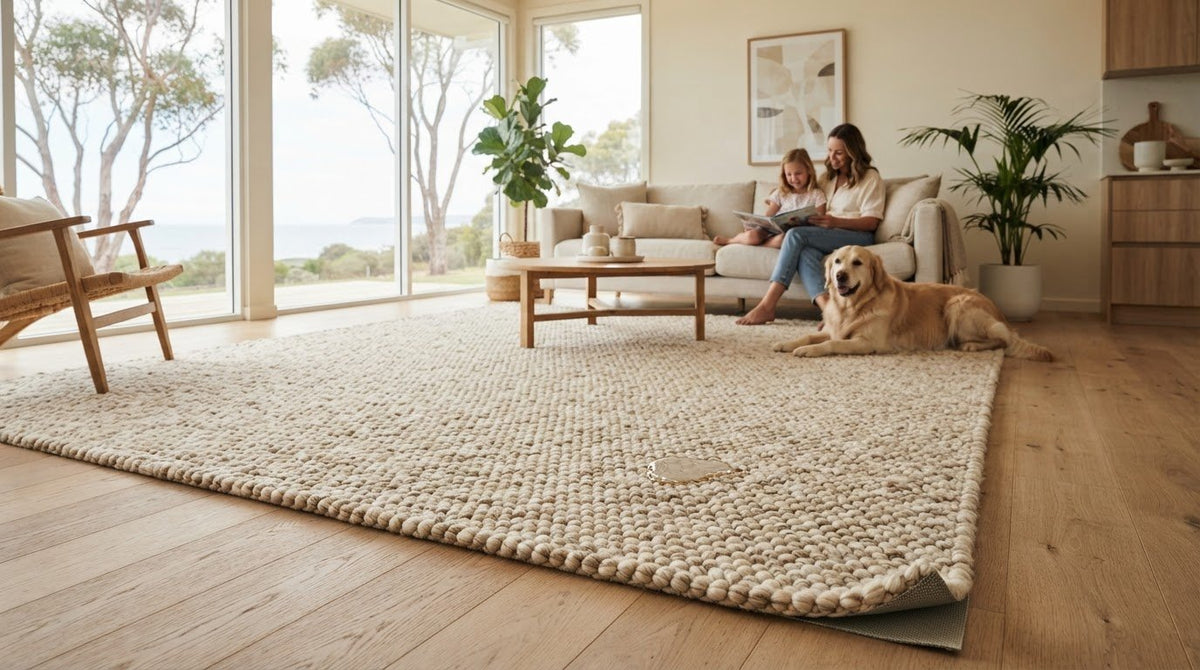
Wool rugs are exceptionally well suited to busy households with pets and young children. Each wool fibre contains a natural outer coating of lanolin, which creates an organic shield that stops muddy paws and liquid spills from penetrating deep into the core. This gives parents and pet owners time to blot away everyday messes before stains set. In contrast, synthetic coatings wear away with repeated cleaning, leaving bare plastic threads susceptible to grease marks.
Can I place a wool area rug directly over existing carpet?
You can layer an area rug over carpet, but you should always follow the hard over soft rule. Placing a pliable wool rug over a deep-pile carpet causes shifting, rippling, and gradual rug creep as the two piles work against each other underfoot. To keep the top layer flat and safe, choose a firmer, low-profile weave like a flatweave and install a specialised rug-to-carpet gripper between the layers.
Why do synthetic rugs flatten faster in high-traffic hallways?
Synthetic yarns flatten faster because petroleum-based filaments like polyester or polypropylene lack natural internal elasticity. Under constant foot pressure, extruded plastic fibres bend and eventually fracture, causing the permanent traffic lane effect. Natural sheep fleece features a microscopic spiral crimp that works like an internal coil spring. This natural resilience allows wool fibres to rebound immediately after being trodden on, preserving texture and thickness across heavy walkthrough areas.
How does natural wool keep homes comfortable during hot Australian summers?
Wool excels at thermal regulation because it naturally breathes. Instead of trapping stagnant heat against floorboards like synthetic backings do, wool fibres absorb ambient humidity without feeling damp and steadily release moisture as indoor air dries out. This continuous vapour transfer keeps the surface pleasantly cool beneath bare feet during sticky summer weather, while still delivering snug underfoot insulation against cold subfloors when winter arrives.
What type of underlay should I use beneath my living room rug?
Your choice of underlay depends directly on your subfloor. On smooth surfaces like timber, hybrid floorboards, or polished tiles, use a quality non-slip underlay or anti-slip pad to prevent slips and stop rug backings from abrading delicate floor finishes. If you are placing a rug over wall-to-wall carpet, use a dedicated rug-to-carpet gripper to anchor the weave and prevent dangerous bunching under furniture.

Leave a comment
This site is protected by hCaptcha and the hCaptcha Privacy Policy and Terms of Service apply.