

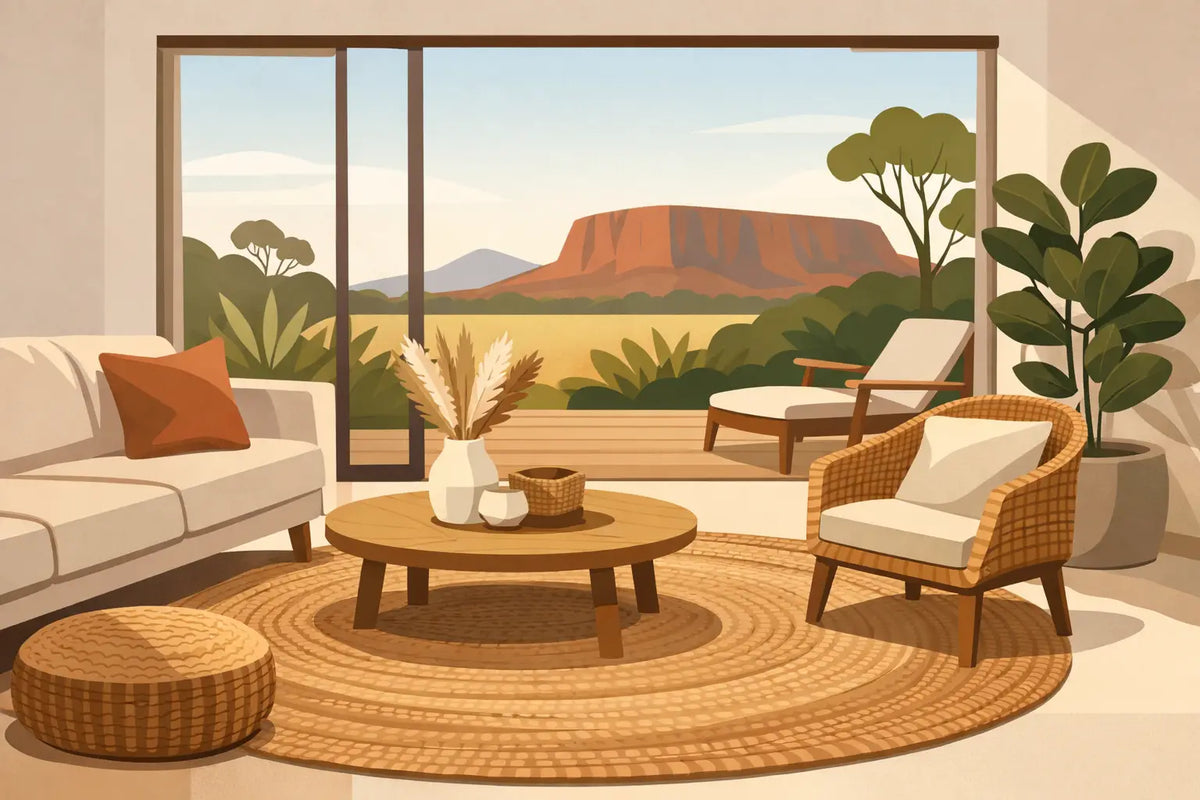
Natural fibre rugs Australia homeowners choose tend to have one thing in common: they make a room feel settled. A wool rug softens a timber-floored lounge, a jute weave brings texture to a breezy coastal space, and cotton offers an easy-going layer underfoot. But choosing a natural rug is not simply about the look. It is about how your room is used, who lives there and how much care you are happy to give it.
For Aussie living, the best choice balances natural beauty with the practical realities of muddy shoes, sandy feet, pets, kids and busy family routines. Here is how to find a fibre and finish that feels right at home.
Why natural fibre rugs work so well at home
Natural materials have a character that synthetic fibres often try to imitate: gentle variation in colour, an inviting texture and a warmth that makes furniture feel less formal. Every weave can carry subtle differences in tone and texture, which is part of the appeal rather than a flaw.
They also suit a wide range of interiors. A handwoven wool rug can anchor a refined contemporary lounge, while a chunky jute rug works beautifully with relaxed linen, pale timber and earthy ceramics. Cotton flatweaves are equally at home in a casual bedroom, a studio or beneath a dining table where you want a lighter, more laid-back feel.
That said, “natural” does not automatically mean low-maintenance or right for every room. Some fibres are highly absorbent, some are prone to shedding when new, and some are best kept away from persistent moisture. The most satisfying purchase comes from matching the material to the job.
Natural fibre rugs Australia buyers can choose with confidence
Wool for comfort, resilience and all-season warmth
Wool is often the first choice for living rooms and bedrooms, and for good reason. It feels plush and insulating in winter, yet it is breathable enough for warmer months. Wool fibres have a natural spring, helping a well-made rug bounce back after everyday foot traffic and furniture pressure.
It is also naturally more resistant to dirt than many people expect. The fibre’s structure can help prevent spills from soaking in immediately, giving you a little more time to blot before a mark sets. That makes wool a practical option for family spaces, although prompt attention is still essential when spills happen.
A wool rug may shed at first, especially if it has a deeper pile or has been hand-tufted. This normally settles with regular vacuuming. For high-traffic areas, consider a low-pile or flatwoven wool design. It is easier to vacuum and less likely to show flattened pathways over time.
Wool is a premium investment, so think of it as a long-term piece rather than a quick seasonal update. Choose a size that properly frames your furniture and a colour with enough depth or pattern to suit the rhythm of your household.
Jute for organic texture and relaxed style
Jute has a wonderfully grounded look. Its golden, earthy tones bring instant warmth to white walls, timber dining settings and neutral sofas, making it a favourite for coastal, country and modern organic homes. It is generally more affordable than wool while still delivering that hand-crafted, elevated feel.
The trade-off is that jute is a little more sensitive. It does not love moisture, which means it is better suited to dry indoor spaces than bathrooms, uncovered patios or places where wet towels and drippy paws are a regular occurrence. If water marks occur, they can be difficult to remove without affecting the fibre’s natural colour.
Jute rugs often feel firmer and more textured underfoot than wool. That can be exactly what a room needs, particularly when you are layering a soft sofa, upholstered bed or plush cushions. In a lounge, a jute rug can add contrast without competing with the rest of your styling.
For dining rooms, a flatter jute weave is usually the most practical choice. Chairs move more easily over the surface, and the low profile gives the setting a neat, considered finish. Use a quality rug pad underneath to reduce movement and give the rug extra support.
Cotton for lightness and everyday flexibility
Cotton rugs are soft, lightweight and easy to style. They suit bedrooms, kids’ rooms, home offices and smaller spaces where a heavy rug may feel too bulky. Many cotton styles are flatwoven, so they are a sensible option under doors or in areas where you need a lower profile.
Cotton is highly absorbent, so it needs a quick response to spills. It can also fade if placed in harsh direct sun for long periods. However, if you like to refresh your home with the seasons or enjoy a relaxed layered look, cotton is one of the easiest fibres to move, clean and restyle.
Look for a tightly woven cotton rug in a busier zone. A handwoven, softer cotton option may be better reserved for lower-traffic rooms where comfort is the priority.
Sisal and seagrass for a tailored, textural finish
Sisal and seagrass sit at the firmer end of the natural-fibre spectrum. They offer crisp texture and a clean, architectural look that can make an entryway, study or dining room feel beautifully pulled together. Their neutral shades also make them easy to pair with patterned upholstery or colourful artwork.
Sisal can be more hard-wearing than jute, though it still benefits from a dry setting and regular care. Seagrass has a slightly smoother, waxier feel and naturally varied green-gold tones. Both are best for homes that love an organic aesthetic but do not need a soft, sink-your-toes-in rug underfoot.
Choose the fibre around the room, not just the trend
Start with how you use the space. In a main living area, wool is often worth the investment because it handles daily use while bringing genuine comfort. If the room is more of a visual retreat than a high-traffic hub, jute can create a relaxed, designer-led foundation for less.
Bedrooms give you more freedom. A soft wool rug beside the bed feels luxurious on cool mornings, while cotton offers a lighter, casual alternative. In a nursery or child’s room, consider the pile height and ease of vacuuming alongside the texture. A very loose weave may not be the best match for small toys, crumbs and constant play.
Hallways and entryways call for durability and a flatter construction. A sturdy wool flatweave, sisal or tightly woven jute runner can define the space without becoming a trip hazard. Leave enough floor visible at the sides so the runner looks intentional rather than cramped.
For dining areas, prioritise a low pile and enough coverage. Ideally, chairs should stay on the rug when pulled back from the table. Natural fibres look fantastic here, but a rug that is too small will make even a beautiful dining setting feel unsettled.
The care details that make a natural rug last
Good care is usually simple and consistent. Vacuum regularly using a suction-only setting where possible, particularly on handwoven or loop-pile rugs. Beater bars can pull at delicate fibres or cause excess fuzzing. Rotate the rug every few months to spread wear and reduce uneven fading near windows.
For a spill, blot immediately with a clean, dry cloth. Avoid rubbing, as this can push the spill deeper into the fibres and roughen the surface. Use minimal moisture, especially on jute, sisal and seagrass. If you are unsure about a cleaning product, test it in an inconspicuous spot first or speak with a professional rug cleaner.
A rug pad is one of the simplest ways to protect your purchase. It adds grip, reduces bunching, cushions the weave and helps prevent premature wear. It can also make a firmer fibre, such as jute or sisal, feel more comfortable underfoot.
Styling natural rugs without making the room feel flat
Natural fibres are neutral, but they never have to be boring. Use their texture as part of the room’s colour story. A warm jute rug can bring out caramel timber tones and terracotta accents. A creamy wool loop-pile rug can soften black furniture and stone surfaces. A patterned wool flatweave adds movement in a room that already relies on plain upholstery.
If your home has lots of smooth finishes, such as polished concrete, leather, glass or sleek cabinetry, choose a rug with visible weave and depth. If you already have rattan, timber panelling, linen and textured cushions, a quieter wool rug may provide balance.
Cozy Rugs curates natural designs across wool, jute and textured flatweaves, so you can choose the material first, then narrow the look by size, colour and room. It is a practical way to shop when you know the feeling you want but are still weighing up the fibre.
The right natural rug should not feel precious or difficult to live with. Choose the texture you love, give it the room and care routine it needs, and it will bring warmth to your home long after the first styling moment has passed.


Leave a comment
This site is protected by hCaptcha and the hCaptcha Privacy Policy and Terms of Service apply.