


What if your rug didn’t have to match every piece of furniture to feel at home? Transitional rugs connect traditional details with cleaner, contemporary shapes, helping a room feel pulled together without dictating a whole new look. If you’re worried a patterned rug might clash with your sofa, timber floors or existing decor, start by looking at the colours and shapes already in the room.
This guide explains how to compare transitional styles, colour palettes and rug shapes, then choose a size that works with your furniture and the way you use the space. You’ll also find practical measuring tips to help the rug anchor the room rather than appear too small or take over.
Whether you’re arranging a living room so the sofa’s front legs sit on the rug or choosing a rug for a family area shared with pets, a few considered choices can make a difference. Use the pattern, palette and placement to connect your existing decor, while keeping everyday movement in mind.
Key Takeaways
- Learn how transitional rugs bridge traditional detail and a more contemporary look, making it easier to blend different furniture styles.
- Compare pattern, colour and shape to find transitional rugs that complement your existing decor rather than compete with it.
- Explore Easton and Anastasia as starting points, then check current designs and size variants to see what suits your room.
- Measure your floor area and map your furniture before choosing a rug, so you can judge how its placement will balance the space.
- Use the final checklist to consider your palette, pattern scale and household needs. A free design consultation is available if you’d like extra guidance.
What makes transitional rugs a flexible choice for Australian homes?
Transitional rugs balance traditional detail with a more current look. They sit between the ornate character of classic designs and the cleaner feel of contemporary interiors. The style doesn’t refer to one set pattern or colour palette. Instead, it describes a design direction that can help connect pieces you already own.
This flexibility can suit homes where an inherited timber sideboard sits near a modern sofa, or a relaxed living space opens towards the outdoors. Rather than asking every furnishing to match, a transitional design can link contrasting shapes, finishes and eras. The aim is balance, not a perfectly coordinated room.
How transitional style sits between traditional and modern
Traditional rugs often feature ornate motifs and a more formal feel, while contemporary designs may favour simpler shapes and less detail. Transitional patterns can soften that divide with updated colours or a less formal treatment of traditional design. The history of carpets and rugs offers broader context on the variety of these designs. Cozy Rugs’ supplied descriptions note muted colours in Easton designs and a soft abrash effect in Anastasia designs. These examples show how pattern and colour can shape a rug’s overall look.
Which rooms can suit a transitional rug?
A living room, bedroom or dining area may suit a transitional rug, depending on its size, layout and furniture. In a living room, decide whether the rug should bring the seating together. In a bedroom, consider how it will sit beside or under the bed. For a dining area, check that the rug works with the table and chairs, including the space needed to move the chairs. In every room, leave walkways clear.
Start with what’s already there: floor colour, furniture finishes and the mood you want. A quieter pattern may work well among several strong features, while a more noticeable design can add interest to simpler surroundings. If children, pets or frequent trips between indoor and outdoor areas shape your routine, consider how much use the room gets and check the care information for the rug you’re considering. A good match should work with both your decor and daily life.
Compare transitional rug patterns, colours and shapes before choosing
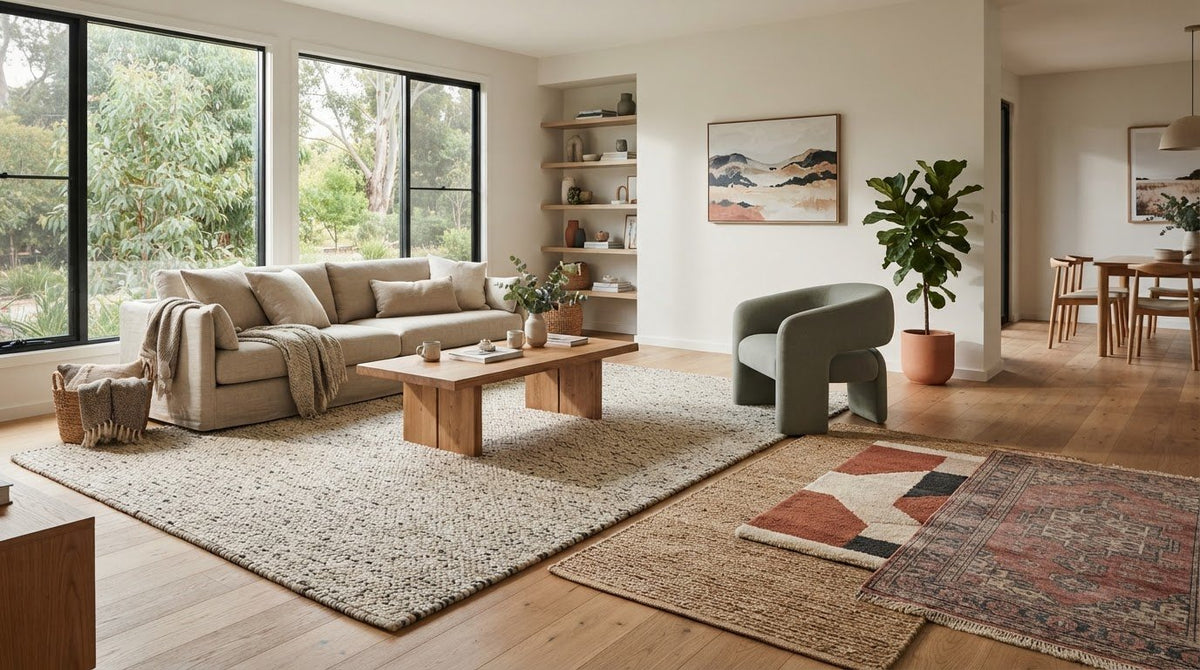
With transitional rugs, the pattern should work with the room rather than compete with it. Compare its scale with nearby upholstery, cushions and furnishings. A simpler space can often carry a more noticeable motif, while patterned furniture or detailed decor may feel calmer with a quieter design. There’s no single pattern that suits every room. The right balance depends on what’s already there.
Coordinate a patterned rug with colours already in the room, then let its pattern add interest without competing with your furniture.
| Pattern character | Palette | Room mood | Decor context |
|---|---|---|---|
| Softened traditional motifs | Muted or blended tones | Calm and settled | Rooms with timber, neutral upholstery or older furnishings |
| More visible, defined pattern | Contrasting colours | Lively and expressive | Simpler rooms where the rug can become a focal point |
| Subtle or softened pattern | Colours close to the existing palette | Quiet and cohesive | Spaces with detailed upholstery or several competing finishes |
Choose a pattern that complements your furniture
Compare the scale of the rug motif with the detail around it. A large, open pattern can read differently beside small, busy upholstery than it does alongside a plain sofa. Consider the room as a whole, including flooring, furniture and soft furnishings, as each affects how prominent the rug feels. If you’re unsure, note two or three colours already in the space and look for a design that relates to them.
Use colour and shape to guide the room’s mood
Muted palettes can sit quietly with existing decor, leaving furniture and other finishes as the focus. A rug with stronger colour combinations can draw the eye and give a simpler room a clear focal point. Compare product imagery with the room’s natural and artificial light, as colours on screen may look different in your home.
Shape matters, too. A round rug can soften straight furniture lines or help define a small seating nook. Check its proportions against the available floor area and furniture placement before choosing. Interior designer Beth Lindsey’s Rug rules for every room offers further guidance on how placement affects a room’s balance.
Once you know whether you want a quiet backdrop or a stronger accent, browse the transitional rug collection to compare the patterns and colourways available.
Transitional rug examples: compare Easton, Anastasia and Jezebel Fluid
These designs are starting points for comparing different transitional looks, not a ranking or a complete list. First decide on the effect you want: a muted base, delicate detail or a stronger colour accent. The names offer an initial colour cue, but check the product details and images before deciding how a design will work with your furniture and flooring.
Easton and Anastasia: softer palettes with decorative detail
Easton designs are described as having muted colours, making them a useful starting point if you want pattern without a strong colour statement. Easton 461 Multi, Easton 462 Silver and Easton 466 Sand offer named colour directions to compare with the tones already in your room. Use the product images and descriptions to assess the design itself, rather than relying on the colour name alone.
Easton 468 Slate Round and Easton 469 Cloud Round are listed in round variants. Consider these if a circular shape suits your furniture layout, and check the listed variant sizes against your available floor area. Shape and proportions matter as much as the colour name.
Anastasia 250 Pastel and Anastasia 259 Ivory are described as having delicate patterns and a soft abrash effect. If you prefer detail that feels gentle rather than sharply defined, compare these designs with the visual weight of your upholstery and other decor. Their colour names suggest a starting palette, while the pattern and abrash effect help distinguish their overall look.
Jezebel Fluid: transitional designs with colour
Jezebel Fluid offers a different direction, with a confirmed faded-wash effect and deliberately placed colours. Jezebel Fluid Midday Modern Red and Jezebel Fluid Nights Modern Blue are examples to consider if you want a more noticeable colour presence. Jezebel Fluid Dew Modern Green provides another colourway to compare, without assuming anything beyond its name.
These examples can help you decide whether you want a rug to blend quietly or draw more attention. Place the product image beside your room’s main colours, such as the sofa, curtains or timber floor, and consider whether the palette feels connected or competing. Screen settings and room lighting can affect how colours appear, so treat online imagery as a guide rather than an exact preview.
Before settling on a design, check the current product listing for its variant sizes and details. That keeps the comparison practical: a pattern may suit your taste, but it still needs to fit the room and the furniture around it.
Choose the right transitional rug size and placement for your room
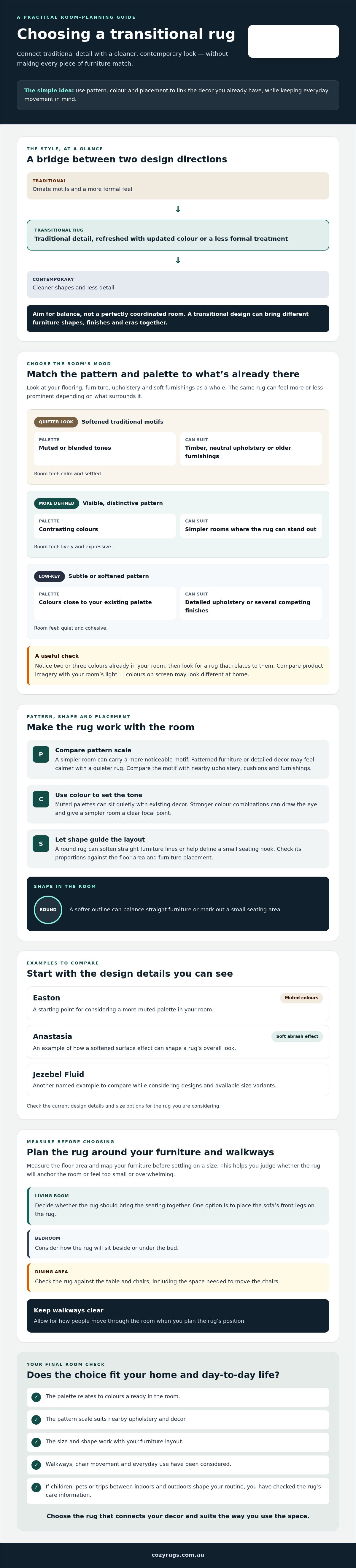
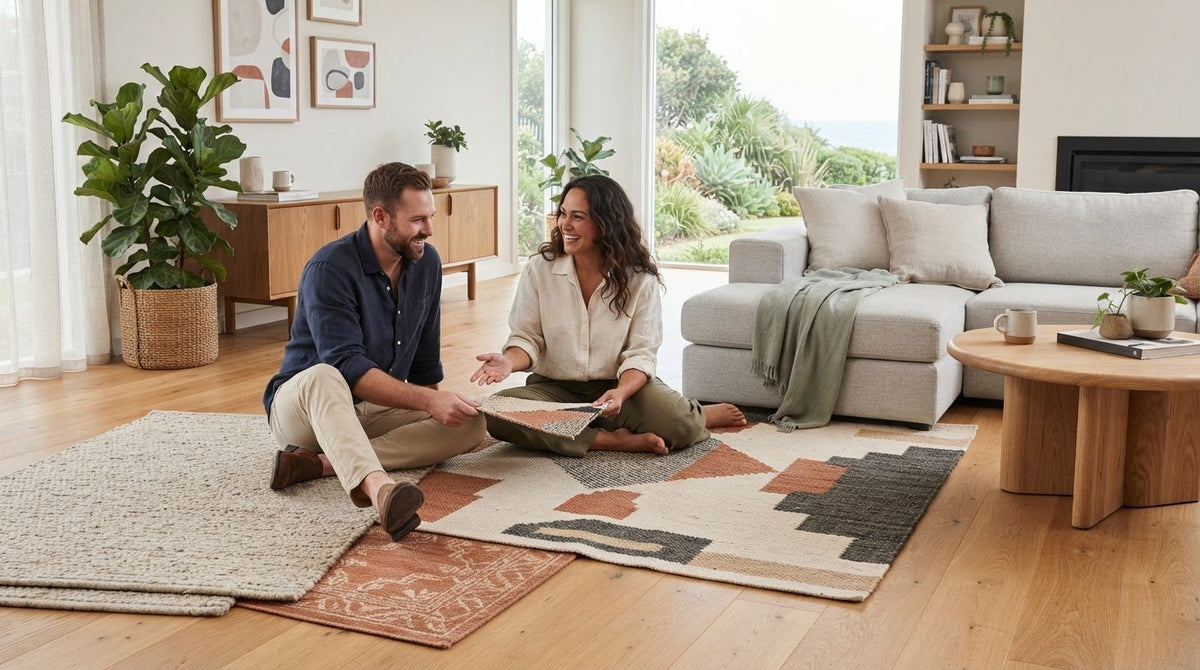
A rug can suit your decor perfectly and still feel out of place if it’s too small, too large or awkwardly positioned. Before choosing between transitional rugs, plan where the rug will sit in relation to furniture and everyday paths through the room. A quick floor test can help you picture the scale before selecting a listed variant.
Measure the room before selecting a variant
Use this simple process to compare the available space with a rug’s listed dimensions:
- Map the furniture. Note the position of sofas, chairs, beds or the dining table. Decide which pieces you want on the rug, partly on it or around it.
- Measure the intended rug area. Measure the floor space you want the rug to cover, then mark its edges with painter’s tape or another removable marker. Check that doors can open, walkways remain clear and furniture can be used comfortably.
- Compare listed variants. Check the product listing for available sizes and compare each one with your marked-out area. Don’t assume every design has the same options. Confirm the dimensions for the particular rug you’re considering.
Marking the floor makes it easier to see how much space the rug will occupy and whether it leaves the balance you want around the furniture. For extra help thinking through room proportions, consult an Australian rug size guide alongside your measurements.
Match the rug shape to the furniture layout
Rectangular rugs can follow the lines of a sofa arrangement or dining table, creating a clear anchor beneath or around the furniture. A rug tucked partly under a seating group can bring the pieces together. One positioned mainly in front of them creates a more open effect. Neither approach is automatically right. Consider the room’s proportions and how much floor you want to remain visible.
Round rugs are another option, including the Easton designs listed in round variants. A circular shape may suit a compact seating area or a grouping of curved furniture, and can soften a room with strong straight lines. Check that the rug’s edges won’t interrupt walkways or catch chair legs as people move around.
Leave room for everyday movement, especially in busy family spaces where people, pets and outdoor trips pass through regularly. Once you’ve measured and mapped the layout, browse transitional rug sizes and designs and compare the listed dimensions with your floor plan.
Make a confident transitional rug choice and browse the collection
You’ve compared styles and thought about placement. Before choosing a design, bring those decisions together with a quick check. This can help you avoid a rug that looks appealing online but feels out of scale, disconnected from your decor or awkward in everyday use.
A short checklist before you select a design
- Confirm the room and placement. Decide where the rug will sit and which furniture it should anchor or sit beside.
- Measure the area. Check the available floor space, then consider door clearance, walkways and how people move through the room.
- Settle on a shape. Compare rectangular or round options with your furniture layout and the proportions of the room.
- Choose the visual effect. Decide whether the rug should blend with existing colours or become a focal point. Note the main shades in your flooring, upholstery and soft furnishings.
- Consider household use. Think about foot traffic, pets and the likelihood of spills. Read the product details and care instructions to check whether the rug’s maintenance needs suit your routine, and look for construction or use information relevant to the durability you need.
- Review the product listing. Check the description and current variant sizes for the specific design before making your choice.
A common misstep is choosing a design before measuring. Even a pattern you love may not suit the room if the rug leaves furniture awkwardly placed or narrows a walkway. Another is focusing on the rug alone and overlooking surrounding colours. Assess the full room, not just a single product image.
Screen images are useful for comparing patterns, but a small preview can make details hard to judge, and colours on your device may differ from how they appear at home. Open product images at a larger size where possible, read the written description and compare the palette with your room in natural and artificial light. If you’re uncertain, keep your measurements and notes handy as you browse.
Browse transitional rugs with support if you need it
Cozy Rugs ships across Australia, and a free design consultation is available if you’d like help comparing colours or considering how a rug might fit your room. Have your measurements and household needs ready so you can explain what you’re looking for.
Ready to compare transitional rugs? Browse the transitional rug collection and check the listed designs and size options against your checklist.
Choose a rug that brings your room together
Transitional rugs connect traditional detail with a more current feel, helping different furniture styles sit comfortably together. Let your existing decor guide the pattern and colour. The rug should complement the room, not dictate a new look. Then measure the floor area and plan how the rug will sit with your furniture before comparing available sizes and shapes.
Keep your household in mind, too. A living area used by family and pets has different everyday needs from a quieter bedroom, so check product details as you compare designs. If you’re weighing up colour, pattern or room fit, Cozy Rugs offers a free design consultation to help you choose. Rugs are shipped across Australia.
Ready to find a design that feels right at home? Browse transitional rugs and compare styles. With your measurements and decor cues in hand, you can compare the options and choose a rug that feels welcoming and balanced.
Frequently Asked Questions
What is a transitional rug?
A transitional rug combines traditional design detail with a more current look. It might feature softened motifs or updated colours rather than feeling fully ornate or starkly contemporary. The term describes a design direction, not one fixed pattern or palette. Choose a design that connects with your furniture, flooring and decor, so it feels at home in a room with both older and newer pieces.
How do I style a transitional rug in a modern home?
Use the rug to add detail and warmth to modern furnishings without letting it overpower them. Compare its pattern scale with nearby upholstery, cushions and curtains. In a simple room, a more noticeable motif can add interest. If your decor already has several patterns, a quieter design may feel more balanced. Pick out one or two colours that relate to existing finishes to help the room feel connected.
Can transitional rugs work with traditional furniture?
Yes, transitional rugs can sit comfortably with traditional furniture because their design balances classic detail with a more current feel. Look for colours that relate to the timber, upholstery or finishes already in the room. A softer or less formal pattern can help traditional pieces sit alongside contemporary lighting or decor. Compare the rug’s visual detail with the furniture so the overall mix feels considered rather than crowded.
How do I choose the right size transitional rug?
Start by deciding which furniture should sit on or around the rug. Measure the floor area you want it to cover, then mark the outline with removable tape to check proportions. Leave doors and walkways clear, and consider how chairs move around a dining table. Compare your measurements with the dimensions listed for each product variant, as available sizes can differ between designs.
Are round transitional rugs suitable for a living room?
They can work well if the shape suits the room’s proportions and furniture layout. A round rug may help define a compact seating nook or soften straight lines created by sofas and tables. Before choosing one, mark its dimensions on the floor and check that it relates comfortably to the furniture. Make sure its position doesn’t obstruct walkways or interfere with everyday movement through the living room.
How do I choose a transitional rug colour for a family home?
Start with the colours of your flooring and larger furniture, then decide whether the rug should blend in or add a noticeable accent. Muted tones can sit quietly with existing decor, while stronger colour combinations can draw the eye in a simpler room. For a family space, also think about everyday activity and check the product’s care information. Compare product imagery with your room in different lighting before deciding.
Can I get help choosing a transitional rug online?
Yes, Cozy Rugs offers a free design consultation to help you compare options for your space. Have your room measurements, furniture layout and preferred colours ready so you can explain what you’re looking for. You can also review product descriptions and listed size variants as you browse. Cozy Rugs ships products across Australia, so you can explore designs online from anywhere in the country.

Leave a comment
This site is protected by hCaptcha and the hCaptcha Privacy Policy and Terms of Service apply.