


What if the best answer to “what size rug for living room” has less to do with the room itself and more to do with your sofa? Starting with the seating footprint can help you avoid a rug that looks undersized or takes over the space.
It’s easy to second-guess how much of the sofa should sit on the rug, especially when you’re balancing the layout with walkways, a coffee table and other furniture. The right size should bring the seating together while leaving enough room to move comfortably around it.
This practical Australian guide will help you choose dimensions that suit your furniture and room layout. You’ll learn what to measure, how to test a rug’s footprint before choosing, and how to plan placement in open-plan spaces. We’ll also consider everyday needs, from kids and pets to busy walkways and living areas that open onto the alfresco. A few simple checks can help your rug feel comfortable, cohesive and ready for daily life.
Key Takeaways
- To decide what size rug for living room suits your space, start with the sofa and chairs grouped around the coffee table.
- Compare front-legs-on, all-legs-on and coffee-table-only placements to see which best suits your layout and furniture.
- Measure the seating group, mark a shortlisted rug outline with masking tape or paper, then check walkways and clearances.
- In small, large or open-plan rooms, let the furniture footprint and room shape guide the dimensions you compare.
- Factor in pets, family life and foot traffic, then consider fibre and construction separately. A free design consultation can help you weigh up your options.
What size rug for living room seating? Start with the group
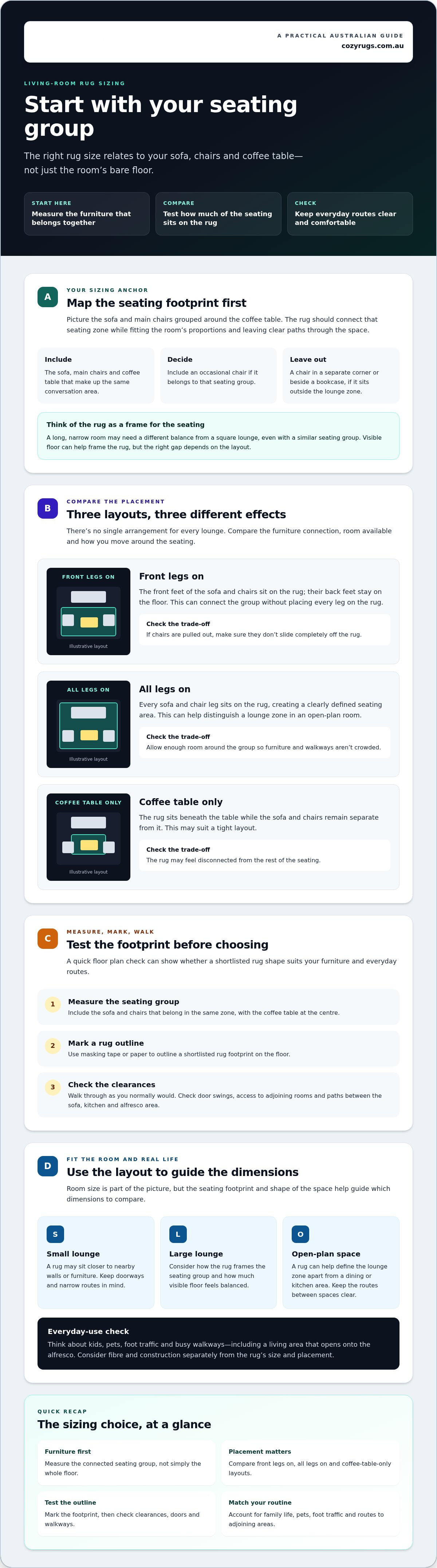
Measuring the whole floor can leave you with a rug that feels disconnected from the furniture. To work out what size rug for living room seating needs, begin with the seating footprint: the sofa and chairs grouped around the coffee table. The rug should relate to that group while allowing for the room’s proportions and clear walkways. If you’re also comparing rugs with fitted carpet, Wikipedia’s overview of Carpet offers background on floor-covering materials and construction. For placement, focus on how your seating works in the room.
Picture a sofa facing a pair of chairs, with a coffee table between them. The rug should help those pieces feel connected, not simply fill the largest patch of bare floor. A long, narrow room may call for a different balance from a square lounge, even if the seating group is similar. Visual harmony matters more than choosing a size based on room dimensions alone.
Which furniture should the living-room rug sit under?
Use the sofa and main chairs as your anchors. The coffee table helps define the centre of the seating zone, so consider how it sits in relation to the rug and surrounding seats. Include an occasional chair if it’s part of the same conversation area. Leave it out if it sits elsewhere, such as beside a bookcase or in a separate corner. This keeps your measurements focused on the furniture that belongs together.
How much floor should show around a living-room rug?
Visible floor can frame a rug and help the room feel balanced, but there’s no single border that suits every layout. In a compact lounge, the rug may sit closer to nearby walls or furniture. In a more open room, a wider floor frame may feel comfortable. Treat the gap as a visual guide, then check that the rug doesn’t crowd a doorway or interrupt a regular route through the room.
Walk through the space as you normally would. Check door swings, access to adjoining rooms and paths between the sofa, kitchen or alfresco area. If a doorway or narrow walkway constrains the layout, adjust the rug’s position before settling on dimensions. For sizing ideas across other rooms, see the Australian rug size guide.
Living-room rug placement: compare front legs and all legs on
Rug placement changes how connected your seating feels. The aim is to bring the sofa, chairs and coffee table together as one zone, rather than leave the rug looking like an isolated mat beneath the table. There’s no single layout that suits every lounge, so compare how each option fits your furniture and walkways before choosing what size rug for living room seating needs.
A front-legs-on layout places the front feet of the sofa and chairs on the rug while their back feet remain on the floor. This can visually link the seating without requiring the rug to extend beneath every piece.
| Placement | Visual effect | Practical trade-off |
|---|---|---|
| Front legs on | Connects the sofa and chairs while keeping some furniture outside the rug’s edge. | Can suit a room that can’t fit all the seating legs on the rug. Check that chairs stay partly on it when pulled out. |
| All legs on | Creates a more clearly defined seating area, which can help distinguish a lounge zone in an open-plan room. | Needs enough floor space around the group. Check clearances so furniture and walkways aren’t crowded. |
| Coffee table only | Places the rug beneath the table but leaves the sofa and chairs separate. | May work in a tight layout, but can make the rug feel disconnected from the rest of the seating. |
When does a front-legs-on rug layout work well?
Try this arrangement if your sofa and chairs form a clear group but the room can’t comfortably take a larger rug under every leg. For example, the front feet of a sofa and the chairs opposite it can sit on the rug, visually drawing the pieces together while their back feet remain on the floor. If chairs are often moved for conversation or everyday use, pull them out and check they don’t slide completely off the rug.
When should all the seating legs sit on the rug?
With a larger seating group and enough room around it, placing every sofa and chair leg on the rug can create a distinct living area. This can be useful in an open-plan lounge, where the rug helps separate the seating zone from a dining or kitchen area. Before settling on this layout, test the footprint and check that chairs can move freely and regular paths through the room remain clear.
For another perspective on furniture placement and rug proportions, see The Right Rug Size. Once you’ve chosen a layout, you can browse rug sizes and compare options with your seating group in mind.
Choose living-room rug dimensions for small, large and open-plan spaces
Room size gives you a useful boundary, but it doesn’t tell you which rug will suit the seating. To choose what size rug for living room layouts need, consider the room’s shape alongside the furniture group and the routes people use to move through it. A long sofa arrangement may need a different rug shape from a compact grouping of chairs, even in rooms with similar floor areas.
Once you’ve decided how the rug will sit with the furniture, compare the available dimensions against your measured footprint. Don’t assume the largest rug that fits the room is automatically the best choice. The goal is a balanced seating area, with enough space for the rug to connect the furniture without getting in the way.
How can you size a rug for a small living room?
Start with the sofa and main chairs, then measure the area they occupy together. Mark a possible rug boundary and look closely at the edges. Will it sit comfortably with the furniture legs, or leave a chair awkwardly outside the group? Check door swings and the walkway through the room, too. A rug can define the seating area without covering every clear patch of floor.
In a compact lounge, a rug that’s too small may sit only under the coffee table, leaving the sofa and chairs visually separate. Compare the next suitable available size as well as the smallest one on your shortlist. The room should still feel easy to move through, so don’t choose a larger footprint if it crowds the entry or narrows a regular path.
What changes in a large or open-plan living room?
In a spacious room, resist measuring the whole floor as though it were one lounge. Measure the sofa and chairs as a distinct group, keeping the dining area and main circulation routes outside that footprint. This helps the rug mark out the living zone instead of stretching without purpose across the open space.
For example, if the lounge opens onto a dining area or a route to the alfresco, position the rug to gather the seating while keeping that path clear. In a broad room, a small rug may make the furniture feel scattered. A larger option can bring the group together, provided it doesn’t run into neighbouring furniture or block everyday movement. Compare each available size in place, rather than relying on the room’s overall dimensions alone.
Room shape can help refine your shortlist, too. A rectangular rug may follow a longer seating arrangement, while a square or round option may suit a more compact grouping, depending on the furniture and clearances. Check the actual dimensions before deciding, and judge the outline in relation to the whole seating zone.
Measure and test your living-room rug size before choosing
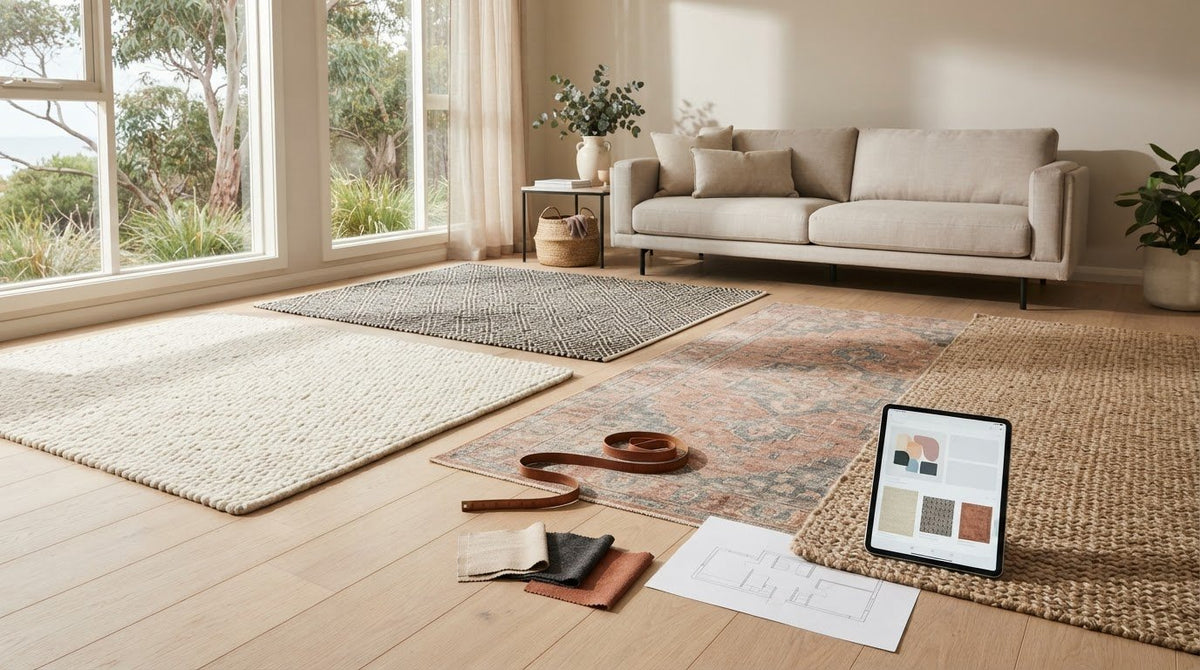
Measurements turn a rough idea into a practical shortlist. Rather than measuring only the room, focus on the seating group and the space it needs to work comfortably. This makes it easier to compare rug dimensions and see how each option might sit with your furniture.
Arrange the seating, measure the group, mark a rug outline and check the clearances before you choose.
- Set up the furniture. Put the sofa, main chairs and coffee table where you expect them to stay. Include occasional chairs only if they’re part of this seating group.
- Measure the footprint. Record the width and depth of the furniture grouping. Note where each sofa and chair leg sits, along with fixed obstacles such as walls, doorways and built-in features.
- Shortlist rug dimensions. Compare your measurements with the actual dimensions of rugs you’re considering. Check how each option relates to the furniture, rather than assuming a rug that fits the room will fit the seating.
- Mark the outline. Use removable masking tape or sheets of paper to represent a shortlisted rug’s boundary on the floor. Keep the corners and edges clear enough to see.
- Test the clearances. Walk around the marked area, open doors fully and pull chairs out as you normally would. Check that the outline doesn’t interrupt a walkway or make everyday movement awkward.
What should you check in the room?
Look at the proposed footprint from the doorway and from your usual seats. From the entrance, does the rug help the furniture read as one group? From the sofa, does the outline feel balanced around the coffee table and chairs? If you’re planning a front-legs-on arrangement, position the furniture so the front feet meet the marked edge. For an all-legs-on layout, make sure the entire base of each seating piece fits within it.
Don’t skip the chair test. A chair that looks neatly placed while tucked in may sit partly or fully off the rug when pulled towards the coffee table. Try moving it through its usual range, then walk the main route through the room again. Adjust the tape or paper and compare another shortlisted size if the layout feels cramped or disconnected.
Once you’ve measured and tested the footprint, you’ll have a clearer idea of what size rug for living room seating makes sense. If you’d like help comparing your measurements with rug options, book a free design consultation.
Match your living-room rug size to everyday use and get help choosing
A rug needs to suit more than the furniture plan. Think about how your lounge works from day to day: where children play, where pets settle, and which paths get the most foot traffic. These routines can help you decide whether your shortlisted rug footprint leaves enough room to move and keeps the seating area comfortable to use.
How do pets, children and daily routines affect rug choice?
Notice where people naturally sit, play and walk before settling on a rug position. Keep busy paths clear, and check that the rug won’t interfere with chairs that are regularly pulled out or moved. Furniture should sit securely in the arrangement you’ve planned, rather than wobble at an edge or block a route across the room.
Size and material are separate decisions. A rug can suit the seating footprint but still need care that doesn’t match your household’s routine. Compare fibre, construction and pile, then read the care guidance for the specific rug you’re considering. Cozy Rugs offers wool rugs and flatweave rugs among its categories, but check each rug’s details rather than assuming a material or construction will suit every home.
For homes with pets or young children, consider where spills, muddy feet or play are most likely, and whether the care instructions feel manageable. In a busy lounge, the way a rug handles regular use matters alongside how well it anchors the seating. The best choice is one that fits both your layout and your everyday habits.
When can a rug design consultation help?
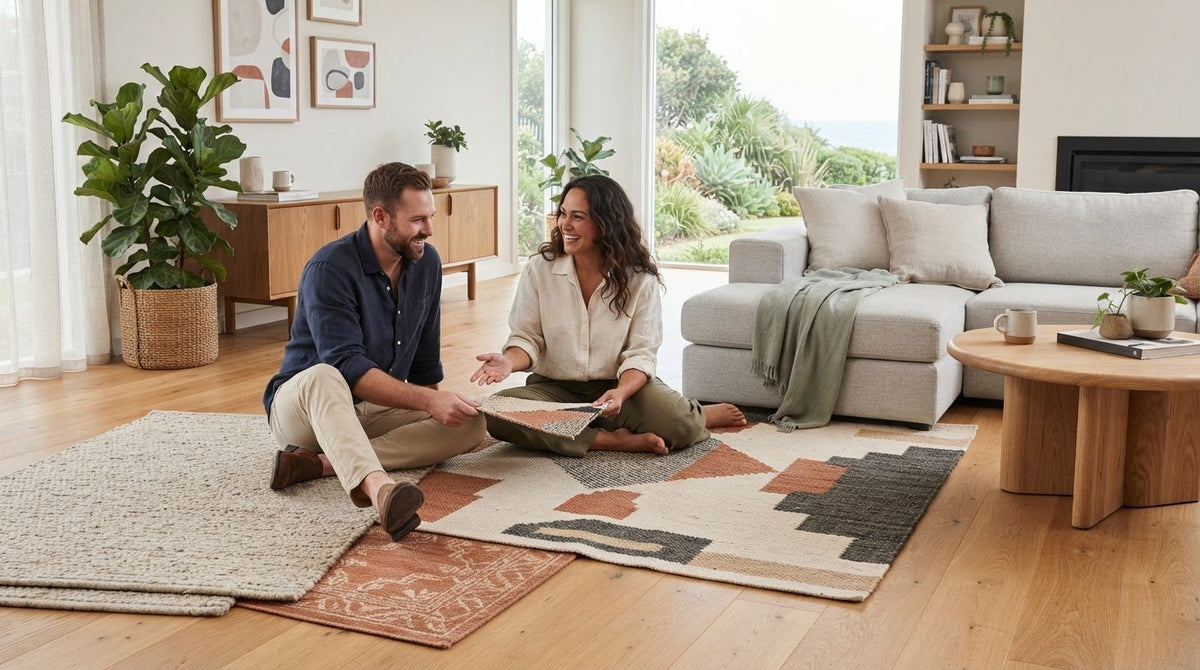
A consultation may be useful if your measurements are awkward, your lounge has several seating pieces, or you’re unsure how a rug will relate to adjoining areas. You can browse by size, colour and pattern first, then discuss your shortlisted options with Cozy Rugs’ free design consultation. Having your room measurements and preferred furniture layout ready can make the conversation more focused.
If you’re still weighing up online rug details beyond sizing, the guide to buying rugs online in Australia covers broader shopping questions. Together, your measurements, household needs and care preferences can help you decide what size rug for living room use makes sense, without treating size as the only consideration.
Choose a rug that feels right in your lounge
The best answer to “what size rug for living room” starts with the seating group, not the whole floor. Choose a placement that brings your sofa and chairs together, whether that means the front legs or all legs sit on the rug. Then consider the room’s shape, proportions and clear walkways to find a size that feels balanced.
Before choosing, measure the furniture grouping and mark a shortlisted rug outline on the floor. Check how it looks from the doorway, how chairs move, and whether the layout suits your household’s everyday routines. A little testing can help you feel more confident about both the dimensions and the placement.
Ready to compare options? Explore living-room rugs and request a free design consultation. Browse by size, colour and pattern, and compare rugs shipped across Australia. With your measurements in hand, you’re well placed to find a rug that makes your lounge feel more connected and comfortable.
Frequently Asked Questions
What size rug should go under a living-room sofa?
Choose a rug size based on how the sofa relates to the rest of the seating, not the sofa alone. For a connected look, you might place the sofa’s front legs on the rug, or choose a larger footprint that sits under all its legs and the other seating. Measure the seating group and compare rug dimensions so the rug feels balanced without crowding nearby walkways.
Should a living-room rug go under all the furniture?
No, all the furniture doesn’t have to sit on the rug. You can place the front legs of the sofa and chairs on it to visually link the group, or put every seating leg on the rug if there’s enough space. A coffee-table-only arrangement is another option, though it may feel less connected. Consider how chairs move and whether the layout leaves enough room to walk comfortably.
Can a rug be too small for a living room?
Yes, a rug can look too small if it sits only beneath the coffee table while the sofa and chairs appear separate from it. That doesn’t make a small rug wrong for every room, but check whether it anchors the seating or reads as an isolated mat. Compare its outline with the furniture grouping, and consider whether a different size would connect the pieces more clearly.
How do I measure my living room for a rug?
To decide what size rug for living room seating needs, measure the width and depth of the sofa and chairs grouped around the coffee table. Note where the furniture legs sit, plus doorways, fixed obstacles and regular walkways. Compare the footprint with the actual dimensions of rugs you’re considering. Then mark a shortlisted size on the floor with removable tape or paper and test the clearances.
What rug shape works best in a living room?
The best shape depends on your seating arrangement and room proportions. A rectangular rug may suit a sofa with chairs opposite it, while a round rug can work with a more compact grouping, provided its footprint fits the furniture and leaves clear paths. Avoid choosing by shape alone. Mark the proposed outline on the floor and see how it relates to the coffee table, seating and surrounding space.
How do I choose a living-room rug for pets and family use?
Think about where your family sits, plays and walks most often, then choose a layout that keeps busy paths clear and furniture stable. Consider the rug’s fibre, construction and pile separately from its size, and read the care guidance for the specific rug. Cozy Rugs offers wool rugs and flatweave rugs, among other categories. Check each rug’s details to see whether its care needs suit your household’s routine.

Leave a comment
This site is protected by hCaptcha and the hCaptcha Privacy Policy and Terms of Service apply.