


A rug can make a grey sofa feel warmer, pull mismatched furniture together or give a lovely room a little more personality. The best rug colour for living room spaces is rarely about picking the trendiest shade on its own. It is about reading the room - its light, flooring, furniture and the way your household actually lives in it.
For busy Aussie living rooms, the right colour also needs to earn its place. It should look good with afternoon sun streaming through the windows, soften the space underfoot and be forgiving when the dog claims the best spot or the kids bring in a biscuit or two. Here is how to choose a colour you will still love long after the first styling moment.
Best rug colour for living room: start with the biggest surfaces
Before falling for a particular rug, look at the colours that are not going anywhere soon. Your sofa, flooring, walls and curtains set the visual temperature of the room. A rug does not have to match them exactly, but it should make sense alongside them.
If your sofa is a strong colour, such as forest green, navy or rust, a neutral rug gives the room breathing space. Think oatmeal, natural ivory, soft grey or sandy beige. Choose a rug with a subtle thread or pattern that repeats the sofa colour, rather than a block colour that competes with it.
With a neutral sofa, you have more freedom. A patterned blue rug can cool down a warm-toned room, while terracotta, olive or muted gold can bring depth to a simple beige or cream setting. The key is to choose one or two colours already present in cushions, art or accessories, then let the rug connect them.
A quick styling rule helps here: your rug can be lighter or darker than the sofa, but try not to choose an almost-identical shade. Too close can make the room look flat, particularly when both surfaces are heavily textured.
Let the natural light guide your choice
Living rooms change dramatically through the day. A colour that looks calm in a bright showroom can feel quite different in a south-facing room or a darker apartment. Check your space in morning light, afternoon light and at night with the lamps on before making a final call.
Light-filled rooms can carry deeper shades beautifully. Charcoal, denim, olive, rich terracotta and chocolate brown add grounding weight without making the room feel gloomy. They are especially effective in open-plan homes where a rug needs to define the lounge zone against a large expanse of pale flooring.
For darker living rooms, lighter rugs usually work hardest. Cream, stone, pale taupe and soft greige reflect available light and create a more open feel. This does not mean pure white is the only answer. In real homes, a flecked ivory, low-contrast pattern or natural wool blend offers the same lift with far more day-to-day practicality.
Be mindful of direct sun, too. Very dark rugs can show fading over time, while very pale rugs may make sunlit glare more obvious. A mid-tone rug with a woven pattern is often the sensible middle ground.
Match your rug colour to the floor undertone
Flooring can be the quiet detail that makes a rug colour look perfect or slightly off. Timber, tiles, polished concrete and carpet all carry undertones, even when they look neutral at first glance.
Warm timber floors with honey, red or golden notes suit rugs in earthy families: beige, mushroom, rust, olive, warm charcoal and cream. Cooler grey oak, concrete or blue-grey tiles tend to sit more comfortably with stone, slate, soft blue, cool grey and faded green. You can mix warm and cool tones, but do it deliberately. A cool blue-grey rug on orange-toned timber can look striking when it repeats cool accents elsewhere in the room, such as artwork or cushions.
If your floor is busy, heavily grained or patterned, choose a quieter rug colour. A textured flatweave in natural, oatmeal or charcoal can add softness without introducing another visual argument. On plain flooring, a bolder rug has more room to shine.
Popular living room rug colours and when they work
Beige, cream and natural tones
Natural shades remain a favourite because they are relaxed, versatile and easy to live with. They work across coastal, contemporary, Scandi and organic interiors, and pair beautifully with timber, linen and leather. Choose a textured weave, heathered finish or gentle pattern if you have pets, young children or a high-traffic lounge. A plain, pale rug can be gorgeous, but it will ask more of you when life gets messy.
Grey and charcoal
Grey is a reliable choice for modern homes, especially alongside concrete-look floors, black details and cooler wall colours. Mid-grey handles everyday marks well, while charcoal gives a large living area a more anchored, tailored feel. The trade-off is that cool grey can feel a little stark in rooms with limited warmth. Add timber furniture, camel leather or warm lighting to keep it inviting.
Blue and green
Blue rugs bring calm without being boring. A muted denim, slate blue or navy works particularly well with white, grey and tan sofas. Green feels equally settled in living spaces, from soft sage in a light-filled room to deep olive in a layered, moody interior. Both colours are more forgiving than cream and tend to stay timeless when the shade is softened rather than overly bright.
Terracotta, rust and warm earth tones
Terracotta and rust offer instant warmth, particularly in homes with timber, tan leather and sun-washed walls. They can make a newer build feel more collected and comfortable. Keep the tone muted for longevity - a faded clay or cinnamon rug feels easier to style than an intense orange.
Black and very dark rugs
A dark rug can look sophisticated and practical, but it is not automatically low-maintenance. Black can show pale pet hair, lint and dust surprisingly quickly. Consider a charcoal, dark brown or navy rug with flecks of lighter yarn instead. You will get the same depth with a more forgiving finish.
Use pattern to make colour more practical
When you love a light colour but need a rug built for real life, pattern is your friend. A tonal design in cream and beige, a vintage-inspired faded motif or a natural flatweave with mixed fibres can disguise everyday variation far better than a single block of colour.
Patterns also help when your room already has several colours. Rather than choosing between the blue armchair, rust cushions and olive throw, select a rug that includes softened versions of two of those tones. It will make the mix feel considered rather than accidental.
Scale matters. In a compact lounge, a small, high-contrast pattern can feel busy, so opt for a larger, more open design. In a generous living room, a detailed pattern can add character and prevent a large rug from disappearing beneath the furniture.
Choose for your lifestyle, not just the photo
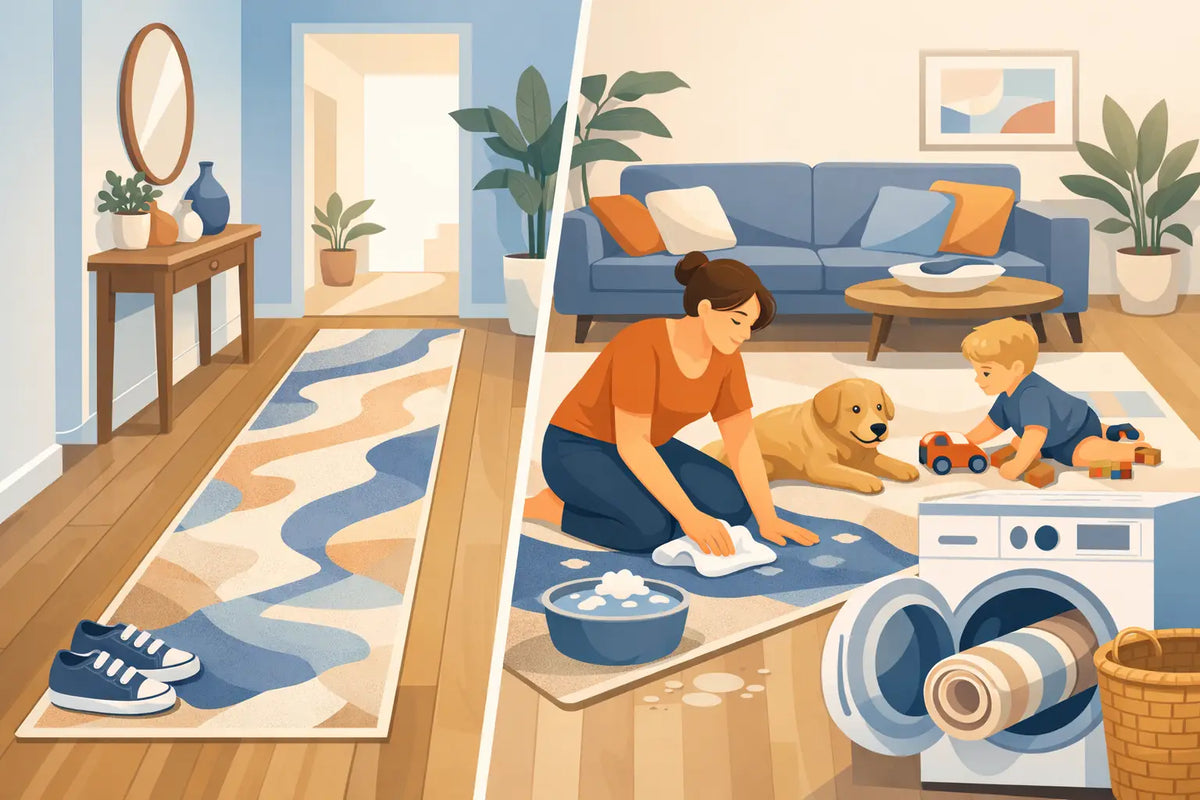
A beautifully styled living room is nice. A living room that still feels lovely after a weekend of visitors is better. If your household includes pets, children or frequent entertaining, mid-tone rugs and multi-coloured patterns are often the easiest choice. Washable rugs can be a smart option for family zones, while durable wool and low-pile flatweaves suit regular foot traffic.
Consider what shows up in your home. Pale dog hair is less noticeable on cream, taupe and light grey; dark fur sits better on charcoal, navy and deeper patterned rugs. If shoes, snacks and backyard dust are part of the routine, avoid relying on a plain ivory rug unless you are happy with regular care.
It is also worth thinking beyond the sofa. A rug should work with the timber of your coffee table, the metal finishes on lamps and the view into adjoining dining or kitchen areas. This is especially relevant in open-plan Aussie homes, where colour can help zones feel connected without making everything match.
Test the colour before you commit
Screens can shift colour, and room lighting can shift it again. If you are torn between two shades, start by placing cushions, throws or paint swatches near the floor where the rug will sit. Notice whether the colour makes the sofa look fresher, the floor look warmer and the room feel more settled.
Then think about size. Even the right colour can feel wrong if the rug is too small and floats in the middle of the room. Aim to have at least the front legs of your seating on the rug where possible. The larger surface will make the colour feel intentional and give the whole space a more generous, finished look.
At Cosy Rugs, we believe the best choice is one that works beautifully on an ordinary Tuesday as well as when guests come around. Choose the rug colour that supports the feeling you want in the room, then give it enough texture and practicality to keep up with the life happening on top of it.
A good rug does not need to be precious to look considered. When the colour complements your home, suits the light and feels easy to maintain, your living room will naturally become the place everyone wants to settle into.

Leave a comment
This site is protected by hCaptcha and the hCaptcha Privacy Policy and Terms of Service apply.