

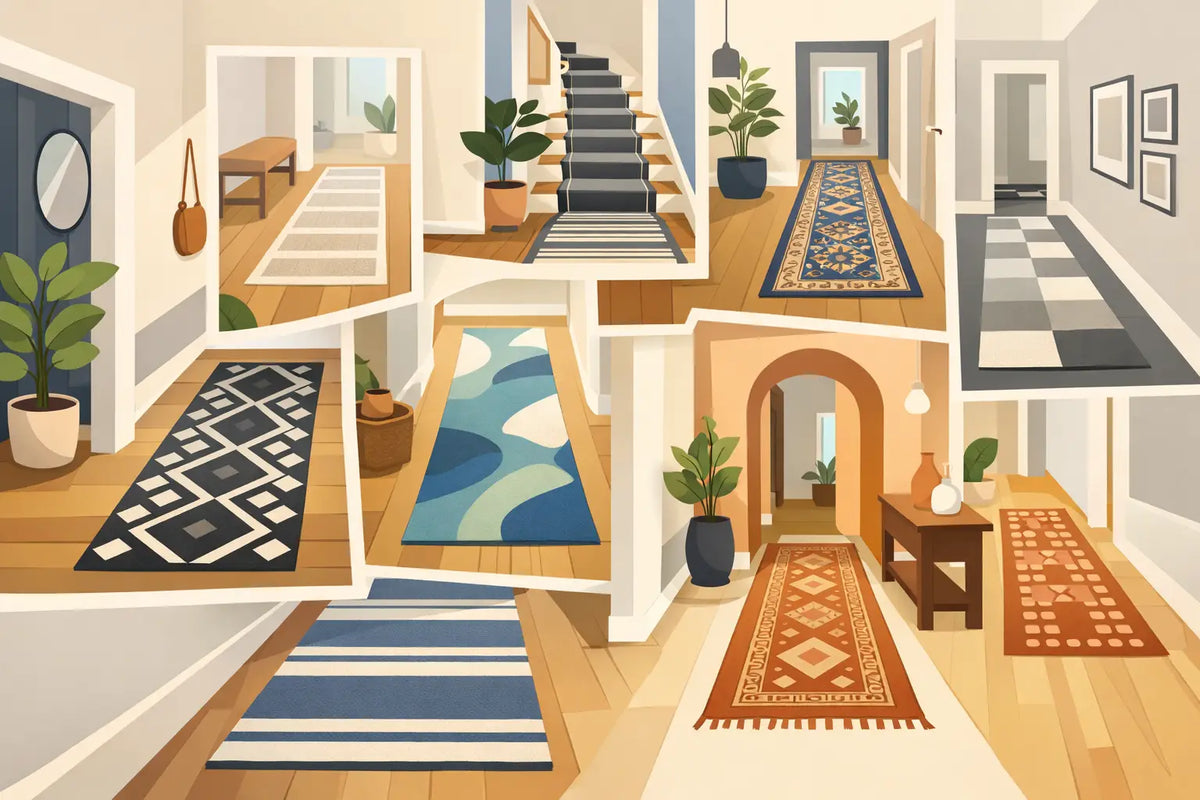
A hallway does a lot of quiet work. It welcomes guests, catches sandy shoes, copes with school bags and connects every room in the house. The right hallway runner rug ideas can turn that often-overlooked strip of flooring into a warm, practical and properly finished part of your home.
A runner also gives you a chance to be a little bolder than you might in a larger room. Whether your style leans coastal, contemporary, classic or relaxed and natural, a well-chosen rug brings colour, texture and comfort to the space you walk through most.
Start with the right hallway runner size
Before falling for a pattern, measure your hallway. A runner should sit comfortably within the space rather than stretching from wall to wall. As a useful guide, aim to leave roughly 10 to 15 centimetres of visible flooring along each side. This frame of floor makes the hallway feel wider and keeps the rug looking intentional.
Length matters just as much. In a long corridor, choose a runner that covers the main walking route while leaving a little breathing room at both ends. A short rug in a very long hall can look lost, while one that runs into a doorway can become a daily annoyance. If you have a particularly lengthy passage, two matching runners with a neat gap between them often look better than one oversized piece.
For narrow halls, avoid thick, bulky rugs that make door clearance tricky. Flatweave and low-pile designs are usually the easy choice, especially near bedrooms, bathrooms or linen cupboards where doors swing over the floor.
Hallway runner rug ideas to suit your style
The hallway sets the mood before anyone reaches the living room. Think of your runner as a compact version of your home's wider style, not an afterthought.
1. Use a patterned runner to hide daily marks
A softly patterned runner is one of the most practical choices for busy family homes. Traditional-inspired motifs, faded medallions and detailed geometric designs are excellent at disguising the odd bit of dirt, pet hair and everyday wear between cleans. They bring character too, particularly in plain white or neutral hallways.
Look for colours with depth, such as muted terracotta, denim blue, olive, charcoal or warm taupe. A cream-based rug can still work beautifully, but a layered pattern will be more forgiving than a solid pale finish near the front door.
2. Bring warmth to a minimalist hall with natural texture
If your hallway has clean lines, pale walls and timber flooring, a jute or natural-fibre-look runner adds warmth without making the space feel busy. The woven texture creates interest underfoot and suits Australian interiors that favour easy, earthy materials.
Natural fibres do have trade-offs. Jute is wonderfully textural but is better suited to dry, lower-spill zones than a hallway straight off a wet entry. In high-traffic areas, a durable flatweave in a natural-look design may offer a similar relaxed feel with simpler maintenance.
3. Choose stripes to guide the eye
Stripes are a smart visual tool in a narrow or short hallway. A lengthways stripe draws the eye down the hall, giving the space a longer, more open appearance. Fine stripes feel tailored and classic, while wider bands can give a contemporary home a more graphic edge.
For a calmer result, choose tonal stripes in similar shades, such as sand and ivory, grey and charcoal, or soft blue and cream. High-contrast black and white stripes make more of a statement, so they work best when the rest of the hallway is relatively quiet.
4. Make an entrance with colour
A hallway is a low-commitment place to introduce colour. If your living areas are mostly neutral, a runner in rust, sage, cobalt, soft pink or a rich berry tone can create a memorable first impression without taking over the entire home.
Repeat one shade from the rug in nearby artwork, a vase, a front door colour or cushions visible from the hall. You do not need an exact match. A few connected tones are enough to make the styling feel considered.
5. Keep it light in a dark passage
Many Australian homes have internal hallways with limited natural light. A runner with a pale base, gentle pattern and some texture can lift these shadowy areas. Ivory, oatmeal, misty blue and light grey are all useful starting points.
The practical balance is important here. Rather than choosing bright white, go for a flecked weave or a design with soft variation. It gives you that lightening effect without making every scuff feel obvious.
6. Layer vintage character into a newer home
A vintage-look runner can instantly soften a new build or recently renovated home. Washed red, faded navy, dusty rose and antique gold designs create a collected feel against crisp walls, stone floors and modern joinery.
These rugs are especially effective in halls that feel a little stark. Their worn-in appearance brings warmth and personality, while their detailed pattern makes them naturally suited to regular foot traffic.
7. Go tonal for a quiet, elevated finish
Not every hallway needs a feature rug. If your home already has strong art, patterned wallpaper or statement lighting, a tonal runner can anchor the space without competing. Choose a rug one or two shades deeper than the flooring, with a subtle ribbed, looped or woven texture.
This approach works beautifully in apartments and smaller homes where visual calm helps rooms feel less crowded. It is also a safe choice if the hallway opens directly into several different spaces with their own distinct styling.
8. Try a washable runner where life gets messy
For households with young kids, pets or an entry that sees plenty of muddy shoes, washable hallway runners are built for real life. They make sense near laundry doors, garage entries and the busiest routes through the house, where a more delicate rug might become stressful to own.
A washable design does not have to look basic. Choose a low-profile patterned option in a colourway that works with your flooring, then follow the care instructions carefully. Regular vacuuming and prompt attention to spills will help it stay fresh for longer.
Choose a material that matches the traffic
The best material depends on where your hall sits in the home and how hard it works. Wool is naturally resilient, soft underfoot and excellent for adding a premium finish. It is a strong option for internal hallways, though it may need more considered care around heavy mud or frequent spills.
Synthetic fibres are often a practical pick for high-traffic zones. They are generally durable, easy to clean and available in an enormous range of styles, from sleek modern designs to faded traditional looks. Flatweave runners are another favourite because they sit neatly under doors and are easy to maintain.
If the runner is close to an exterior door, consider whether it will need to manage moisture. A dedicated doormat at the threshold can take the worst of wet shoes, while your runner adds comfort and style further inside. This simple pairing helps protect both your floors and the rug.
Do not skip the runner underlay
A good rug underlay is a small addition with a big payoff. It helps prevent slipping, reduces creeping on smooth timber or tile floors and gives the runner a more cushioned feel. It can also reduce wear by stopping the rug from shifting under constant footsteps.
Check that the underlay is suitable for your floor type, particularly if you have polished timber, vinyl or delicate surfaces. In rental homes, it is worth choosing an option designed to stay put without leaving marks behind.
Styling details that make a hallway feel finished
Keep furniture light in a narrow passage. A slim console, wall hooks, a mirror or one well-placed piece of art can work alongside a runner, but the walkway should remain clear. If your hallway is very narrow, let the rug do the decorating and keep walls uncluttered.
At the front entry, choose a runner that relates to the adjoining room rather than matching it perfectly. For example, a blue-toned hallway runner can lead naturally into a living room with sand-coloured rugs and blue cushions. That sense of connection makes the whole house feel more cohesive.
Finally, trust the practical test: walk through the space. Doors should open easily, the runner should lie flat, and the pattern should feel good from both directions. The best choice is the one that handles everyday Aussie living while making the trip from room to room feel a little more special.


Leave a comment
This site is protected by hCaptcha and the hCaptcha Privacy Policy and Terms of Service apply.