


Imagine it's a rainy Saturday morning and the kids have just bolted inside with muddy boots, while the dog does laps across the lounge room. If your first instinct is to cringe at the thought of your floor coverings, you aren't alone. Most of us have felt that pang of regret after a spill or watched a beautiful rug start to pill and shed after only a few months of use.
We believe your home should be a place of comfort, not a museum where you're constantly worried about the floor. Finding the right rugs for high traffic areas is about more than just picking a pretty pattern; it's about "mess-matching" the construction to your family's unique lifestyle. You can have a stylish centrepiece that survives kids, pets, and heavy foot traffic without sacrificing that soft, underfoot feel.
In this guide, we'll help you discover how to choose durable materials like wool and flatweave fibres that maintain their "new" look for years. We'll also look at practical designs from the Darren Palmer collection and our natural ranges that make cleaning accidental spills a breeze while keeping your home looking effortlessly put together.
Key Takeaways
- Identify your home's "red zones" and understand how friction and soil impact different fibres over time.
- Compare the durability of natural wool against earthy jute to find the best rugs for high traffic areas that suit your specific aesthetic.
- Learn why flatweave and low-pile constructions are the secret to preventing shedding and keeping your floors looking fresh for years.
- Use our practical two-step guide to measure your thoroughfares and choose a rug that matches your household's unique mess profile.
- Find out how a free design consultation can take the guesswork out of choosing a rug that balances family-proof durability with beautiful style.
What Defines a High-Traffic Area in Your Home?
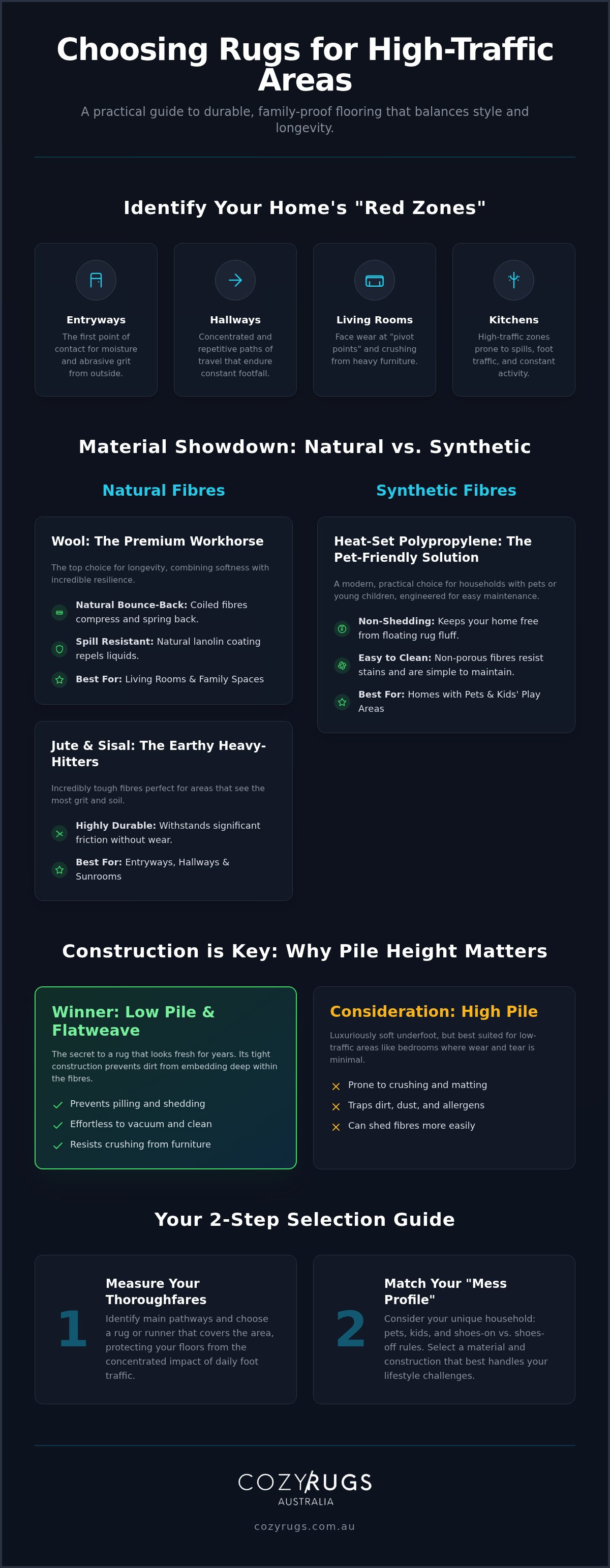
Think of your home's layout like a map of busy highways. Some areas, like the guest bedroom, rarely see a footprint. Others, which we call "red zones," are under constant siege. Hallways, entryways, kitchens, and living rooms are the primary spaces where rugs for high traffic areas are essential rather than optional. These spots endure the most action, from the morning rush to the evening wind-down.
Standard rugs often fail in these zones because they aren't built for the physical stress of friction and weight. Every time someone walks across a rug, tiny particles of grit and soil act like sandpaper, grinding against the fibres. Over time, this abrasive action breaks down the structure. If you've ever noticed a rug looking "bald" or fuzzy in the centre, you're seeing the results of this constant wear. Different Carpet and rug materials respond to this stress in various ways, with some fibres shredding while others stand their ground.
Your household habits play a massive role too. A shoe-off household might get away with softer textures, but if your family wears boots or sneakers inside, the demand on your rug triples. This leads to the "crush factor," where the weight of footfall flattens the pile until it loses its bounce. Once a rug is crushed, it's very difficult to revive, making it look aged and tired long before its time.
The Hallway and Entryway Challenge
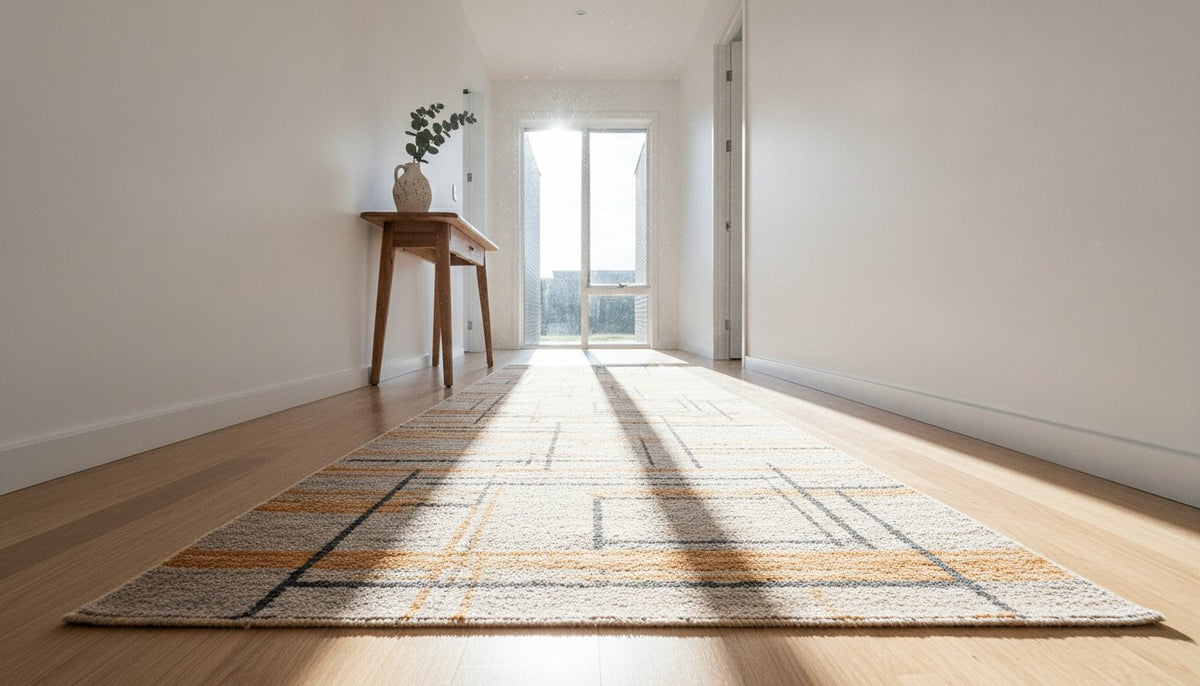
Entryways face a double threat. They're the first point of contact for moisture from rainy days and abrasive grit from the garden. Without a proper barrier, this debris travels straight onto your expensive timber floors. High traffic is any zone where the path of travel is concentrated and repetitive. This is why many homeowners choose hallway runners australia to act as a protective shield. These runners take the brunt of the impact, trapping dirt before it reaches the rest of the house.
Living Rooms and Open-Plan Spaces
In the living room, the challenge shifts to "pivot points." These are the specific spots, like the area directly in front of your favourite lounge chair, where you stand up, sit down, and turn. These areas show wear much faster than the edges of the rug. You also have to consider furniture weight; heavy sofas can leave deep indentations in high-pile rugs that never quite disappear. Choosing rugs for high traffic areas in these spaces means finding a balance. You want something soft enough for the kids to play on, but dense enough to handle the weight of the furniture and the constant shuffle of feet.
The Best Materials for Durability: Natural vs Synthetic
Choosing the right material is the foundation of a long-lasting home. While many big-box retailers push plastic-based options as the only solution for mess, we've found that the best rugs for high traffic areas often come from nature. Wool, jute, and sisal offer a level of organic resilience that is difficult to replicate in a factory. The secret lies in how these fibres handle the daily grind of feet, paws, and furniture.
For those who love an earthy, coastal aesthetic, jute and sisal are the heavy hitters of the rug world. These fibres are incredibly tough and can handle a significant amount of friction without showing wear. While they don't offer the plushness of a deep pile, they're perfect for entryways where you need a material that can stand up to grit and garden soil. The "feel factor" here is firm and textured, providing a grounded sensation that suits the relaxed Australian lifestyle.
Why Wool Rugs Win for Longevity
Wool is the undisputed "premium workhorse" of floor coverings. The science behind it is fascinating. Each fibre has a natural three-dimensional crimp, acting like a tiny coiled spring. When you walk across the room, the fibres compress and then bounce back to their original shape. This is why wool rugs australia stay looking fresh for years while cheaper alternatives go flat. Beyond the bounce, wool contains lanolin. This natural waxy coating acts as a protective barrier, stopping liquid spills from soaking into the core of the fibre immediately. It's also a sustainable, eco-friendly choice that brings a sense of warmth and domestic harmony to any lounge room.
Synthetic Fibres for Pet-Friendly Homes
Sometimes, the specific "mess profile" of a household makes synthetic options the most practical choice. Heat-set polypropylene is a modern solution that pet owners swear by. Unlike some natural fibres, high-quality synthetics are non-shedding, which means you won't be chasing rug fluff around the house with a vacuum every day. These materials are often the best pick for mudrooms or laundry zones because they're highly resistant to moisture and staining. While they might not have the multi-decade heritage of a wool piece, the cost-to-lifespan ratio is fantastic for families who need a stylish rug that can handle a bit of chaos. If you're looking for a balance of stamina and style, you might want to explore our collection of modern and natural rugs to find your perfect match.
Flatweave vs. Low Pile: Which Construction Wins?
If the material is the heart of your rug, the construction is its backbone. You might find the perfect wool fibre, but if it's woven into a deep, shaggy pile, it won't survive your hallway for long. High-pile or shag rugs are the natural enemy of busy thoroughfares. They look stunning in a low-use bedroom, but under heavy footfall, those long fibres quickly become matted, tangled, and impossible to revive. For the best rugs for high traffic areas, we recommend sticking to flatweave or low-pile options that are built to stay upright.
Beyond the pile itself, pay close attention to the edge binding. A reinforced, tightly stitched border is vital for any rug in a high-traffic zone. It prevents the rug from fraying over time and, more importantly, stops the corners from curling up. Curling edges aren't just an eyesore; they're a tripping hazard for kids and elderly family members. A well-finished rug stays flat and secure, no matter how many times it's stepped on.
The Benefits of Flatweave Rugs
Flatweave rugs are created by weaving the warp and weft threads together without any upright tufts, resulting in a "zero-pile" surface. This construction is the ultimate utilitarian choice for an Australian home. Because they're so thin, they provide excellent door clearance, gliding under front entryways or laundry doors without catching. Many of our flatweaves are also reversible. You can flip them every few months to even out the wear and extend their life. Best of all, vacuums perform exceptionally well on these surfaces because there are no deep pockets for grit and pet hair to hide in.
Low Pile Rugs for Comfort
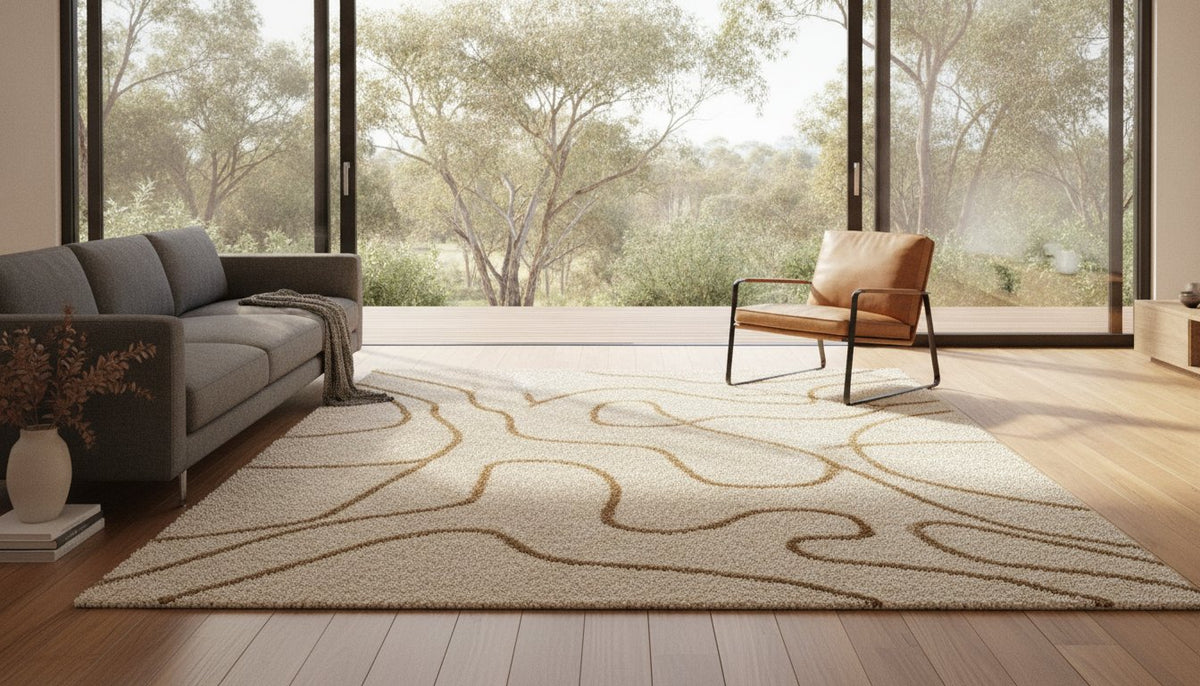
Sometimes you want a bit of a "cushioned" feel underfoot, especially in the lounge room where the family spends most of their time. Low pile rugs, typically between 5mm and 8mm, find the perfect sweet spot between softness and stamina. This height provides enough comfort for kids to sit on the floor while remaining dense enough to resist the "crush factor" we mentioned earlier. A low-pile rug also hides vacuum marks and footprints much better than plush, velvety styles. In a busy Australian living room, an 8mm pile height is the gold standard for balancing a cosy atmosphere with long-term durability.
Practical Selection Guide: Matching the Rug to the Room
You've narrowed down the materials and construction, but the final choice comes down to how a rug interacts with your specific floor plan. Selecting rugs for high traffic areas requires a bit of detective work. Start by measuring the "thoroughfare" rather than just the room. People rarely walk across the entire surface of a rug; they follow a specific path from the door to the sofa or the kitchen. If your rug is too small and the path hits the very edge, the constant "stepping on and off" will cause the borders to fray and curl much faster.
Next, define your household's "mess profile." A home with a golden retriever has different needs than one with toddlers who love spaghetti. If your main issue is dry dirt and pet hair, a low-pile wool rug is your best friend. If you're dealing with wet mud or frequent liquid spills, a synthetic flatweave might be more practical. Finally, never skip the rug pad. It acts as a shock absorber, reducing the friction between the rug backing and your hard floors. This simple addition can effectively double the lifespan of your investment by preventing the fibres from being crushed against a solid surface.
Pattern and Colour Strategies
The right aesthetic can do a lot of the heavy lifting when it comes to maintenance. Busy patterns, such as geometric shapes or traditional Turkish designs, are masters of disguise. They hide small stains and lint far better than solid blocks of colour. We always recommend the "Mid-Tone Rule" for busy Australian homes. Very light rugs show every bit of dark mud, while very dark rugs act like a spotlight for light-coloured dust and pet hair. Mid-tones like sage, terracotta, or warm greys are the sweet spot for camouflaging daily life. In narrow spaces, using long hallway runner australia designs can also help draw the eye along the length of the space, making any minor floor imperfections less noticeable.
Managing Dust and Sand in Australia
Living in Australia often means dealing with fine sand and dust, even if you don't live right on the coast. This grit is the silent killer of floor coverings. It settles deep into the base of the rug and acts like sandpaper, cutting through fibres every time you step on them. Certain natural rugs australia, particularly jute, are excellent at trapping this dry soil within their weave until you can vacuum it away. To keep your rugs in top shape, stick to a regular "shake out" and rotate schedule. Rotating your rug 180 degrees every six months ensures that wear is distributed evenly across the surface. If you need help finding a piece that fits your specific room layout, explore our range of durable rugs to find a style that works for your home.
Why Cozy Rugs is Australia's Choice for Durable Decor
At Cozy Rugs, we've spent years curating a collection that understands the unique pressures of an Australian household. We don't just sell floor coverings; we offer pieces that become part of your family's daily rhythm. Our commitment to quality means every item is hand-picked to ensure it can handle the grit and activity we've explored in this guide. Whether you're looking for the refined durability of the Darren Palmer Collection or the practical simplicity of our affordable flatweave rugs, we've got a solution for every budget and every "red zone" in your home.
We know that choosing the right decor can feel overwhelming. That's why we position ourselves as a helpful companion rather than a distant authority. We're here to help you find rugs for high traffic areas that look as good in five years as they do the day they arrive. With national Australian shipping and a focus on domestic harmony, we've become the go-to choice for homeowners who refuse to choose between style and stamina.
Expert Guidance You Can Trust
Our team doesn't just look at aesthetics. We evaluate each piece for structural integrity and fibre resilience before it reaches our store. We prefer a neighborly, friendly expert approach over high-pressure sales tactics. We want you to feel confident and reassured during your home improvement journey. Many Australian families with busy homes have shared how our free design consultations helped them avoid common layout mistakes. By talking through your specific needs, we can help you choose a material that genuinely survives your household's unique chaos.
Shopping Online with Confidence
We've designed our website to be as intuitive as possible. You can easily navigate our range by material, size, and room type. We believe in total transparency regarding material performance and care instructions. We don't just want to make a sale; we want you to be satisfied with your purchase for the long haul. Our goal is to demystify the decoration process, providing you with all the technical advice you need on sizing and placement. If you're ready to transform your busy spaces into zones of comfort and style, we invite you to Browse our High-Traffic Rug Collection today.
Ready to Transform Your High-Traffic Zones?
Choosing the right floor covering doesn't have to be a trade-off between beauty and durability. By focusing on resilient materials like wool and jute, and opting for low-pile or flatweave constructions, you can create a space that handles the chaos of family life with ease. Don't forget that a quality rug pad is your best insurance policy. It provides the extra support needed to keep your investment looking fresh for years.
We're here to help you find the perfect rugs for high traffic areas without the stress. Our team offers free design consultations to ensure you pick the right material for your specific "mess profile." With our specialised wool and natural fibre collections, you can enjoy quality style that actually lasts. We also offer national shipping across Australia so you can shop from the comfort of your home.
Shop Australia's Favourite High-Traffic Rugs at Cozy Rugs and start building a home that feels as good as it looks. You've got this!
Frequently Asked Questions
What is the most durable rug material for high traffic areas?
Wool is widely considered the most durable natural material for high traffic areas because its fibres possess a natural crimp that bounces back after being stepped on. For a synthetic alternative, heat-set polypropylene is exceptionally tough and resistant to moisture. Both materials handle heavy footfall without fraying or losing their shape quickly. When choosing, consider your household's specific needs; wool offers long-term heritage quality, while synthetics are fantastic for messy mudrooms or laundry zones.
Are wool rugs good for high traffic zones like hallways?
Yes, wool rugs are an excellent choice for hallways because they contain lanolin, a natural wax that repels spills and soil. This makes them much easier to maintain in busy thoroughfares than delicate silk or viscose alternatives. For the best results in a hallway, look for a low-pile or flatweave construction. These styles resist the crushing effect of repetitive foot traffic, ensuring your runner stays looking fresh and plush for many years to come.
How do I stop my high-traffic rug from sliding?
The most effective way to stop a rug from sliding is to use a high-quality, non-slip rug pad. Beyond safety, a pad acts as a vital shock absorber, protecting the rug's backing from being ground against the hard floor. This simple addition can significantly extend the lifespan of your floor covering. Make sure the pad is slightly smaller than the rug itself to ensure it remains hidden while providing a secure, stable grip on timber or tiles.
Can I use a jute rug in a busy entryway?
Jute is a fantastic option for busy entryways because its thick, woody fibres are naturally adept at trapping dry dirt and sand before they reach the rest of your home. It brings a relaxed, coastal vibe to Australian interiors while standing up well to heavy boots. However, keep in mind that jute is highly absorbent. It's best suited for covered entryways where it won't be exposed to direct rain or constant wet umbrellas, as moisture can cause staining.
What rug colour is best for hiding dirt and pet hair?
Mid-tone colours like sage, warm grey, or terracotta are the best for camouflaging daily wear and pet hair. Very light rugs show dark mud instantly, while very dark rugs highlight every speck of lint or light-coloured fur. Choosing rugs for high traffic areas with a busy geometric or traditional pattern further helps to hide small spills and imperfections. This strategy allows your home to look tidy between cleans, even in the busiest parts of the lounge.
How often should I clean a rug in a high-traffic area?
In a high-traffic zone, you should vacuum at least twice a week to remove the abrasive grit that cuts through fibres. For homes with pets or young children, a quick daily pass in the "red zones" is even better. We recommend a professional deep clean every 12 to 18 months to remove deeply embedded soil. Regular rotation of your rug every six months also ensures that wear and fading from sunlight are distributed evenly across the surface.
Are flatweave rugs more durable than rugs with a pile?
Flatweave rugs are generally more durable in high-traffic zones because they have no upright fibres to crush or mat down. Their zero-pile construction makes them incredibly easy to vacuum and allows for better door clearance in entryways. While low-pile rugs offer more comfort underfoot, flatweaves are the ultimate utilitarian choice. Many are even reversible, allowing you to flip the rug every few months to even out the wear and double its useful life.

Leave a comment
This site is protected by hCaptcha and the hCaptcha Privacy Policy and Terms of Service apply.