


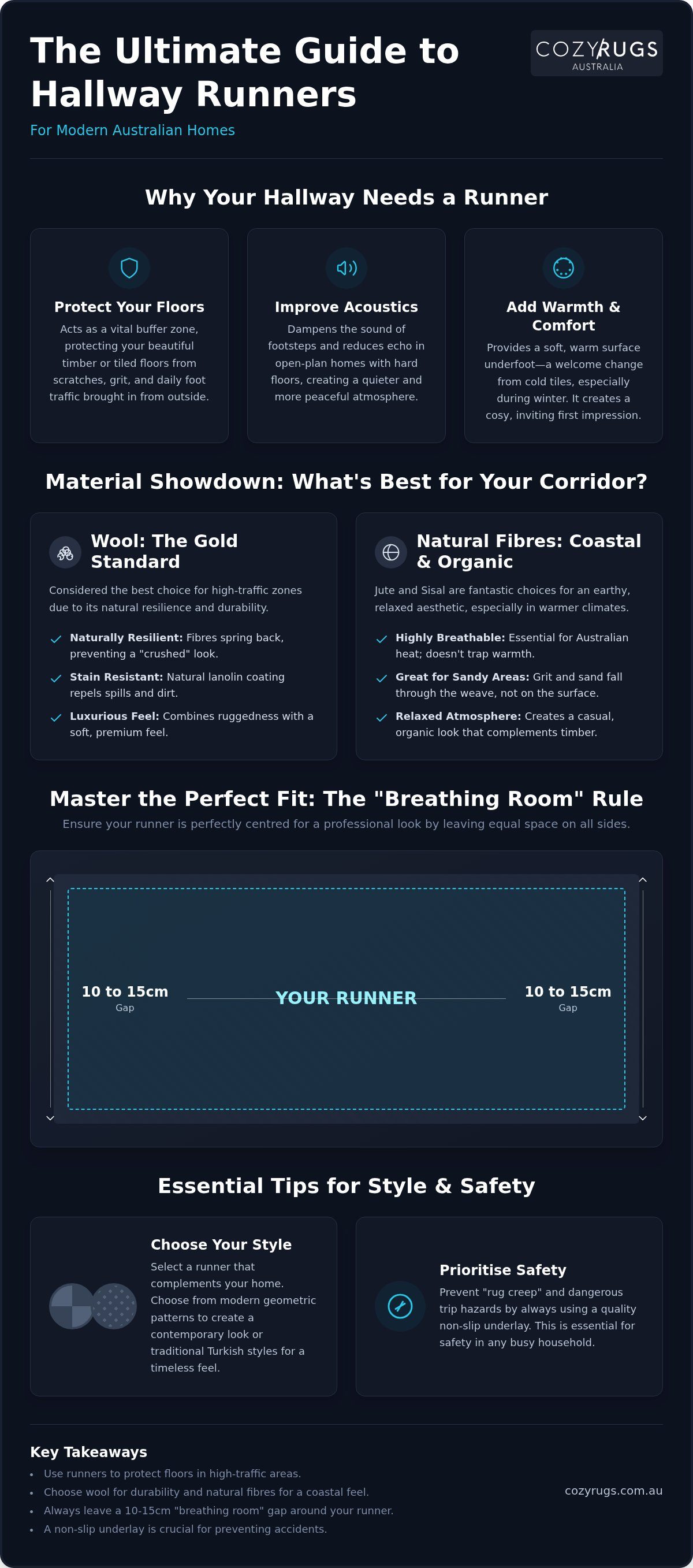
Have you ever considered that your hallway is actually the hardest-working "room" in your home? While we focus on styling living areas, the corridor bears the brunt of every muddy paw print and heavy footstep. When searching for hallway runners Australia homeowners often struggle to find that balance between rugged durability and high-end style. You likely chose your timber or tiled floors for their beauty, but watching them accumulate scratches or hearing the constant echo of shoes can be stressful. It's normal to worry about runners that slip, bunch up, or simply don't survive the Aussie climate.
We believe your home should be a sanctuary of comfort and quiet. This guide will show you exactly how to choose, measure, and style a runner that protects your investment and softens your space. We'll explore durable materials like wool and flatweaves, explain how to manage acoustics in open-plan builds, and provide the practical tips you need to ensure a perfectly centred fit. By the end, you'll have the confidence to pick a piece that complements your colour palette while standing up to years of busy family life.
Key Takeaways
- Learn how to use a runner as a practical "buffer zone" to protect your beautiful timber or tiled floors from scratches and daily foot traffic.
- Discover why wool and natural fibres are the gold standard for durability and stain resistance in the unique Australian climate.
- Master the "Breathing Room" rule to ensure your hallway runners Australia are sized perfectly with a professional 10 to 15cm gap from the walls.
- Explore how to choose between modern geometric patterns and traditional Turkish styles to create a cohesive look throughout your home's transition zones.
- Find out the secret to preventing rug creep and trip hazards with essential non-slip underlays and simple maintenance routines.
Why Hallway Runners are Essential for Modern Australian Homes
Think about the layout of a modern Australian home. We love our open-plan designs, high ceilings, and sleek hard floors, but these features often come with a noisy side effect. An echoey corridor can make a house feel cold and cavernous. This is where a hallway runner becomes essential. By definition, these are long, narrow rugs specifically crafted to fit corridors, entryways, and transition zones. When looking for hallway runners australia homeowners often prioritise style, but the functional benefits for acoustics and floor protection are just as vital.
Soft surfaces are natural sound absorbers. In a home with timber or tiled floors, sound waves bounce off hard surfaces, creating a sharp, clattery environment. A well-placed runner breaks these reflections. It dampens the sound of footsteps, children running, and pets' claws clicking. This acoustic management is particularly important in newer builds where minimal soft furnishings are used. By adding a textile layer, you're not just decorating; you're engineering a quieter, more peaceful atmosphere for the whole family.
Protecting Your Flooring Investment
Your flooring is a major investment. Whether it's premium spotted gum or modern laminate, it's vulnerable to "track marks" in the high-traffic corridor between your front door and the main living hub. A runner acts as a primary filter for the dust, grit, and moisture brought in from outside. Without this "buffer zone", tiny particles of sand act like sandpaper under your feet, slowly dulling your floor's finish over time. A hallway runner is the most hardworking rug in an Aussie home because it stands at the front line of daily wear and tear. Having a basic grasp of understanding carpet materials helps you choose fibres that can handle this constant abrasion without losing their look.
Improving Home Soundscapes and Comfort
Beyond the noise reduction, there's a significant psychological benefit to a "soft landing" when you move through the house. Moving from a busy street or a cold garage onto a plush surface provides an immediate sense of arrival. It creates a warm first impression for guests, signalling that they've entered a comfortable, lived-in space. In southern regions of Australia, this thermal comfort is a game-changer during winter. Stepping onto a cold tile floor at 6:00 AM isn't ideal; a runner provides that much-needed layer of insulation. It turns a functional thoroughfare into a welcoming part of your home's story, making every transition between rooms feel intentional and cosy.
Choosing the Best Materials for Your Corridor
Choosing the right fibre is about matching the material to your home's "traffic profile". Is your corridor a busy highway for kids and pets, or a quiet lane leading to a guest bedroom? When selecting hallway runners australia homeowners often have to weigh up local climate factors. Humidity and dust can wreak havoc on some materials, while others thrive in our unique conditions. Selecting the wrong material can lead to a runner that looks worn within months, so it pays to understand the strengths of each fibre.
The Benefits of Wool Hallway Runners
Wool is widely considered the gold standard for high-traffic zones. It's naturally resilient. Each fibre has a microscopic spring-like structure that allows it to bounce back after being stepped on; this prevents the "crushed" look common in cheaper alternatives. Beyond its strength, wool contains a natural lanolin coating. This waxy layer acts as a built-in shield, repelling spills and preventing dirt from sinking deep into the pile. If you're looking for wool rugs australia offers plenty of options that combine this ruggedness with a soft, luxury feel underfoot. It's a smart choice for families who want a runner that looks as good in five years as it does on day one.
Natural Fibres for a Coastal or Organic Look
For beachside homes or those aiming for an earthy aesthetic, jute and sisal are fantastic choices. These materials are incredibly breathable, which is essential for the Australian heat. They don't trap warmth like thick, heavy synthetics do. Jute is particularly effective in sandy environments because the grit from the beach tends to fall through the weave rather than sitting on top and scratching the surface. These natural rugs australia residents love create a relaxed, organic atmosphere that works beautifully with timber floors. When you're looking for expert design ideas for your hallway, you'll often see natural textures used to bridge the gap between the outdoors and your interior.
While natural fibres are brilliant, you might need a low-profile flatweave runner if you have very low door clearance. These options sit flush against the floor, ensuring your front door doesn't catch every time you open it. Synthetic options can also be useful in areas prone to dampness, though they lack the natural cooling properties of wool or jute. No matter your choice, ensure the material suits your daily routine. If you're still unsure which texture fits your space, you can browse our collection of hallway runners australia to find the perfect match for your home's unique needs.
How to Measure Your Space for a Perfect Fit
Measuring up might seem straightforward, but getting it wrong can make your corridor feel cramped or cluttered. When shopping for hallway runners australia homes often present unique challenges, from narrow heritage corridors in Victorian terraces to wide, modern entranceways in newer builds. To ensure a professional look, we always recommend following the "Breathing Room" rule. This means leaving a consistent border of 10 to 15cm of visible floor on all sides of your runner. This frame highlights your timber or tiles and prevents the rug from looking like it's been squeezed into a space that's too small for it.
In Australia, the most common standard widths you'll encounter are 66cm and 80cm. A 66cm runner is usually the perfect fit for older cottages with narrower halls, while the 80cm width suits the more generous proportions of contemporary homes. If your hall is exceptionally wide, you might even need to look at custom lengths to maintain visual balance. The goal is to create a sense of symmetry where the runner leads the eye naturally down the length of the home without overwhelming the architecture.
Step-by-Step Measuring Instructions
Follow these three simple steps to get your dimensions right the first time:
- Step 1: Measure the total width of your hall from skirting board to skirting board. Subtract 20 to 30cm from this total to allow for that 10 to 15cm border on each side.
- Step 2: Determine the ideal length. Ensure the runner doesn't end awkwardly halfway across a doorway or a cupboard entrance. It should ideally start just after an entry point and finish about 15cm before the next floor transition.
- Step 3: Account for door swing. This is a common oversight. Open your doors fully and measure the gap between the bottom of the door and the floor. You need to ensure the pile height (thickness) of your chosen runner is low enough for the door to glide over it without catching.
Common Sizing Mistakes to Avoid
One of the most frequent errors is the "Landing Strip" mistake. This happens when a homeowner chooses a runner that is far too short for a long corridor, making the space feel disjointed. On the flip side, the "Wall-to-Wall" mistake involves buying a runner so wide that it touches the skirting boards. This not only hides your beautiful flooring but can also create a trip hazard if the edges bunch up. For those prioritising safety and accessibility, the Home Modification Information Clearinghouse provides evidence-based advice on floor safety, which highlights why a flat-lying, well-proportioned rug is so important.
A handy pro tip for visualising your new hallway runners australia before you buy is to use blue painter's tape. Mark out the exact dimensions of the runner on your floor with the tape. This allows you to walk the space, check door clearances, and see how the size feels in your actual home environment. It's a simple five-minute task that can save you the hassle of a return later on.
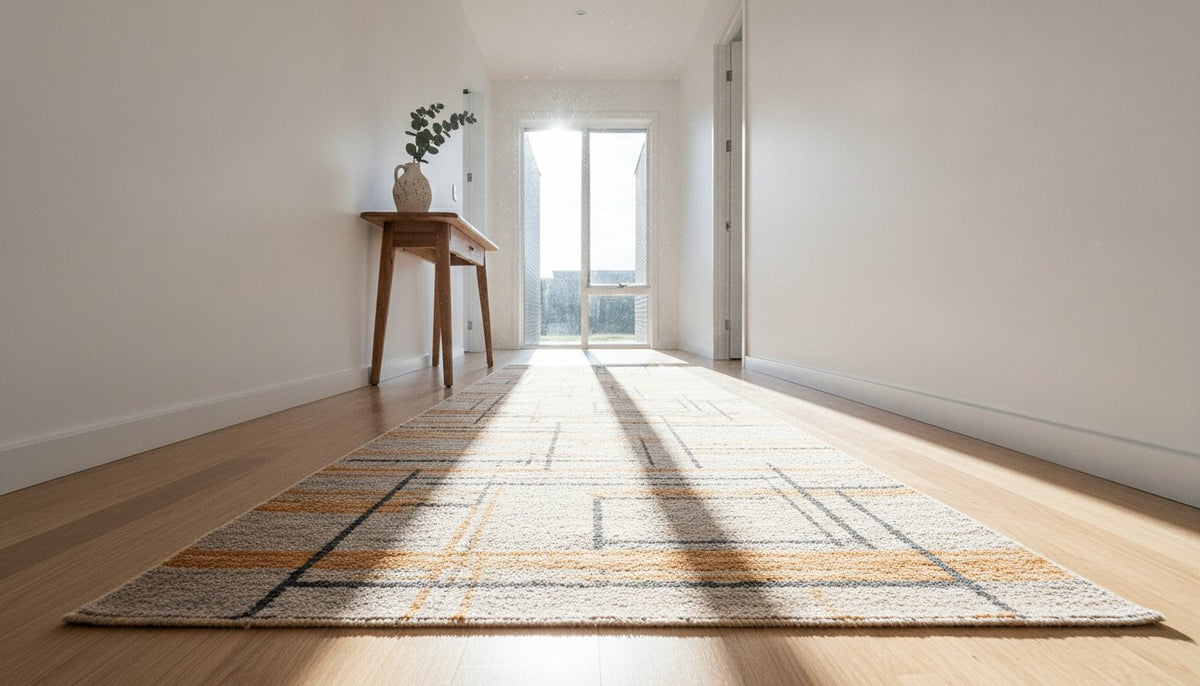
Styling Tips to Transform Your Transition Zones
Styling your corridor is about more than just filling a gap on the floor. It's an opportunity to set the mood for your entire home from the moment you step through the door. When browsing hallway runners australia, you'll find that the right design can either blend seamlessly into your existing decor or act as a bold statement piece. For a modern minimalist look, consider geometric patterns or soft neutral tones. These choices create a clean, airy feel that suits contemporary Australian architecture. Conversely, traditional Turkish rugs bring a sense of heritage and warmth, making them ideal for older character homes or Victorian terraces.
If you're looking for a polished, professional finish, consider the designer touch. Pieces from the Darren Palmer collection are specifically designed to elevate residential spaces with sophisticated textures and timeless patterns. Colour psychology also plays a massive role here. If your hallway is narrow and lacks natural light, opting for lighter colours like cream, soft grey, or beige can help "open up" the space. Darker tones or busy patterns, while practical for hiding dirt, can sometimes make a small corridor feel slightly more enclosed. It's all about finding the balance that works for your specific lighting and layout.
Coordinating with Other Rugs in the Home
A common mistake is thinking every rug in your house needs to be identical. We suggest following the "Sister, Not Twin" rule. Your hallway runner should relate to your living room rug without being a carbon copy. You can achieve this by picking up a common colour thread. For example, if your living area has a navy blue rug, choose a runner that features a small amount of navy in its pattern. Alternatively, you can keep the textures consistent. Using natural fibres or wool across all transition zones creates a cohesive flow even if the patterns vary. This approach ensures your home feels designed rather than just decorated, allowing for a smooth transition from a bold entryway statement to a more subtle hallway flow.
Creating Visual Depth in Narrow Spaces
Hallways are often the narrowest parts of our homes, but you can use clever styling to change the perception of space. Horizontal stripes are a classic trick; they draw the eye outward, making a skinny hall feel significantly wider. Patterns are also your best friend in high-traffic zones. A well-chosen motif doesn't just look good; it's incredibly practical for hiding the occasional footprint or stray pet hair between vacuums. Finally, use your runner to "lead the eye". Align the pattern so it directs guests toward a focal point, such as a piece of art at the end of the hall or a sun-drenched living room. If you're ready to find your perfect match, you can explore our full range of hallway runners australia and start your transformation today.
Practical Maintenance and Safety for Long-Lasting Runners
Once you've found the perfect piece for your home, the focus shifts to keeping it in top condition. Because hallway runners australia are placed in the highest-traffic zones of the house, they require a bit more attention than a rug tucked away in a spare bedroom. Proper maintenance doesn't just keep the fibres looking fresh; it's also a matter of home safety. By following a few simple routines, you can ensure your runner remains a beautiful, functional part of your interior for years to come.
Safety and Slip Prevention
A runner that bunches up or slides across a floor isn't just annoying; it's a genuine trip hazard. This is why a high-quality non-slip underlay is absolutely essential, especially on polished timber or tiled surfaces. These pads act as a grip, preventing "rug creep" and keeping the piece firmly in place. Beyond safety, underlays provide an extra layer of cushioning that absorbs some of the impact from footsteps. This reduces the friction between the rug backing and your floor, which actually extends the life of both the runner and your floor's finish. If you notice "corner curl" starting to happen, a good underlay often provides enough weight and grip to help the edges stay flat and flush.
Routine Cleaning for Australian Lifestyles
Our local environment brings unique challenges, from the fine red dust of the interior to the abrasive coastal sand of the bight. For wool and natural fibres like jute, regular vacuuming is your best defence. We suggest vacuuming at least twice a week in high-traffic corridors to prevent grit from sinking deep into the weave. If you're dealing with wool, use a suction-only setting to avoid damaging the delicate fibres with a heavy beater brush.
Spot cleaning is another skill every homeowner needs. If someone drops a coffee or tracks in muddy footprints, act quickly. Blot the spill with a clean, dry cloth rather than rubbing it, which can push the stain deeper into the pile. For most natural fibres, a small amount of lukewarm water and a mild detergent is usually enough to lift the mark. It's also a good idea to rotate your runner 180 degrees every six months. This ensures that the wear from foot traffic and any sunlight exposure is distributed evenly across the entire surface. While routine care handles the day-to-day, a professional deep clean every 12 to 18 months will help revitalise the fibres and remove deeply embedded allergens.
Ready to find your perfect fit? Explore our full range of hallway runners today!
Elevate Your Home's Transition Zones
Your hallway is the backbone of your home's daily rhythm. By choosing a runner that balances rugged durability with your personal style, you're protecting your floors while creating a quieter, warmer environment for your family. Remember to stick to the "Breathing Room" rule when measuring and prioritise resilient materials like wool for those high-traffic zones. These small details ensure your investment lasts for years to come.
Finding the perfect hallway runners australia homeowners love doesn't have to be a guessing game. Whether you're drawn to designer textures or the earthy appeal of natural jute, the right choice will transform your corridors into stylish features. Our team is here to help you get the sizing and material just right with our free design consultations. We pride ourselves on being a helpful partner in your home styling journey.
Ready to make a change? Shop our curated collection of Hallway Runners Australia-wide and enjoy fast shipping across the country. We specialise in durable wool and natural fibre collections that are built to withstand the busy Aussie lifestyle. We're excited to help you find a piece that makes you feel truly at home the moment you step through the door.
Frequently Asked Questions
What is the standard width for hallway runners in Australia?
In Australia, the standard widths for hallway runners typically range between 60cm and 80cm. A 66cm width is often the perfect choice for narrower heritage homes or Victorian-style cottages. For modern builds with more generous corridors, an 80cm width provides a better sense of scale. Always remember to leave that 10 to 15cm border of visible floor on either side to ensure the space doesn't feel cramped or cluttered.
Should a hallway runner be the full length of the corridor?
Your runner shouldn't cover the entire length of the hall from wall to wall. It's best to leave about 15 to 30cm of floor visible at each end of the corridor. This gap creates a defined frame around the rug and prevents it from looking like a piece of wall-to-wall carpet. If you have a very long hallway, you might even consider using two shorter runners with a small gap between them.
Are wool hallway runners better than synthetic ones for high traffic?
Wool is the superior choice for high-traffic zones because the fibres are naturally resilient and bounce back after being stepped on. Synthetic options can be easier to wash, but they often flatten over time. When shopping for hallway runners australia residents often find that wool's natural lanolin coating makes it much better at repelling stains and dirt than synthetic alternatives. It offers a luxury feel that cheaper materials simply can't replicate.
How do I stop my hallway runner from sliding on timber floors?
The most effective way to secure a runner on timber or tiled floors is by using a dedicated non-slip underlay. These thin pads provide the necessary grip to prevent rug creep and keep the edges from bunching up. They also add a layer of protection for your floor's finish by reducing friction. Avoid using cheap adhesive tapes; these can leave a sticky residue that is difficult to remove and might damage your floor's sealant.
Can I use a hallway runner in the kitchen or laundry?
You can certainly use a runner in these areas to add warmth and cushion underfoot while you work. For kitchens and laundries, a flatweave or natural fibre option is usually best as they sit low and are less likely to be a trip hazard. Just ensure the material can handle the occasional splash of water. Placing hallway runners australia wide in these functional spaces is a great way to soften the look of hard cabinetry.
How do I choose a runner colour that won't show dirt easily?
To hide daily wear and tear, opt for mid-tone colours or rugs with busy, multi-coloured patterns. Shades like charcoal, deep navy, or warm terracotta are excellent at masking footprints. Avoid very light creams or solid dark blacks, as these tend to show every speck of dust and lint. Heathered yarns, which blend several different shades together, are particularly forgiving in a busy household with pets or young children who track in grit.
What is the best pile height for a hallway runner if I have low doors?
If you have low-clearance doors, a flatweave runner or a low-pile rug with a height of less than 10mm is your best bet. These slim profiles allow doors to glide over the top without catching or dragging. Before you buy, it's a good idea to measure the gap between the bottom of your door and the floor. This simple check ensures you won't have to trim your doors or return a rug that's just a few millimetres too thick.


Leave a comment
This site is protected by hCaptcha and the hCaptcha Privacy Policy and Terms of Service apply.