

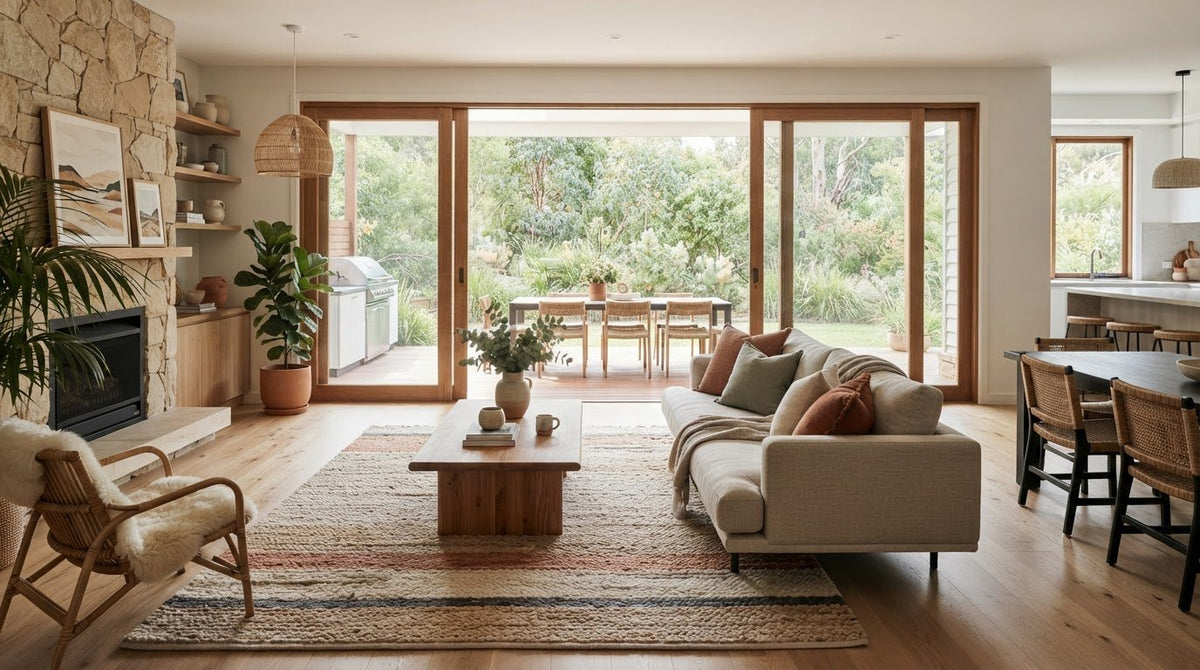
What if the missing piece in a room isn’t another cushion or a fresh coat of paint, but a rug that brings everything together? Choosing a rug to make a house feel like a home starts with how you want the space to feel and how your household uses it each day. A well-placed rug can soften a hard floor, connect furniture and make an open-plan living area feel more settled.
If a room feels cold or unfinished, finding a rug that works with your colours and furniture while suiting everyday life can be a challenge. Family routines, pets and busy walkways all matter, especially in Australian homes where indoor and outdoor living often go hand in hand.
This guide will help you choose a rug that feels inviting, reflects your household’s personality and works with your routines. You’ll learn how to balance colour and texture, compare practical options, and get the size and placement right. With a few simple checks, you can find a rug that looks at home and feels good underfoot.
Key Takeaways
- Choosing a rug to make a house feel like a home starts with how you use the room, not just the look you want.
- Use your existing furniture, wall colours and finishes to decide whether a rug should blend in or become a focal point.
- Match the rug’s texture and care needs to family routines, pets and foot traffic.
- Measure the furniture arrangement and walking paths before choosing a rug size and placement.
- Compare natural, modern, traditional Turkish, wool, round and flatweave rugs, and consider a design consultation to help narrow your choices.
How the right rug helps a house feel like home
A room can look finished and still feel a little unwelcoming. The furniture is in place and the walls are styled, yet the space doesn’t quite invite you to sit down and stay awhile. Choosing a rug to make a house feel like a home means looking beyond appearance: the right rug supports comfort, reflects your household’s personality and suits the way you use the room.
On hard floors, a rug adds a softer layer underfoot and can make a living or dining area feel more settled. It also helps anchor furniture, bringing a sofa, chairs and coffee table into one clear arrangement. In an open-plan space, a rug can define a shared zone without creating a physical barrier.
Think about the routines you want the room to support, then choose a rug that fits them. Its texture and construction can shape how the space looks and feels, so understanding rug materials and construction can help you consider more than colour alone.
Start with the moments you want the room to hold
Picture an ordinary day. Is this a quiet corner for reading, a place where the family gathers, a play area, or somewhere to relax with friends? Think about where people sit, move and spend time together. A rug beneath a reading chair can distinguish that corner; one beneath the main seating arrangement can bring people together in a shared space.
Your household’s habits matter more than a decorating rule. A room used for play may need a different feel from a calm retreat, while a space that opens onto an outdoor area may see people coming and going throughout the day. Start with what happens there, then choose a rug that suits those moments.
Notice what already makes the space feel like yours
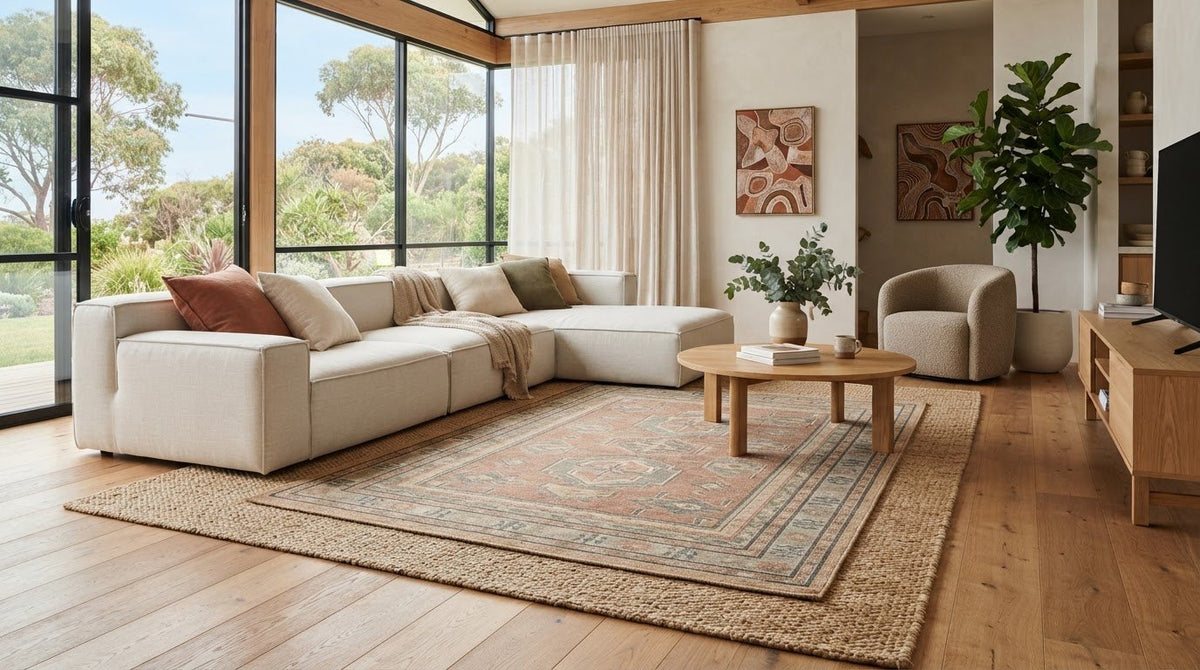
Look at the details you already care about: a much-loved sofa, artwork collected over time, family photographs or keepsakes from a favourite trip. These pieces can guide your rug choice. A quieter design can sit comfortably alongside patterned cushions or distinctive artwork, while a more noticeable pattern can add character to a room with simpler furniture. Aim to complement the things that tell your story, rather than compete with them.
Before settling on a size, consider how the rug will relate to the furniture and walkways. Use this Australian rug size guide to picture the layout and compare placement options. A rug that connects with the room’s routines and personal details is more likely to feel like it belongs.
Build a welcoming feel with rug colour, pattern and texture
Once you know how the room needs to work, look at the colours and finishes already in it. A rug doesn’t need to match every item. It can pick up a shade from the sofa, cushions, artwork or timber finishes, helping the room feel considered without looking overly coordinated.
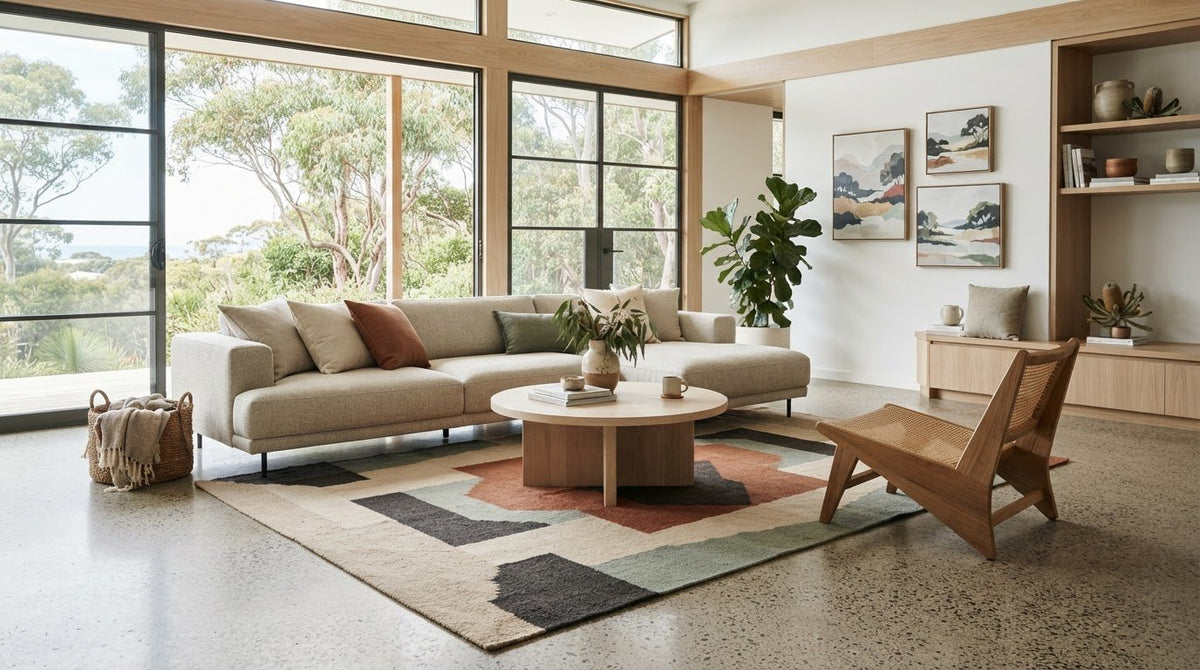
Choosing a rug to make a house feel like a home also means deciding where you want the eye to land. A quiet, understated rug can balance patterned cushions or detailed furniture. A patterned rug can bring character to a simpler space and draw attention to the seating area. In a busy room, a restrained pattern adds interest without competing with every other detail.
Choose colour and pattern to suit the room’s mood
Start with a colour you already enjoy seeing in the room. Repeating a small accent from a favourite artwork or cushion can connect the rug with your furnishings. If the room has lots of visual detail, look for a design that gives the eye somewhere to rest. If the furniture and walls are plain, a bolder pattern can add personality.
Trends can offer inspiration, but your own response matters more. Ask whether the rug feels inviting in the space, not just appealing on its own. Colours can look different in bright daylight and warm evening lighting, so consider both before deciding. Reviewing professional styling advice can also offer another perspective as you consider the room’s overall look.
Use texture to make the room feel more comfortable
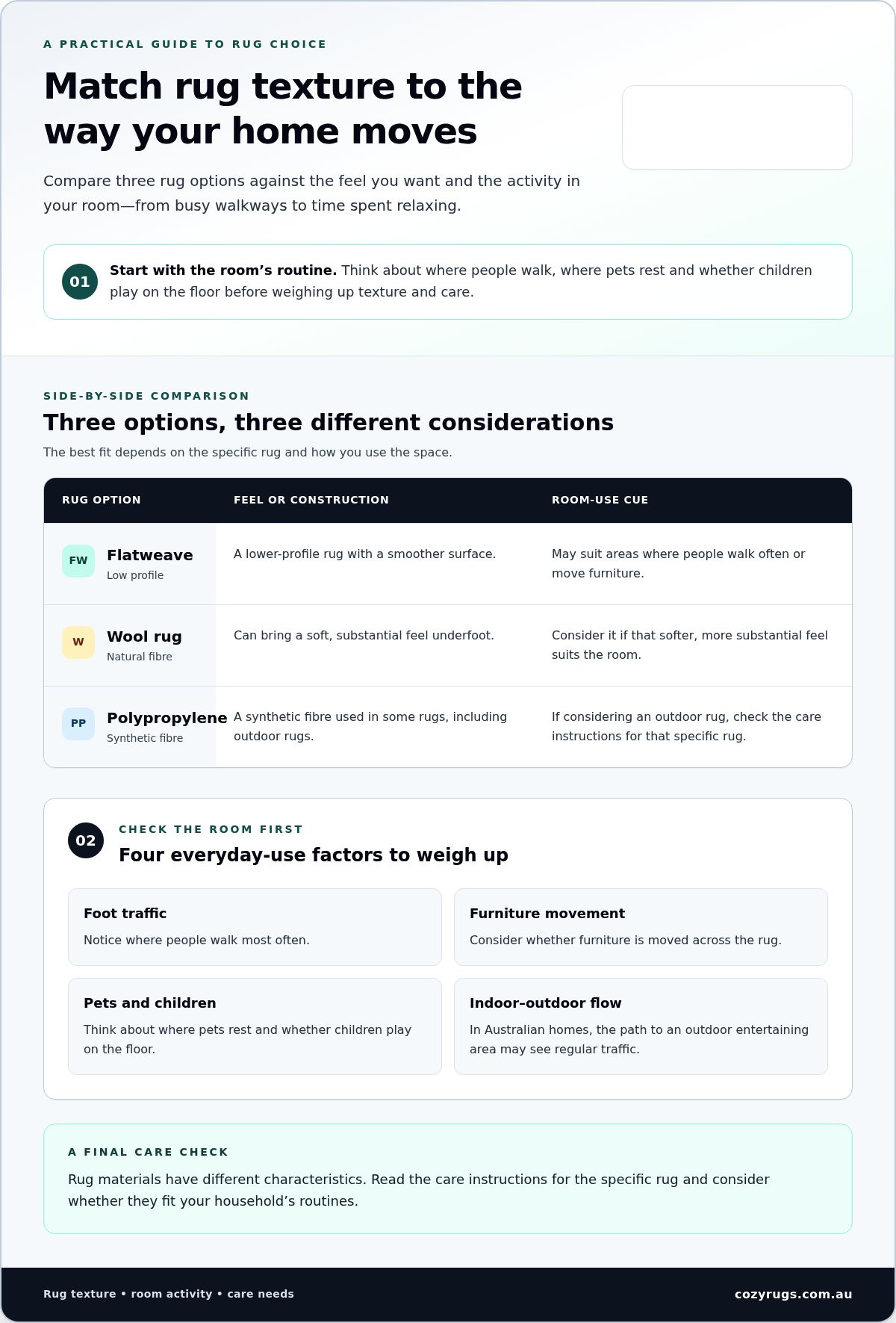
Texture affects how a rug looks and feels in daily use. A wool rug can bring a soft, substantial feel underfoot, while a flatweave has a lower profile and a smoother surface. Consider whether you want a cosy spot to sit or a surface that works easily with dining chairs and everyday movement. The best fit balances the feel you want with how the room is used.
Natural fibres and finishes bring their own character to a space. For more detail on these options, read the natural rugs guide. You can also browse rugs by colour and style to compare designs for your home.
Choose a rug that suits family life, pets and everyday use
A rug can look lovely in a styled room, but everyday life is the real test. Before choosing one, think about where people walk most, where pets rest and whether children use the floor for play. In an Australian home, the path between living areas and an outdoor entertaining space may see regular traffic, so placement and household routines matter as much as appearance.
Match the rug to the activity, rather than expecting your routine to change around it. A flatweave has a low profile that may suit areas where people move furniture or walk often. A wool rug offers a different feel and natural-fibre option. Polypropylene is a synthetic fibre used in some rugs, including outdoor rugs. These materials have different characteristics, so read the care instructions for the specific rug and consider whether they fit your household. For background on carpet materials and construction, see this carpet materials reference.
Match rug characteristics to the room’s activity
Use this comparison to identify what matters for your room, then weigh up your routines and care preferences. The right choice depends on the specific rug and how you use the space.
| Room use | Household needs | Texture to consider | Practical care consideration |
|---|---|---|---|
| Busy hallway or entry | Frequent passing and shoes coming in from outdoors | A lower-profile flatweave may suit a well-used walkway | Check the care guidance for the specific rug |
| Family living area | Shared time, children’s play and pets moving through | Choose a feel that suits sitting or playing on the floor | Consider the household’s usual cleaning routine |
| Quiet retreat | Reading, resting or less frequent foot traffic | A softer-feeling surface may suit the way you use the room | Follow the rug’s care instructions |
| Area beside outdoor access | People and pets moving between inside and outside | Consider how the pile and texture fit the traffic | Plan placement around the main path through the room |
Plan for pets, children and high-traffic areas
Notice where muddy shoes, pet paws or toys are most likely to end up. You could place a rug outside the direct route to an outdoor area, or choose a colour and texture you’re comfortable maintaining between cleans. Don’t assume a material is stain resistant or easy to clean without checking the information for that specific rug.
If wool is on your shortlist, the wool rugs guide can help you consider this option. Cozy Rugs also offers a free design consultation to help you compare choices for your space and routines.
Follow a simple process to choose and place your rug
A few measured steps can make choosing a rug to make a house feel like a home much easier. Start with how the room is used, then check the fit in your actual layout before deciding. This helps you balance comfort and appearance while keeping routes through the space clear.
- Define the room’s use. Note where people sit, gather or walk, and what the rug needs to support.
- Measure the furniture arrangement and walking paths. Record the area you want the rug to cover and how it will sit beside sofas, beds or a dining setting.
- Shortlist suitable options. Compare sizes, colours, patterns and textures with the room and your household’s routines.
- Test the placement. Mark the proposed rug footprint on the floor with removable tape and live with the outline before settling on a size.
- Review the fit in daily use. Check the layout, movement around the rug and how it works with the room’s furnishings.
Measure the room and map the furniture
Measure the furniture grouping as well as the floor area. In a living room, decide whether the rug will sit beneath the front legs of the seating or bring the whole arrangement together. In a bedroom, map its position beside the bed. For a dining area, check that chairs can move in and out without catching on the rug’s edge. Keep frequently used walking routes in mind, too.
The Australian rug size guide offers room-fit and placement examples to help you compare your measurements. If you’re layering a rug over carpet, the 30cm border rule can be a useful visual guideline, but it won’t suit every room or layout.
Review the choice in the context of everyday life
Walk around the taped outline. Open doors, pull out dining chairs and follow the routes you use most. Does the proposed size leave enough space to move comfortably? Does the rug define the area without interrupting the room’s flow? Look at colour and texture in the setting, rather than judging them in isolation.
Floor type matters, too. A rug can shift with regular foot traffic, so consider rug creep and choose a suitable non-slip underlay or anti‑slip pad for the rug and floor. Check that the product is appropriate for both surfaces and follow its care guidance. A design review can help bring size, placement and style into focus. Explore rugs for your space.
Make your house feel more like home with a rug that fits
The best choice isn’t necessarily the one that follows a trend or looks perfect in a styled photo. It’s the rug that suits your routines, feels right in the room and works with the way your household lives. Start with what happens in the space, then bring together colour, texture, size and practical needs.
Use your household’s priorities as the final check
Before settling on a rug, consider the full picture. Does it feel comfortable underfoot? Does its colour and pattern sit well with your furniture and favourite details? Is the size right for the layout, with room for doors, chairs and everyday movement? Most of all, does it suit the room’s purpose, whether that’s family time, quiet reading or relaxed entertaining?
Keep a shortlist based on what you genuinely like and how you’ll use the room, rather than feeling you need to follow a passing trend. A welcoming home doesn’t depend on getting every detail just right. It grows from considered choices that feel natural to live with. Once you’ve chosen, follow the care guidance for that rug to look after its particular material and construction.
Get help bringing the choices together
Colour, texture and size are easier to weigh up when you consider them as a group. Cozy Rugs offers a free design consultation to help you explore options for your space, including colours and sizes. Talk through your preferences and narrow your shortlist with practical guidance.
Choosing a rug to make a house feel like a home doesn’t mean finding a flawless match. Look for one that feels comfortable, reflects your taste and fits the way you live. That’s a good foundation for a room you’ll enjoy spending time in. Explore rugs for your home and find a style that feels right for your space.
Choose a rug that feels right for your home
A welcoming rug fits the way you live, rather than following a decorating rule perfectly. Start with your household’s routines, then consider colour and texture alongside the room’s size, furniture and walking paths. This practical approach to choosing a rug to make a house feel like a home can help shared spaces feel more settled while reflecting your personal style.
Cozy Rugs offers natural, modern, traditional Turkish, wool, round and flatweave rugs, with options to browse by size, colour and pattern. If you’d like help weighing up what could suit your space, a free design consultation can help you explore your choices. Rugs are shipped across Australia, so you can browse from wherever you call home.
Take your time, trust what feels comfortable and choose a rug that works for everyday life. Explore rugs for your home and find a welcoming layer that feels like yours.
Frequently Asked Questions
How does a rug make a house feel more like a home?
A rug can make a room feel more comfortable, connected and personal. It softens the feel of a hard floor, helps anchor furniture and can define a shared area in an open-plan space. Choosing a rug to make a house feel like a home means thinking about the moments the room holds, from family catch-ups to quiet time, as well as the colours and textures that feel like you.
How do I choose a rug that suits my home?
Start with the room’s purpose and your household’s routines, then consider size, colour, pattern, texture and care needs. Look at the furniture and finishes already in the space, and decide whether you want the rug to blend in or stand out. Measure the furniture arrangement and walking paths, then check that your shortlist suits the floor and the way you’ll use the room day to day.
Can a rug make a small room feel more welcoming?
Yes, a well-sized rug can help a small room feel more settled by connecting key pieces of furniture. Measure the space and map the seating before choosing a size, so the rug relates to the furniture without blocking doors or walkways. A quieter colour or pattern can keep the room feeling calm, while a distinct texture adds interest without needing more decorative pieces.
What colour rug makes a room feel cosy?
Warm neutrals, earthy shades and colours already present in your furnishings can help create a cosy feel. Pick up a tone from cushions, artwork or timber finishes to tie the room together. A patterned rug can add warmth and personality, while a quieter design may suit a room with plenty of existing detail. Consider colour choices in both daylight and evening light before deciding.
What type of rug is best for a busy family home?
The right rug depends on where your household gathers, plays and walks most, as well as your care preferences. A flatweave has a lower profile that may suit a frequently used area, while a wool rug offers a different feel and material choice. Check the care guidance for each rug, and consider whether its texture and colour suit children, pets and daily foot traffic.
How do I stop a rug from moving on the floor?
A suitable non-slip underlay or anti-slip pad can help reduce rug movement, but choose one that’s appropriate for both the rug and your floor type. Check the product guidance before placing it underneath. If the rug shifts as people walk over it, adjust its position and reassess the pad. Regular movement, known as rug creep, can make a rug look misaligned and affect how securely it sits.
How do I choose the right rug size for my living room?
Measure the seating arrangement and walking paths around it before selecting a size. Decide whether the rug should sit beneath the front legs of the sofa and chairs or contain the whole grouping, then mark the proposed footprint with removable tape. Check that doors and walkways remain clear. A rug size guide can help you compare layouts and picture how different dimensions may fit.

Leave a comment
This site is protected by hCaptcha and the hCaptcha Privacy Policy and Terms of Service apply.