

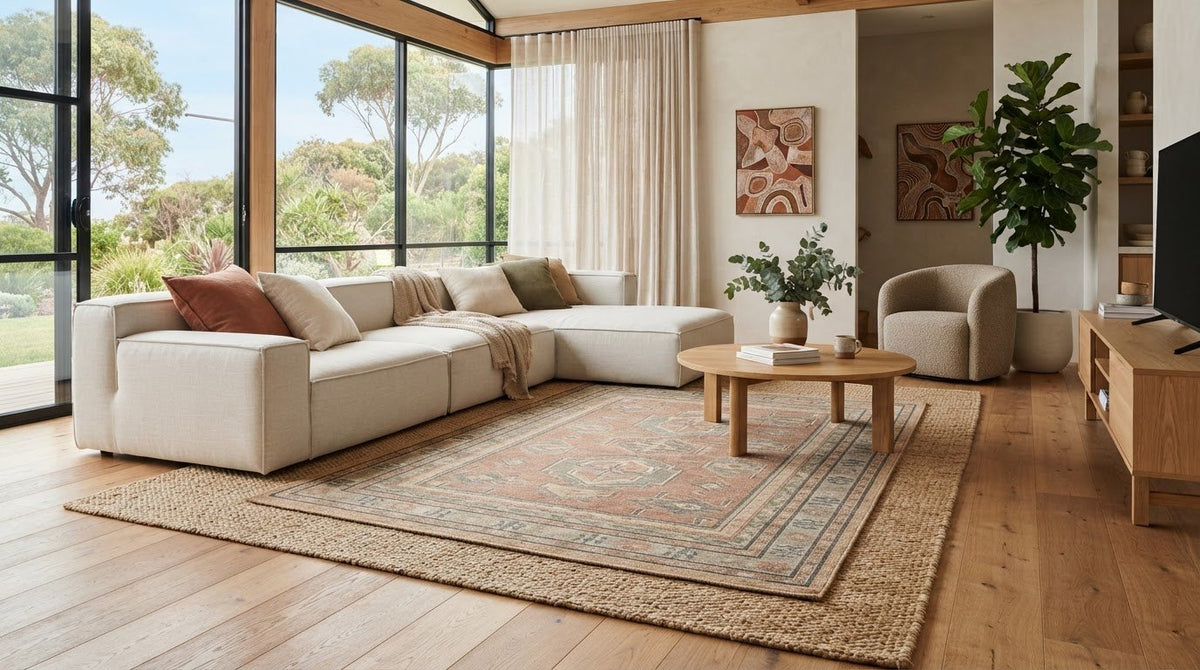
What if the secret to a well-styled lounge room isn’t a single perfect rug, but two rugs working together? It’s easy to worry that patterns will clash, layers will slide on timber floors or the proportions will feel off. The good news is that layering rugs ideas start with a practical framework: choose a larger base to anchor the room, then add a smaller rug for colour, pattern or texture.
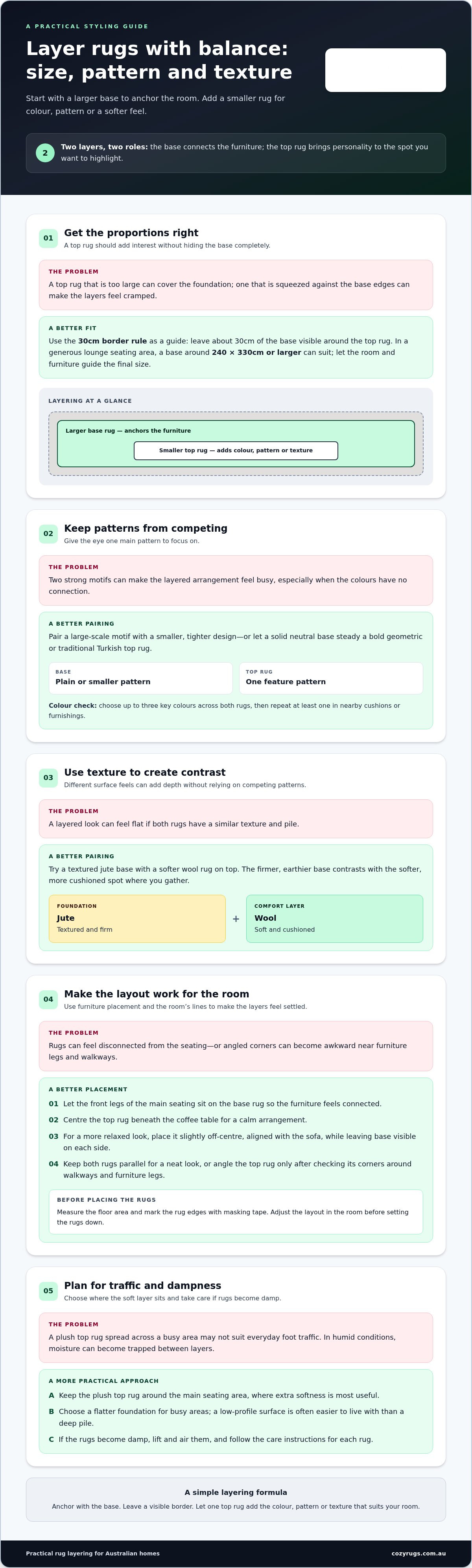
In this guide, you’ll learn how to choose and position each layer, use the 30cm border rule as a sizing reference and keep rugs steady underfoot. You’ll find pairing ideas, such as a natural jute base with a softer wool top rug, plus tips for Australian lounge rooms and bedrooms where family life, pets and indoor-outdoor living shape the choice. Start with the base, check the proportions, then let the top rug bring the personality.
Key Takeaways
- Use a larger, neutral base rug to anchor the room, then add a smaller rug for texture or personality.
- Try the 30cm border rule as a starting point, and balance bold motifs with simpler patterns to keep the layers harmonious.
- Explore layering rugs ideas with a natural jute foundation and a wool rug on top for added softness.
- Adapt the arrangement to the room, from anchoring a modular sofa to adding a soft accent near the foot of the bed.
- Choose a suitable rug pad or gripper to help keep layers steady, and plan simple care habits for busy homes with pets or family traffic.
What is Rug Layering and Why Your Space Needs It?
Rug layering means placing a smaller decorative rug over a larger base rug. The base anchors the furniture, while the top layer creates a focal point with colour, pattern or texture. Together, they can make a lounge room feel more considered without a full room makeover.
There are practical benefits, too. On timber floors, layered rugs add a softer landing underfoot, can help reduce the sound of footsteps and bring extra warmth during cooler months. Materials and construction affect how each rug feels and performs. A rug is a textile floor covering, with options ranging from flat woven surfaces to deeper piles. Choose a combination that suits the room and your household’s everyday use.
The Secret to Defining Open-Plan Zones
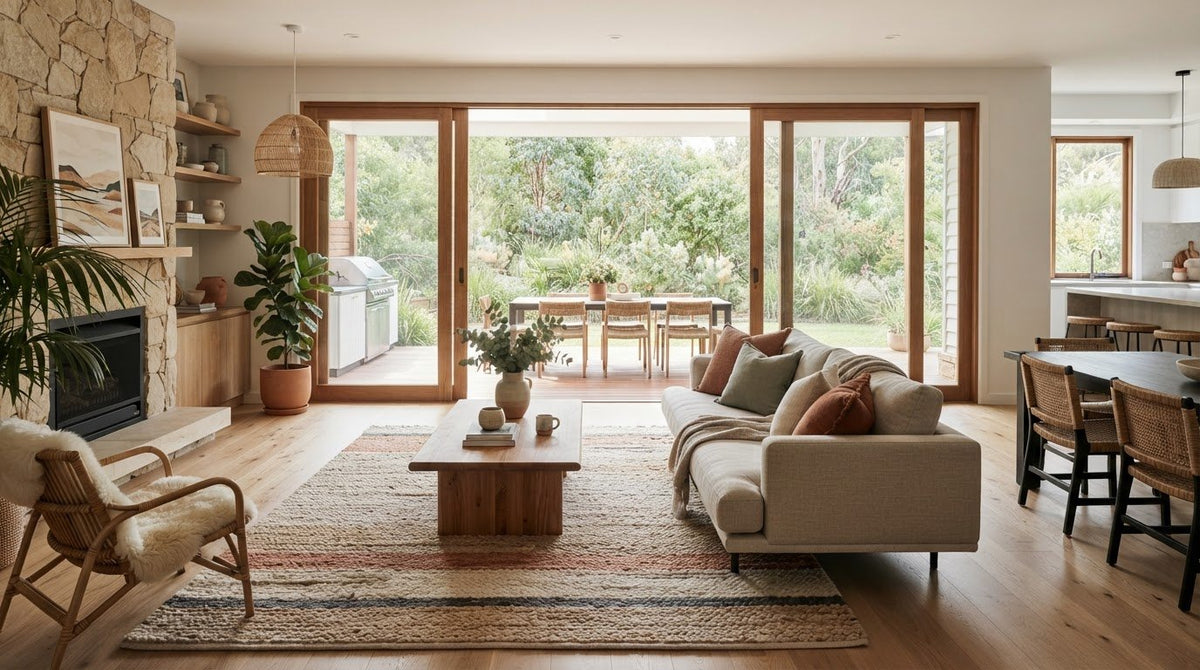
In an open-plan home, a large base rug creates a visual island for a furniture grouping. Choose a size that reaches beneath the front legs of the main seating, so the sofa and chairs feel connected rather than scattered across the floor. A smaller rug can mark out a reading nook or sit beneath the coffee table, giving that part of the room its own purpose without adding a wall or screen.
Texture as the Primary Design Element
Colour isn’t the only way to add interest. Try contrasting pile heights, such as a soft, shaggy top rug over a low-profile flatweave base. This soft-over-hard pairing changes the feel underfoot and can make a seating area more inviting. In a minimalist room, a textured top rug adds visual weight and helps ground the space without relying on a busy pattern.
Layering rugs ideas can also help refresh a rental with dated or plain carpet. A larger base rug can cover part of the floor and set a new tone, while a smaller accent rug adds personality. It’s a practical, removable styling option when you want to make a space feel more like home without changing the carpet. On carpet, choose layers thoughtfully: a thick, soft base can make a top rug shift or buckle, so a flatter foundation is often easier to style.
For a natural look, jute can work well as a textured base, with a wool rug adding softness on top. Consider how the room is used, especially in busy areas where children, pets and regular foot traffic are part of daily life.
The Golden Rules of Rug Layering: Size, Scale, and Colour
A balanced layered look depends on proportion and a clear visual connection between the rugs. The base should be large enough to anchor the furniture, while the top rug adds interest without hiding the foundation entirely. Before choosing colours or patterns, measure the floor area and mark the rug edges with masking tape. This lets you judge the proportions in your actual room and adjust the layout before placing the rugs.
Proportions and Placement Tips
In a lounge room, a base rug around 240 x 330cm or larger can suit a generous seating area, but let your room and furniture guide the final size. Aim to have the front legs of the main seating sit on the base rug. As a visual guide, the 30cm border rule suggests leaving about 30cm of the base visible around the top rug. If space is tight, a narrower border can still show the layered effect, provided the top rug doesn’t look squeezed against the edges.
Centre the top rug beneath a coffee table for a calm, balanced arrangement. For a more relaxed look, place it slightly off-centre, perhaps aligned with the sofa rather than the room, while leaving enough of the base visible on each side. For help measuring the whole space, use this Australian rug size guide.
Mixing Patterns Without Clashing
Give the eye one pattern to focus on. A large-scale motif pairs well with a smaller, tighter design, while a solid neutral base can steady a bold geometric or traditional Turkish top rug. The “Rule of Three” is a handy colour check: choose up to three key colours across both rugs, then repeat at least one in nearby cushions or furnishings. A shared colour helps the combination feel intentional rather than busy.
Orientation matters, too. Keep both rugs parallel for a neat, settled look that follows the room’s lines. Turn the top rug at an angle for a more casual accent, but check that its corners don’t create awkward points in walkways or near furniture legs.
A plain flatweave rug makes a useful pattern-free foundation, letting a detailed top rug take the lead. If you’re weighing up colours and proportions, a free rug design consultation can help you plan a combination that suits your room.
Winning Texture Pairings: From Wool to Natural Fibres
Good pairings combine a steady foundation with a top layer that feels different underfoot. Jute and sisal bring a natural, textured look, while a wool rug adds softness where you sit or stretch out. Natural fibres vary in weave and feel, so consider the room’s traffic, your household and how much texture you want before choosing a base. In a busy lounge, a low-profile foundation is often easier to live with than a deep pile.
The Jute and Wool Combination
A jute rug beneath a wool rug creates an easy coastal-inspired contrast: the base has a coarser, earthy texture, while wool softens the spot where you gather. That difference is called tactile contrast: jute feels more textured and firm, while wool feels softer and more cushioned. It gives a layered arrangement depth without relying on competing patterns. Explore natural rugs in Australia for material and styling inspiration.
In a high-traffic space, keep the plush top rug around the main seating area rather than covering the entire base. This adds comfort where it’s most useful and leaves more of the foundation clear. In humid conditions, avoid trapping moisture between layers: lift and air the rugs if they become damp, and follow the care instructions for each one.
A cowhide can make a more unexpected top layer. Its organic outline breaks up the straight edges of a rectangular base and adds an asymmetrical accent beside a chair or coffee table. Keep it clear of busy walkways so its irregular shape doesn’t interrupt the room’s flow.
Layering on Wall-to-Wall Carpet
Rugs can creep or bunch on carpet, especially when the pile underneath is plush. A rug-to-carpet gripper is designed to bond a rug to carpet and help prevent slipping and bunching. Choose a top rug with a lower profile, too. A thick pile on thick carpet can make furniture feel less grounded and may cause chair or table legs to sit unevenly.
A flatweave is a sensible option over plush carpet because its low profile creates less bulk. It also follows the hard over soft rule: place the firmer, low-profile layer over the softer, high-pile surface to help reduce buckling. These layering rugs ideas balance comfort with a more stable-looking finish, particularly in family rooms where people regularly walk across the rug.
For more texture and material inspiration, browse the natural and wool rug range.
Room-by-Room Styling: Layering Ideas for Your Home
Each room has its own rhythm, so tailor the layers to how you move through the space. In busy Australian homes, leave clear walking routes and make sure rug edges lie flat, especially where children or pets are on the move.
The Modern Lounge Layout
For a modular sofa, start with a generously sized base that extends beneath the front legs of every section, helping the seating feel connected. A large Scandinavian-style rug can provide a calm foundation, with a smaller traditional Turkish rug adding pattern and colour near the coffee table. Keep the top rug clear of sofa feet and avoid placing its edges where people regularly step. Ideally, all the main furniture legs sit on at least the base layer.
This approach also works in open-plan living. Use one rug beneath the lounge furniture and another to mark the dining zone, leaving a visible strip of floor between them. The rugs can share a colour or material cue to connect the areas while keeping each zone distinct.
Creating a Cosy Bedroom Sanctuary
At the foot of the bed, position a smaller accent rug where you’ll take your first step in the morning. A plush wool rug adds a soft landing, while angling it at about 45 degrees over a larger base creates a more relaxed look. Check that the corners don’t sit in the main path around the bed. In a nursery, a round rug can soften the room’s straight lines and create a defined play spot; position it securely so it won’t shift during everyday use.
Making the Entryway Work Harder
A wider natural mat can anchor the entry, with a narrower hallway runner layered along the main route. This frames the walkway and adds a welcoming touch, but keep the mat and runner aligned so their edges don’t obstruct the door or create a trip point. For a busy entry where shoes, bags and paws pass through, a low-profile pairing is easier to walk over than a combination of thick piles.
These layering rugs ideas are a starting point, not a strict formula. If you’d like help matching a base and accent rug to your room, book a free design consultation.
Maintenance and Safety: Keeping Your Layered Rugs Secure
Layers need a little extra attention because the top rug can shift, trap dust or develop a curled edge. Check the arrangement regularly, especially in busy family areas where foot traffic, children and pets can nudge rugs out of place. Keep edges flat and choose low-profile rugs for walkways to help reduce trip hazards.
Rug Pads and Anti-Slip Solutions
Use the right grip for the surface. On timber or other hard flooring, an anti‑slip pad sits beneath the base rug to increase friction and help protect the floor. Between two rugs, use a gripper designed to keep the top layer from creeping or bunching. These serve different purposes, so don’t assume a pad made for a hard floor will work between rugs.
A pad also creates a buffer between a textured backing, such as jute, and timber, helping limit rubbing as the rug moves underfoot. By reducing movement and friction, a suitable rug pad can help both layers keep their shape and wear more evenly over time. Follow the pad and rug care instructions, and check periodically that the pad hasn’t shifted or gathered at the edges.
Cleaning and Longevity
Vacuum the top rug gently and take care near its edges so the vacuum head doesn’t catch and pull them up. Lift a corner now and then to vacuum dust from between the layers, then make sure both rugs are dry and lying flat before putting them back together. If your furniture is heavy, move it safely in stages rather than dragging it across the rug.
For spills on a wool rug, blot promptly with a clean cloth instead of rubbing, and follow the rug’s care instructions before using any cleaning product. If a stain has soaked through or an odour remains, stop spot-treating and check the care guidance for appropriate next steps. Avoid soaking either rug, as trapped dampness between layers can be difficult to dry.
Sunlight through Australian windows can fall unevenly across a room. Rotate the rugs from time to time to help spread everyday wear and exposure, taking care to keep the furniture arrangement and edges secure. These simple habits make layering rugs ideas easier to live with, not just lovely to look at.
Bring Your Rug Layers Together
Great layering rugs ideas begin with a practical foundation: size the base to anchor your furniture, then add a top rug for colour, pattern or a softer feel. Keep a shared colour thread between the layers, and choose textures that suit the way you use the room. A suitable pad and simple care habits help keep the setup comfortable and secure.
Natural fibres can give your room a relaxed base, while a wool rug brings extra softness to a lounge or bedroom. With wool and natural fibre options for Australian homes, you can create a look that feels welcoming and suits everyday living. Cozy Rugs offers nationwide shipping and a free design consultation to help you pair rugs with confidence.
Ready to find a combination that feels right for your space? Browse our curated collection of rugs for layering and take the first step towards a more comfortable, thoughtfully styled home.
Frequently Asked Questions
Can you layer rugs on top of carpet?
Yes, you can layer a rug over carpet, but choose a low-profile top rug to help prevent bunching. A flatweave is often easier to place on plush carpet than another thick-pile rug, which can feel unstable under furniture. A rug-to-carpet gripper can help hold the top rug in place. Check that the rug lies flat, particularly at the edges and in walkways.
What is the rule for rug layering sizes?
Start with a base rug large enough to anchor the main furniture, then choose a smaller top rug that leaves a visible border around it. The 30cm border rule suggests leaving about 30cm of the base visible for a balanced look. Treat this as a guide, not a fixed requirement: adjust the proportions to suit your room, furniture and rug shapes.
Do layered rugs cause a trip hazard?
They can if edges curl, layers shift or a rug sits across a busy walkway. Choose rugs that lie flat, keep corners out of doorways and main walking routes, and use a suitable pad or gripper to reduce movement. Check the edges regularly, especially in family homes with children or pets. If a layer keeps bunching, reposition it or change the pairing.
Can I layer two patterned rugs together?
Yes. To keep the combination from feeling cluttered, vary the scale: pair a large, open motif with a tighter, smaller pattern. Look for a shared colour that links the rugs, then let one pattern take the lead while the other plays a supporting role. If both designs are bold, keep nearby cushions and furnishings simpler so the room still feels settled.
Do I need a rug pad between two layered rugs?
A suitable rug-on-rug gripper can help stop the top rug from shifting or bunching. It’s different from an anti‑slip pad designed for a rug on a hard floor, so choose a solution made for the surfaces in your setup. Check the rug and pad care instructions, and inspect the layers from time to time to make sure the gripper remains flat and correctly positioned.
What rug materials are best for layering?
Jute or sisal can provide a textured, natural-looking base, while a wool rug adds a softer feel on top. For a lower-profile pairing, try a flatweave foundation with a more tactile accent rug. Think about the room’s use, including foot traffic, pets and spills, before choosing. Materials differ in texture and care needs, so follow the instructions supplied with each rug.
How do I stop layered rugs from wrinkling?
Lay both rugs flat before positioning one on top of the other, and use a suitable gripper to limit movement. Make sure the layers are clean and dry, then smooth out folds rather than placing furniture over them. Avoid dragging furniture across the setup, as this can pull the rugs out of line. If wrinkles persist, follow the rug’s care guidance before trying to flatten it.
Is rug layering still in style for 2026?
Yes, rug layering remains a popular styling approach in 2026. A larger, understated foundation paired with a smaller rug that adds texture or pattern suits the current interest in warm, tactile interiors. The look works best when the sizes, colours and materials feel connected. Choose a combination that fits your home and daily routine, rather than following a trend that doesn’t suit the space.

Leave a comment
This site is protected by hCaptcha and the hCaptcha Privacy Policy and Terms of Service apply.