

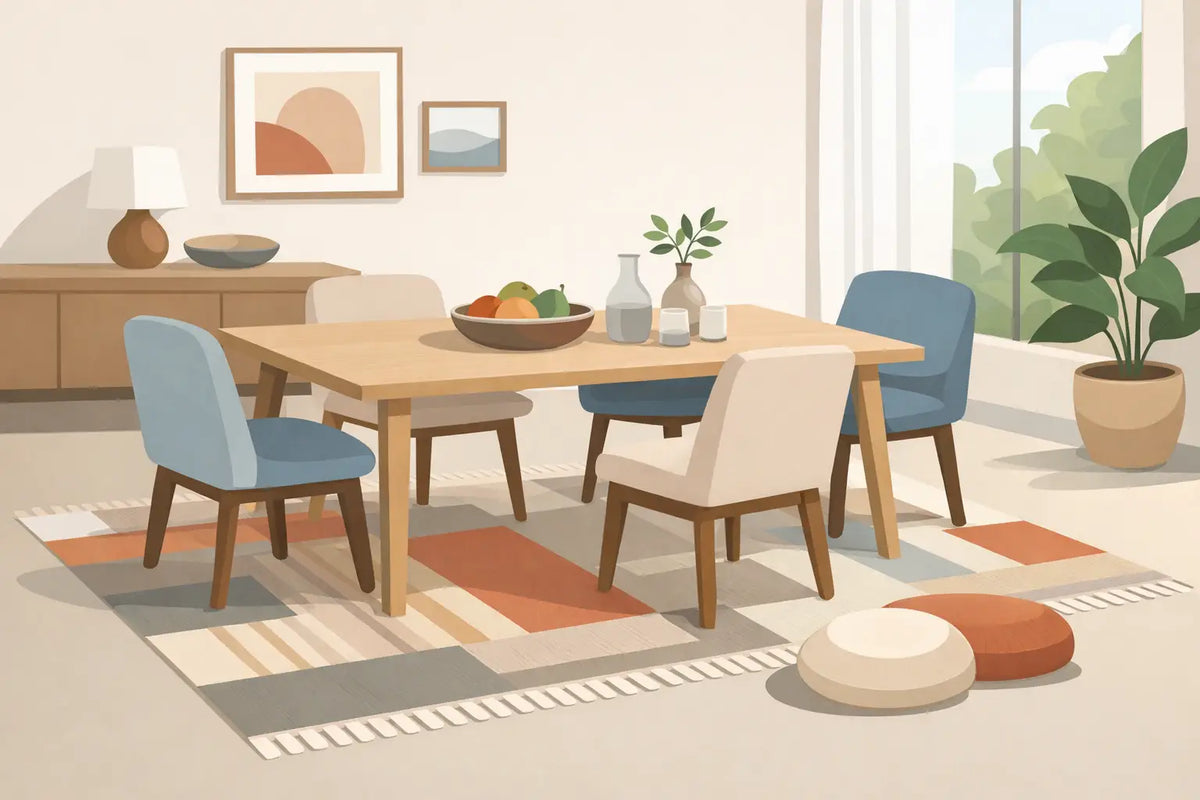
Dining chairs should glide back easily, not catch on a thick pile every time someone gets up from the table. That is exactly why flatweave rugs for dining room spaces are such a smart choice: they bring warmth, colour and definition to the room while keeping day-to-day meals feeling practical.
A flatweave has a low, woven surface rather than a deep pile. It sits neatly beneath dining furniture, is generally easier to vacuum and gives your table setting a more considered finish. Whether your dining zone is a dedicated room, part of an open-plan kitchen or squeezed into a sunny apartment corner, the right rug can make it feel settled and inviting.
Why flatweave rugs work so well under a dining table
A dining rug has a different job to a bedroom rug. It needs to handle chair movement, crumbs, the occasional splash of pasta sauce and plenty of foot traffic, without becoming a frustrating thing to live with. The low-profile construction of a flatweave helps on all fronts.
Chairs are easier to pull in and out because their legs do not sink into a dense surface. A flatweave also tends to collect less debris than a plush rug, so a quick vacuum or shake outside is often all it needs between deeper cleans. For busy households, this matters more than any trend.
There is a styling benefit, too. Dining tables, particularly timber, stone or black-framed designs, can feel visually heavy. A flatweave breaks up those hard surfaces without adding bulk. It is an easy way to introduce pattern beneath a simple table, or texture beneath a room with a more pared-back palette.
That said, flatweave does not have to mean plain. From relaxed natural fibres and subtle stripes to geometric motifs and vintage-inspired patterns, there is plenty of character in a low-profile rug. The best choice depends on how your family uses the space and how much visual energy you want around the table.
Choosing the right size for a dining room flatweave rug
Size is where most dining rug decisions go wrong. A rug that only sits beneath the table may look fine until the chairs are pulled back, leaving their rear legs half on and half off the edge. It feels awkward underfoot and can make the whole setting look undersized.
As a useful rule, allow at least 60 cm beyond each side of the table. This gives dining chairs enough room to remain on the rug when pulled out. If you have generous space, 75 cm is even better, especially with larger armchairs at the ends of the table.
For rectangular tables
A rectangular rug usually mirrors a rectangular dining table and suits long open-plan zones. For a standard six-seat table, a 240 x 330 cm rug is often a comfortable starting point. Larger eight-seat settings may need 300 x 400 cm, depending on chair depth and how far the table extends when guests arrive.
Before ordering, place masking tape on the floor to map out the dimensions. Pull the chairs back as you normally would. This simple test shows whether the rug will give the dining area enough breathing room without blocking a walkway, buffet or sliding door.
For round dining tables
A round flatweave rug can soften a square room and works beautifully with a round pedestal table. Make sure the rug is wide enough to accommodate every chair when it is pushed back. In many homes, a 200 cm round rug suits a compact four-seat setting, while a 250 cm or 300 cm round option gives a larger table the proportions it deserves.
If a round rug is not practical, a square flatweave can also work. The key is to keep the table centred and maintain a consistent border around it.
Pick a material that suits real life
There is no single best fibre for every dining room. Think about spills, pets, children, the level of sunlight and whether the space is used daily or only when guests come over.
Wool for natural comfort and lasting style
Wool flatweaves are a lovely choice for dining rooms that need warmth and a more elevated look. Wool has natural resilience and its fibres can help repel light soiling, making it well suited to regular use. Its texture brings depth to contemporary, coastal and classic interiors alike.
The trade-off is that wool deserves prompt attention when spills happen. Blot rather than rub, use a clean cloth and follow the care guidance for your rug. A patterned wool flatweave is often more forgiving than a pale, solid design in a home with young kids or enthusiastic dinner guests.
Jute and natural fibres for relaxed texture
Jute flatweaves bring an easy, organic feel to Aussie living. They look especially good under timber tables, with linen dining chairs or in homes that lean coastal, earthy or Mediterranean. Their natural variation means they are never overly formal.
However, jute is not the best match for a table that sees frequent messy meals. Natural plant fibres can be more sensitive to moisture, so they are better suited to lower-spill households or formal dining areas. If you love the look but need more everyday practicality, consider a jute-look woven design in a more cleanable fibre.
Synthetic fibres for easy-care households
Polypropylene and similar performance fibres are hard to beat for family dining spaces. They are generally durable, colourfast and easier to clean after everyday mishaps. They can also be a sensible option near patio doors, where wet feet, dusty shoes and extra sunlight are part of the deal.
A quality synthetic flatweave need not look overly casual. Look for a refined weave, muted colour and a design that complements the finishes already in your kitchen and dining area. The goal is practical, not disposable.
How to choose colour and pattern
Your dining rug can either quietly support the room or become the feature that makes it memorable. If your table, chairs and pendants already make a strong statement, a natural-toned flatweave with gentle texture will keep the balance calm. Sand, oatmeal, soft grey and warm charcoal are versatile choices that sit comfortably with many Australian interiors.
If the dining furniture is simple, a patterned rug can do more of the design work. Small-scale geometric motifs, faded traditional designs and uneven stripes disguise crumbs and minor marks better than a block colour. They also bring a lived-in feel to a newer home that might otherwise feel a little too polished.
Consider undertones before you commit. A cool grey rug can clash with yellow-toned oak, while creamy natural fibres may look out of place beside crisp white cabinetry with blue-grey stone. Take cues from the flooring first, then the table. A rug does not need to match either exactly, but it should make them look intentional together.
Keep the rug secure and easy to maintain
Even a low-profile rug benefits from a quality rug pad, particularly on timber, polished concrete or tiles. A non-slip pad helps prevent creeping, adds a touch of cushioning and reduces friction between the rug and floor. It can also make chairs move more smoothly, which is a welcome bonus during long lunches.
For regular care, vacuum using a suitable setting for the weave and avoid an aggressive rotating brush if the manufacturer advises against it. Deal with spills quickly by blotting from the outer edge towards the centre. Do not soak the rug or scrub the fibres, as this can spread the stain or alter the texture.
Rotate the rug every few months if one side gets more sun or traffic. In open-plan spaces, this small habit helps colour and wear develop more evenly. For a washable flatweave, always check the washing instructions and the capacity of your machine before assuming it will fit.
A practical finishing layer for your dining space
Flatweave rugs for dining room areas offer a rare balance of style and common sense. They make an open-plan layout feel more defined, bring softness to hard floors and are built to cope with the push and pull of everyday chairs. At Cosy Rugs, that means you can choose a design-led piece that still feels right for family dinners, weekend entertaining and everything in between.
Start with the chair clearance, choose a fibre that fits your household, then trust the rug to do what good styling should do: make the room feel more comfortable to use every day.


Leave a comment
This site is protected by hCaptcha and the hCaptcha Privacy Policy and Terms of Service apply.