


A rug can quietly make a room feel finished, or make everything around it look slightly off. That is why the choice between modern rugs vs traditional rugs is about more than personal taste. The right style can bring calm to a busy family living room, add character to a rental, or give a newly renovated space the warmth it is missing.
Neither look is automatically better. Modern rugs often suit clean-lined, relaxed interiors, while traditional designs bring depth, pattern and a sense of history. Your best choice comes down to the mood you want to create, how the room is used, and how much visual energy the space can handle.
Modern rugs vs traditional rugs: the key differences
Modern and traditional rugs may use similar materials and construction methods, but they create very different effects in a room.
Modern rugs feel fresh and flexible
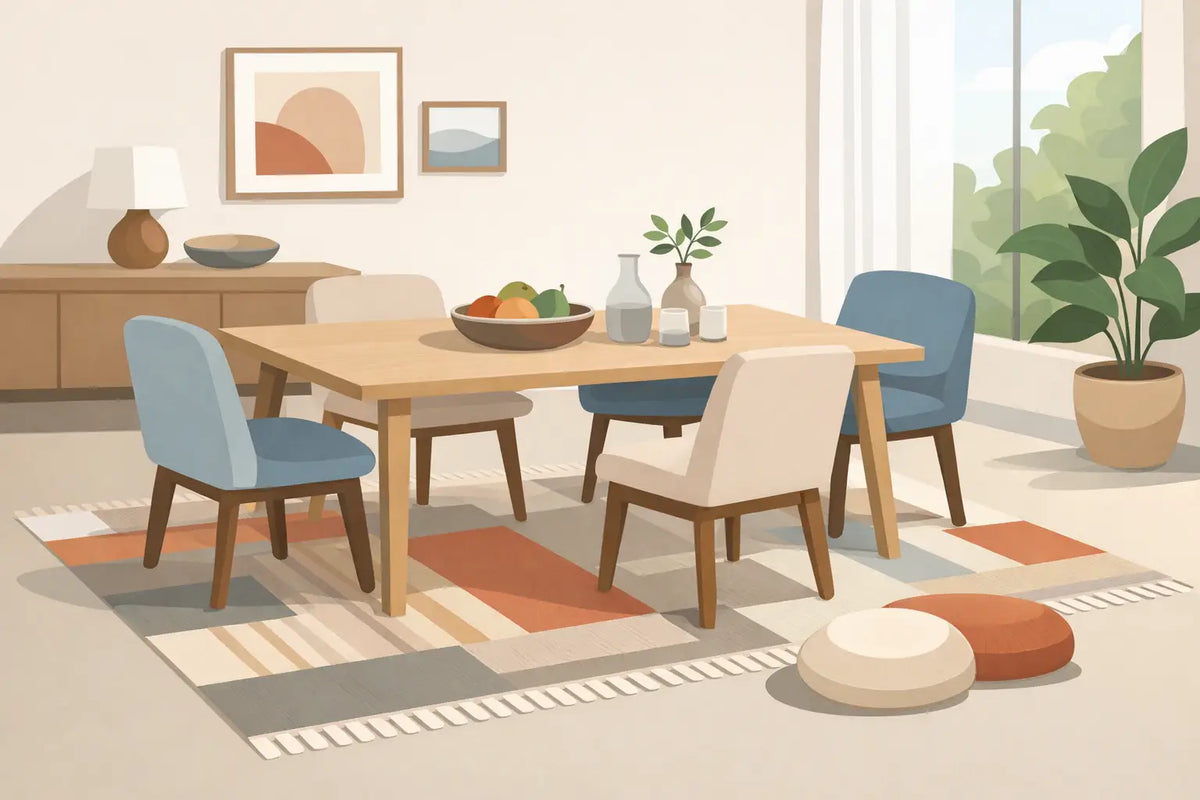
Modern rugs tend to feature abstract shapes, simple linework, geometric patterns, tonal designs or broad blocks of colour. You will often see neutral palettes of ivory, sand, charcoal and grey, along with earthy terracotta, olive, rust and soft blue. A contemporary rug can still be colourful, but the overall design is usually edited rather than ornate.
This style works beautifully with modern Australian interiors: think open-plan living areas, light timber floors, streamlined furniture and natural finishes. A modern rug can soften a minimalist room without making it feel busy. It also gives you plenty of freedom to change cushions, artwork or furniture over time, as the rug is less tied to one particular decorating era.
For real life, a heathered or multi-tonal modern design can be especially practical. Small marks, pet hair and everyday dust are generally less obvious than they are on a plain cream rug.
Traditional rugs bring character and warmth
Traditional rugs are inspired by time-honoured Persian, Oriental, Turkish and European motifs. They often include detailed borders, floral elements, medallions and layered patterns in rich shades such as navy, red, green, rust, gold and faded blue.
They are a natural fit for homes with timber furniture, heritage details, leather sofas, classic art or a collected look. But traditional does not have to mean formal or old-fashioned. A distressed traditional rug with a softened palette can look right at home beneath a linen sofa, beside a boucle chair or in a contemporary apartment.
Their pattern is also one of their biggest practical strengths. In high-traffic areas such as dining rooms, hallways and family living spaces, detailed designs are wonderfully forgiving of crumbs, scuffs and the odd spill. They offer plenty of personality without demanding perfection from the household.
Start with the feeling you want from the room
Before choosing a pattern, consider what the room needs to do for you. A living room that already has a statement sofa, patterned curtains and bold artwork may benefit from a quieter modern rug. Choose a textured neutral, an understated check or an abstract design that picks up one or two existing colours.
If the room feels flat, sparse or overly new, a traditional rug may be the missing layer. Its pattern can ground the furniture, add a lived-in feel and make the space feel more welcoming. This is particularly helpful in large rooms with hard surfaces, where timber, tile and glass can otherwise feel a little echoey and bare.
For bedrooms, both styles work well. A soft, tonal modern rug creates a calm retreat, while a faded traditional rug can make a simple bedroom feel considered and cosy. In either case, choose a generous size so your feet land on softness when you get out of bed.
Consider colour before committing to a style
A modern rug is not always neutral, and a traditional rug is not always dark. Colour is often the deciding factor.
If your furniture is neutral, a traditional rug in blue, rust or muted red can become the room’s focal point. Pull one small accent shade from the rug into a cushion, throw or piece of artwork to make the scheme feel intentional. You do not need to match every colour exactly.
If you have colourful furnishings or a feature wall, a modern rug in cream, oatmeal, stone or soft grey can bring visual breathing room. Texture matters here. A handwoven wool rug, loop pile rug or low-profile flatweave adds interest without introducing another strong pattern.
For homes with kids and pets, mid-tones are often the sweet spot. Very pale rugs can show muddy paws and snack-time mishaps, while very dark rugs may reveal lint and light-coloured fur. A mix of two or three shades is usually more forgiving and still looks polished.
Match the rug construction to everyday life
Style sets the mood, but material and construction determine how a rug performs. This is where the practical choice matters just as much as the visual one.
Wool is a lovely option for both modern and traditional designs. It feels warm underfoot, has natural resilience and brings a premium, tactile finish to living rooms and bedrooms. A wool rug can be an investment, but with regular care it is made to be enjoyed for years.
Flatweave rugs are popular in modern interiors because of their clean, low-profile look. They suit dining areas, hallways and homes where doors need to swing freely over the rug. Many are easy to move, straightforward to vacuum and ideal for layering over carpet or larger natural-fibre rugs.
For busy homes, washable and pet-friendly rugs are well worth considering. They let you choose a beautiful pattern without treating the lounge room like a museum. A washable traditional-style rug can be particularly clever in a family space, combining the camouflage of detailed pattern with simpler care when life gets messy.
Jute and other natural-fibre rugs bring relaxed texture to coastal, contemporary and earthy homes. They are best suited to lower-spill areas such as bedrooms, studies and sitting rooms, rather than beneath a dining table where food and drinks are regularly on the menu.
Use rug size to make either style look intentional
The most beautiful rug can still look undersized if it is floating in the middle of the room. Whether you choose modern or traditional, size is what gives the design presence.
In a living room, aim for at least the front legs of the sofa and chairs to sit on the rug. If the room is large enough, placing all furniture legs on the rug creates an even more generous, connected look. A smaller rug can work in compact spaces, but it should still visually anchor the seating zone.
In the dining room, allow enough room for chairs to stay on the rug when pulled out. For bedrooms, choose a rug that extends beyond both sides and the end of the bed, or use runners on each side for a more streamlined approach.
Traditional patterns often look especially good at a larger scale, where the border and central motif have room to be seen. Modern rugs can be more flexible, but abstract patterns also benefit from enough space to read as a deliberate design feature rather than a small patch of colour.
You can mix traditional and modern styles
One of the most interesting interiors combines old and new rather than sticking rigidly to one look. A traditional rug under a curved contemporary sofa can feel layered and collected. A sleek modern rug in a home with ornate timber furniture can stop the room feeling too formal.
The trick is to create one clear connection. It might be a shared colour, a similar warmth in the timber and rug tones, or a repeated shape elsewhere in the room. For example, a faded blue traditional rug can sit beautifully with a modern navy sofa, while an abstract rug with rust accents can echo vintage timber and tan leather.
Avoid choosing pieces that compete at the same volume. If the rug is richly patterned, keep nearby textiles fairly simple. If you are using a bold modern rug, let it take centre stage and give the rest of the room a little room to breathe.
Choose the rug you will enjoy living with
The right rug should look good in the product photo, but it should also suit your Saturday mornings, dinner with friends and the daily rush through the hallway. At Cosy Rugs, that means considering style alongside pile height, material, room size and the realities of Aussie living.
Choose a modern rug when you want a clean, relaxed foundation that can evolve with your home. Choose a traditional rug when you want richness, warmth and a pattern that tells more of a story. And if you love elements of both, trust that instinct: a well-chosen rug does not have to follow one rulebook to make a room feel completely at home.


Leave a comment
This site is protected by hCaptcha and the hCaptcha Privacy Policy and Terms of Service apply.