

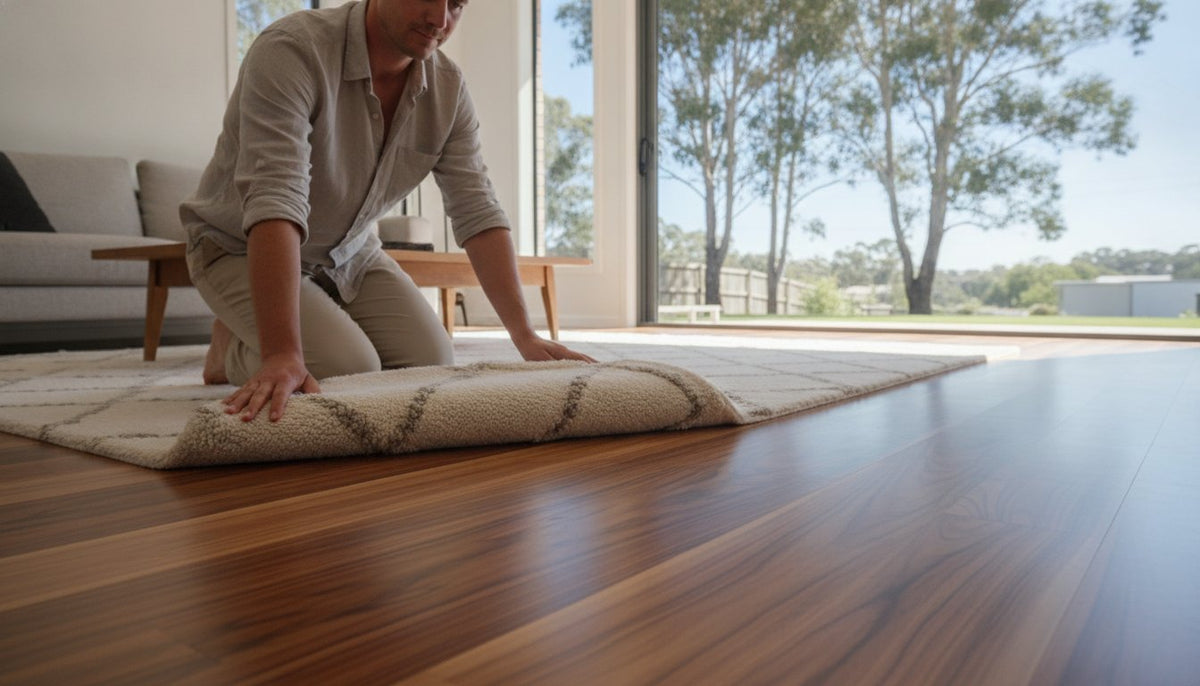
What if the very rug you bought to protect your beautiful Spotted Gum or Oak floorboards is actually the thing slowly ruining them? It's a common worry for Australian homeowners who want the warmth of a textile underfoot but fear the hidden damage a poorly chosen backing can cause. You've likely spent a lot of time and money on your flooring, so it's only natural to feel hesitant about covering it up.
We understand that you want a home that feels cozy and lived-in, but you shouldn't have to risk scratches or permanent discolouration to get there. Finding the right rugs for timber floors Australia requires a bit of local know-how, especially when it comes to navigating our unique climate and flooring finishes. This guide promises to demystify the selection process so you can shop with total confidence, knowing your floor remains pristine underneath.
We'll dive into why breathable natural fibres like wool are the gold standard for timber protection. We will also look at the latest 2026 styling trends and explain exactly which rug pads will keep your family safe from slips without reacting with your floor's sealant. By the time you've finished reading, you'll know how to keep your floors safe while making your living space feel truly complete.
Key Takeaways
- Learn how to select the right rugs for timber floors Australia to prevent permanent UV discolouration and abrasive scratching on your floor's finish.
- Discover why wool is the gold standard for breathability and how to safely style natural fibres like jute without damaging your boards.
- Understand the hidden danger of plasticiser migration and how to choose a safe rug pad that prevents permanent yellowing and chemical bonding.
- Get expert tips on matching rug colours and textures to iconic Australian timber tones like Jarrah, Spotted Gum, and Oak for a cohesive look.
- Master simple maintenance routines, including the "monthly lift" and proper vacuuming techniques, to ensure your timber remains pristine underneath.
Protecting Your Investment: Why the Right Rug Matters for Australian Timber Floors
Your timber floors are likely one of the most expensive features of your home. Whether you've installed solid Jarrah, Blackbutt, or a high-quality engineered Oak, these surfaces are premium assets that significantly boost your property's resale value. However, they aren't indestructible. In busy Australian households, the daily grind of foot traffic, pets, and dust can take a toll. This is where choosing the right rugs for timber floors australia becomes a strategic decision rather than just a styling choice.
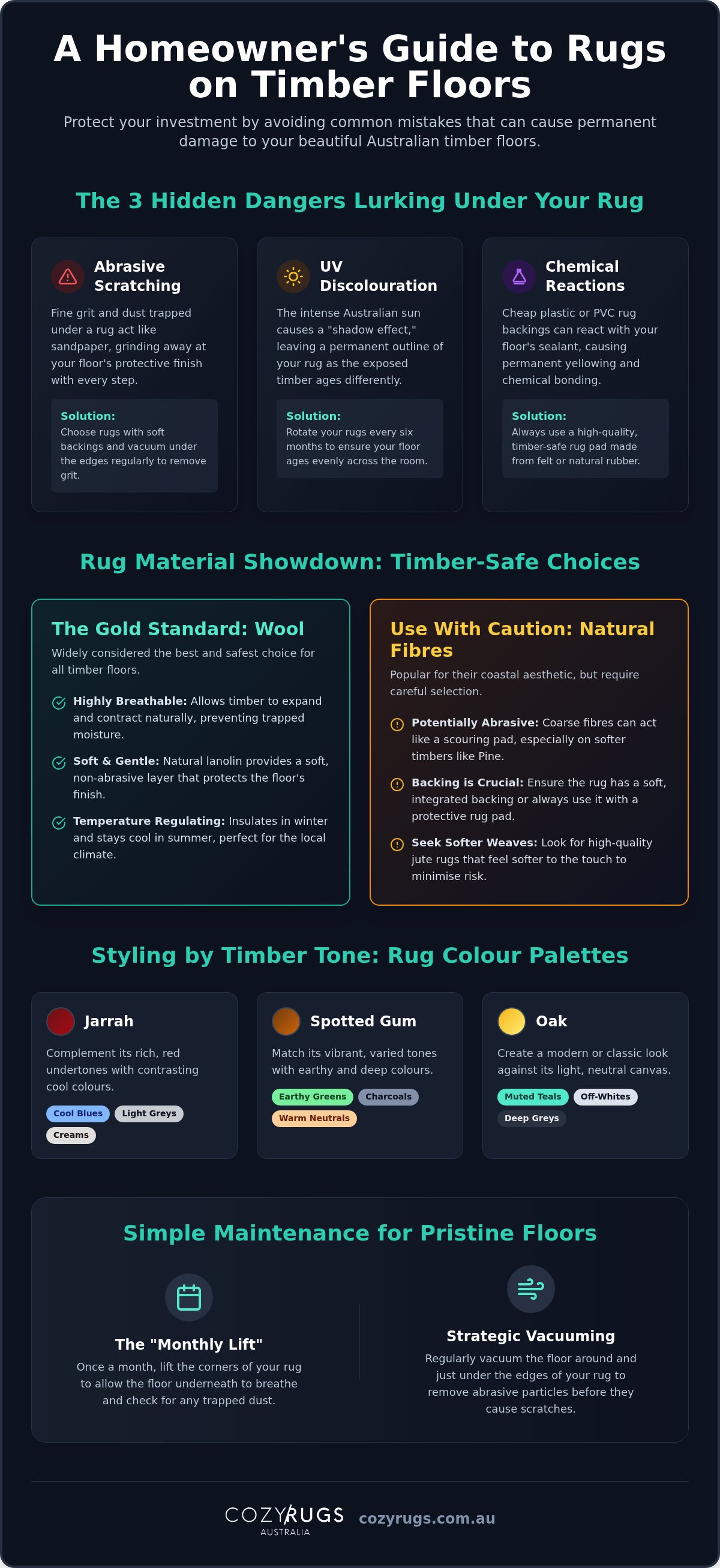
Think of a rug as a sacrificial layer. It's much easier and cheaper to replace a textile than it is to sand and refinish your entire living room floor. To truly protect your investment, you need what experts call a "timber-safe" rug. This refers to a rug that allows the floorboards to breathe. Without proper airflow, moisture can become trapped, or the floor's finish can react with the rug's underside, leading to three main risks:
- Abrasive scratching from trapped grit.
- UV discolouration and uneven ageing.
- Chemical reactions between the rug backing and the timber sealant.
The Problem with Abrasive Scratching
It's not just the rug itself that can cause damage, but what hides beneath it. Fine grit, sand, and dust are inevitable in our coastal or suburban homes. When these tiny particles get trapped between a rug and the floor, they act exactly like sandpaper. Every time you walk across the room, you're essentially grinding that grit into the timber's protective coating. Cheap synthetic rugs often have rough, stiff backings that exacerbate this problem. To keep your floors pristine, we recommend choosing rugs with soft, natural backings and making a habit of vacuuming the floor under the rug edges regularly. This simple step removes the "sandpaper" before it can do any real harm.
Understanding UV Fading and Shadowing
The Australian sun is famously intense, and our timber floors feel it too. UV rays cause a natural photochemical reaction in wood, leading to either fading or darkening depending on the species. If you leave a rug in the same spot for years, you'll eventually discover a "shadow effect." This is a distinct tan line where the covered wood looks completely different from the exposed areas. While you can't stop the sun, you can manage its impact. We suggest rotating your rugs every six months. This helps the floor age more evenly across the entire room, preventing permanent outlines from forming on your floorboards.
Choosing the Best Materials: Wool, Jute, and Natural Fibres on Wood
Selecting the right material is the most critical step in your search for rugs for timber floors australia. While aesthetics matter, the physical interaction between the rug fibre and your floor's sealant determines whether your boards stay beautiful or end up dull and scratched. Our Australian climate adds another layer of complexity. Fluctuating humidity causes timber to expand and contract naturally. If a rug doesn't breathe, it can trap moisture against the wood, potentially leading to cupping or warping over time.
Why Wool Rugs are the Premium Choice
Wool is widely considered the gold standard for timber protection. The natural lanolin found in wool rugs australia acts as a built-in lubricant, providing a soft landing that won't scour your floorboards. Beyond texture, wool is incredibly breathable. This airflow is vital for the health of your timber, as it prevents the pockets of stale, damp air that can damage floor finishes. It's also a smart choice for our local weather. Wool naturally insulates your home during chilly winters and stays surprisingly cool underfoot during a sweltering January heatwave.
Natural Fibres: Jute and Sisal Styling
If you're aiming for that classic "coastal" look, natural rugs australia made from jute or sisal are popular choices. However, you need to be careful. Some low-quality natural rugs can be surprisingly abrasive. Their tough fibres can act like a scouring pad on softer timbers like Pine or Tasmanian Oak. We always recommend choosing a soft-weave jute or a flatweave natural rug. These are particularly effective in dining rooms. They allow chairs to slide easily without catching, which reduces the risk of dragging grit across your floor. If you're still weighing up your options, you might like to browse our collection of timber-safe rugs to see these materials in action.
For high-traffic areas where spills are likely, modern heat-set polypropylene is a practical alternative. These synthetic options are engineered for easy cleaning and durability. When combined with a proper rug pad, they offer a budget-friendly way to protect your floors. Finally, don't overlook flatweave rugs if you have low-clearance doors. Their slim profile ensures your doors won't drag across the rug surface, which protects both the rug and the floor underneath from unnecessary friction.
The Rug Pad Essential: Preventing Scratches and Chemical Discolouration
While you've already chosen the perfect material for your rugs for timber floors australia, there's a hidden component that can make or break your floor's health: the rug pad. It's easy to overlook this thin layer, but using the wrong one is a recipe for disaster. Many homeowners pick up a cheap PVC or rubber mat from a discount store, not realising these materials contain chemicals that can permanently ruin a timber finish. It's a small saving that can lead to a very expensive repair bill.
The most significant technical risk is something called plasticiser migration. This happens when the oils used to keep cheap rubber or PVC pads flexible "leak" out and react with your floor's sealant. This chemical bond doesn't just make the rug stick to the floor; it causes a permanent yellow discolouration that often can't be sanded out. In our warm Australian climate, this reaction happens even faster as heat accelerates the chemical transfer. A quality rug pad avoids this risk entirely, acting as a breathable barrier that extends the life of both your rug and the timber underneath.
Safe Backings for Polyurethane and Oil Finishes
Whether your floor is finished with a modern polyurethane or a traditional oil, you must look for "timber-safe" labels on your padding. We generally advise against "waffle" style rubber pads on expensive wood. These grids can trap heat and moisture, often leaving a permanent ghost-like pattern on your boards. Instead, look for breathable felt pads or high-quality natural rubber. A dual-surface pad is often the best choice. It provides a dense layer of felt for cushioning and a safe, non-slip backing that won't react with your floor's finish.
Stopping the Slip: Safety in the Australian Home
Beyond protecting the wood, a good pad is a vital safety feature. Timber floors are notoriously slippery, and a loose rug is a trip hazard waiting to happen. This is especially true for pet friendly wool rugs in high-traffic zones like the lounge or kitchen. If you have dogs or cats zooming through the house, a high-grip pad ensures the rug stays exactly where you put it. This stability is even more critical for hallway runners on polished Jarrah or Blackbutt, where the long, narrow shape makes them prone to bunching and "creeping" along the floor. By investing in a quality pad, you're not just protecting your timber; you're making your home safer for everyone who walks through it.
Styling by Timber Tone: Matching Rugs to Jarrah, Spotted Gum, and Oak
When you're styling a room, we always suggest the "Floor First" rule. Your timber isn't just a surface; it's the dominant colour in the space. The best rugs for timber floors australia work with the natural grain and undertones of your wood rather than fighting against them. Whether you have the deep reds of Jarrah or the light straw hues of Blackbutt, the right rug acts as a bridge between your floor and your furniture. Choosing rugs for timber floors australia that complement your specific wood species ensures the whole room feels intentional and balanced.
For those with warm-toned timbers like Jarrah, Blue Gum, or Red Mahogany, you're working with strong burgundy and orange undertones. To create a balanced look, we often recommend modern rugs australia in cooler shades like sage green or navy. These colours sit opposite red on the colour wheel, which makes the timber's natural beauty pop without making the room feel overly "hot." If you prefer a more cohesive feel, earthy ochres and deep creams can create a rich, inviting atmosphere that feels incredibly grounded.
Contrast vs. Cohesion: The Colour Wheel for Floors
If your home features dark, moody timber, a light cream or off-white rug provides a stunning visual break. This contrast prevents the room from feeling too heavy or enclosed. Conversely, if you have honey-coloured woods like Spotted Gum or Cypress, navy blue or deep forest green rugs add a sense of luxury and depth. Be careful with neutral timbers like Tasmanian Oak, though. It's easy to fall into the "beige hole" where everything blends together. In these spaces, focus on layering different textures. A chunky wool loop or a flatweave with a subtle pattern can add the visual interest you need without needing bold colours.
Shape and Placement for Open-Plan Living
Most Australian homes now favour open-plan living, which can sometimes feel a bit vast and unorganised. You can use rugs to define specific zones, like a reading nook or a dining area, without needing walls. While rectangular rugs are the standard, don't be afraid of round rugs. They're fantastic for breaking up the long, linear lines of floorboards and softening the hard angles of a room. For transitions between these zones, hallway runners australia are your best friend. They lead the eye through the home and protect those high-traffic timber corridors from wear and tear. If you're feeling unsure about which style fits your specific timber species, you can book a free design consultation with our team to find your perfect match.
Caring for Your Rug and Floor: Maintenance Tips for a Long-Lasting Look
Most homeowners lay down their rugs for timber floors australia and then forget about what's happening underneath. While a rug provides excellent protection, it shouldn't be a "set and forget" feature of your home. We recommend a simple habit called the "Monthly Lift." Once a month, peel back the corners and edges of your rug to inspect the timber. You're looking for any signs of trapped grit, moisture, or changes in the floor's finish. This quick check takes less than five minutes but can prevent minor issues from becoming permanent damage.
Your vacuuming technique also plays a massive role in floor health. While modern vacuums are powerful, beater bars and rotating brushes can be too aggressive for both your rug and your timber. These brushes can fray the fibres of a wool rug and, more importantly, they can flick trapped grit against your floorboards at high speeds. For the best results, use a suction-only setting or a dedicated hard-floor attachment. This removes the dust without the risk of scouring your floor's protective sealant.
Seasonal Maintenance Checklist
To keep your home looking its best, we suggest following a seasonal routine. Every six months, rotate your rug 180 degrees. This is the most effective way to manage UV exposure and ensure that any natural fading happens evenly across your floor. While you're at it, take the opportunity to air out your rug. Hanging it outside in the shade for a few hours helps refresh the fibres. Just remember to keep the timber floor itself shaded while the rug is gone to avoid sudden sun exposure. Finally, check your rug pad. If it feels brittle or shows signs of sticking to the floor, it's time to replace it before it degrades further.
Dealing with Humidity and Spills
In our coastal Australian climates, humidity can be a silent threat. If moisture gets trapped between a rug and a timber floor, it can cause the boards to cup or warp. This risk increases significantly after a liquid spill. If you drop a drink, remember the golden rule: blot, don't rub. Rubbing pushes the liquid deeper into the rug fibres and down onto the wood. If the spill is large, you must lift the rug and dry both the textile and the floorboard separately. Never leave a damp rug sitting on timber, as the lack of airflow will almost certainly damage the finish. While DIY spot cleaning works for small accidents, we suggest calling a professional rug cleaner every 12 to 18 months to remove the deep-seated dust that domestic vacuums simply can't reach.
Ready to Style Your Australian Home with Confidence?
You now have the expertise to transform your living space without risking your floor's premium finish. Protecting your investment comes down to a few simple, smart choices. By prioritising breathable wool fibres and investing in a high-quality, timber-safe rug pad, you'll avoid the heartbreak of permanent yellowing or abrasive scratches. Finding the right rugs for timber floors australia is about more than just a colour match; it's about ensuring your home remains a safe and beautiful sanctuary for years to come.
Don't forget the power of the "monthly lift" and regular seasonal rotations to keep your Jarrah or Oak boards ageing gracefully. If you're ready to take the next step, we'd love to help you find the ideal piece for your unique space. Browse our collection of timber-safe rugs at Cozy Rugs today to see our range in person. We offer a free design consultation to find your perfect match, alongside our durable wool and natural fibre collections. With fast shipping across Australia, you can enjoy a cozy, protected home in no time. We can't wait to see how you bring your timber floors to life.
Frequently Asked Questions
What is the best type of rug for timber floors?
Wool is the superior choice for timber. Its natural breathability prevents moisture from being trapped against the wood finish, while its soft fibres won't scour the surface. When searching for rugs for timber floors australia, look for high-quality wool or flatweave options. These materials provide a gentle touch that protects your boards while offering a cozy feel underfoot. Always pair them with a quality pad to ensure the best long-term results for your home.
Can I put a rug on a brand-new timber floor immediately?
You should wait at least two to four weeks before placing a rug on newly finished timber. Even if the floor feels dry, the sealants and oils need time to fully cure and "gas off." Placing a rug too early can trap chemicals and lead to permanent clouding or a tacky finish that ruins the floorboards. It's always best to check with your flooring installer for their specific curing timeframe before decorating.
Do all rugs need a rug pad on timber floors?
Yes, we highly recommend using a pad under every rug. Without one, the rug can shift and act like sandpaper, grinding dust and grit into your floor's finish. A pad also provides a vital safety barrier, stopping the rug from sliding on polished surfaces. Choosing the right rugs for timber floors australia means also selecting a breathable, non-reactive pad that won't bond to your polyurethane or oil-based sealant over time.
Will a jute rug scratch my hardwood floor?
Jute rugs can be abrasive if they have a rough, exposed weave on the underside. While they offer a beautiful coastal look, their tough fibres can cause fine scratches on softer timbers like Tasmanian Oak. To enjoy the style safely, choose a soft-weave jute and always use a dense felt rug pad. This prevents the fibres from rubbing directly against the wood, keeping your hardwood floors looking pristine while you enjoy the natural texture.
How do I prevent my rug from discolouring the wood underneath?
Prevention starts with choosing breathable materials and rotating your rug every six months. This rotation ensures that UV exposure is spread evenly across the floor, preventing a permanent "shadow" where the rug once sat. You should also avoid cheap PVC backings that cause chemical yellowing. By lifting the rug monthly to let the timber breathe and vacuuming away trapped grit, you can keep the wood underneath looking as good as the rest of the room.
Are wool rugs better than synthetic rugs for timber?
Wool is typically better because it's a natural, breathable fibre that doesn't trap heat or moisture. Synthetic rugs, particularly those with stiff glue-based backings, can be less forgiving on timber finishes. However, modern heat-set polypropylene is a safe alternative if you use a high-quality rug pad. The key is ensuring the rug doesn't have a rough underside that could scour the boards during daily foot traffic or furniture movement.
How do I stop my rug from sliding on polished floorboards?
A high-quality rug pad made from natural rubber or felt is the only safe way to stop sliding. Avoid using double-sided tape or cheap "sticky" mesh, as these often leave a gummy residue that's nearly impossible to remove from timber. A dedicated non-slip pad provides enough grip to keep your hallway runners and area rugs stationary, even in high-traffic zones with kids and pets zooming across the polished floorboards.
What size rug should I get for a timber-floored living room?
The ideal size should define your seating area while still showing off plenty of your beautiful timber. In a standard living room, aim for a rug that allows at least the front legs of your sofa and armchairs to sit on the textile. This anchors the space and prevents the rug from looking like a small "island" in the middle of the room. For most Australian homes, a 200x290cm or 250x350cm rug works perfectly.


Leave a comment
This site is protected by hCaptcha and the hCaptcha Privacy Policy and Terms of Service apply.