

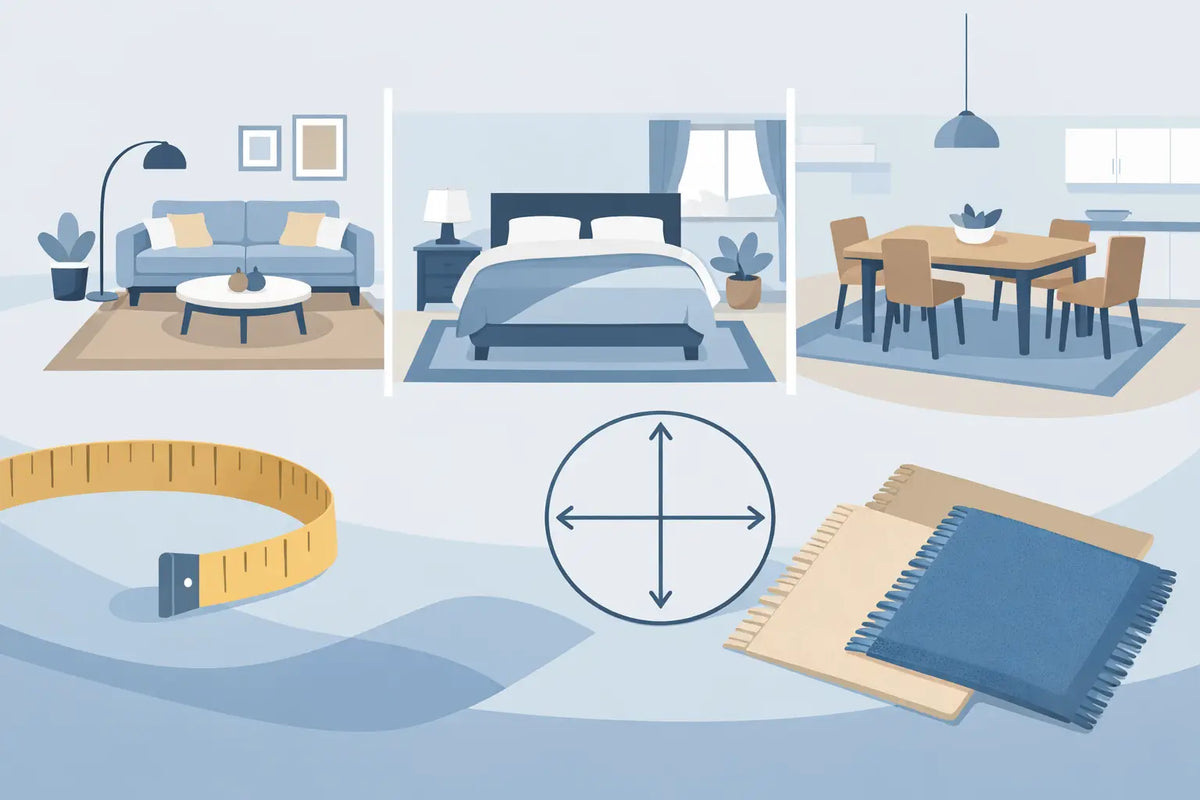
A rug can make a room look pulled together in seconds, or make it feel oddly off even when everything else is right. If you have ever rolled out a rug and thought, why does this look too small, too crowded or just a bit awkward, the issue is usually scale. Knowing how to choose rug size comes down to how your furniture sits, how people move through the room and how much floor you want to show.
The good news is that rug sizing is not complicated once you know what to look for. You do not need to guess, and you definitely do not need to settle for a rug that feels like an afterthought. A well-sized rug gives a room structure, adds warmth and makes everyday living feel more considered.
How to choose rug size without second-guessing
The simplest way to choose a rug is to start with the furniture, not the empty floor. Rugs are there to anchor a space, so the size should relate to the key pieces in the room rather than float somewhere in the middle.
As a general rule, bigger usually looks more intentional. A rug that is slightly generous often helps a room feel calmer and more finished, while one that is too small can break up the space and make furniture look disconnected. That said, there is always a balance. In a compact apartment, terrace or smaller Aussie living area, a rug still needs breathing room around the edges.
Before buying, measure the room and then mark the rug size on the floor with painter's tape. It is one of the easiest ways to see whether the proportions feel right. You will quickly spot if a rug is cutting under chair legs awkwardly or leaving too much bare flooring around your main seating area.
Living room rug sizes that actually work
The living room is where rug sizing matters most because it shapes the whole layout. A rug should connect the sofa, armchairs and coffee table so the space feels like one zone.
In a larger living room, the most polished look is usually to place all front furniture legs, or even all legs, on the rug. This gives the room a grounded, generous feel and works especially well in open-plan homes where the rug helps define the lounge area.
In a medium-sized room, having the front legs of the sofa and chairs on the rug is often the sweet spot. It still anchors the furniture, but it does not demand as much floor space. This is a popular option for everyday family homes because it feels balanced without crowding the room.
If your rug sits only under the coffee table and does not reach the seating, it will usually look undersized. There are exceptions, especially in very small spaces, but most of the time this is the classic mistake people make when figuring out how to choose rug size for a lounge room.
Try to leave around 20 to 40 centimetres of visible floor between the rug edge and the walls. It does not need to be exact, but a border of exposed flooring helps the rug feel framed rather than wall-to-wall.
What size rug for a sectional?
With a sectional or corner sofa, go larger than you first think. The rug should extend beyond the sofa edge so the shape feels intentional. If the rug stops exactly where the chaise ends, the whole layout can feel tight.
For roomy family areas, larger rugs often create that relaxed, styled look people want, especially when paired with a coffee table in the centre and enough space for feet to land on softness rather than hard flooring.
How to choose rug size for the dining room
Dining rooms are less about looks alone and more about practicality. The rug needs to be big enough for chairs to stay on it, even when they are pulled out. If the back legs slip off the edge every time someone sits down, the rug is too small.
A good rule is to allow at least 60 to 70 centimetres beyond each side of the dining table. That gives chairs enough room to move without catching. It also helps the room feel more generous and less cramped.
Shape matters here as well. A rectangular table generally suits a rectangular rug, while a round table often looks best on a round rug. You can mix shapes for a more styled look, but the proportions still need to make sense.
Material is worth thinking about too. In dining spaces, flatweave, low-pile and washable options are often the practical favourites because crumbs, spills and daily traffic are part of real life. A beautiful rug still needs to earn its place.
Bedroom rug sizing for a softer start and finish
In bedrooms, the rug should make the room feel warmer and more comfortable when you get in and out of bed. The right size depends on whether you want the rug to sit mostly under the bed or frame the whole sleeping zone.
For the most luxurious feel, place a large rug under the bed so it extends out on both sides and at the foot. This creates a soft landing and gives the room a calm, hotel-like finish. It works especially well in main bedrooms where there is room to let the rug breathe.
If space is tighter, the rug can start partway under the bed and still look balanced, as long as enough extends beyond the sides. What you want to avoid is a rug that disappears almost entirely under the bed, leaving only a narrow strip visible at the foot. That tends to look accidental.
In kids' rooms or guest rooms, there is a bit more flexibility. You might choose a rug that sits beside the bed rather than underneath it fully, especially if the aim is to add comfort and colour without taking over the room.
Rug runners beside the bed
Runners are a smart option when a full-size bedroom rug is not practical. They add softness where you need it and can suit narrower spaces beautifully. This is especially handy in smaller homes, apartments or rooms where wardrobes and door swings limit placement.
Hallways, entryways and narrow spaces
Hallways often get overlooked, but the right runner can make them feel less like a pass-through and more like part of the home. The key is scale. A hallway runner should leave some floor visible on each side, rather than stretching wall to wall.
Aim for a consistent border of flooring around the runner so it looks centred and deliberate. In entryways, check that the rug will not interfere with the front door opening. It sounds obvious, but it is one of those things that is easy to miss when shopping online.
For busy areas, durability matters just as much as size. Low-pile, flatweave and easy-care materials are ideal for homes with kids, pets and plenty of foot traffic. A runner needs to look good, but it also needs to handle everyday comings and goings.
Outdoor rug sizing follows the same logic
Outdoor rugs work much like indoor ones. They should define the furniture zone, not just sit under the coffee table on their own. If you are styling an alfresco area, balcony or covered patio, measure around the outdoor lounge or dining set first and choose a rug that relates to that footprint.
You still want the furniture arrangement to feel connected. In tighter outdoor spaces, getting the front legs of seating onto the rug is usually enough. In larger entertaining areas, a more generous rug can make the whole setting feel more finished and inviting.
Common rug sizing mistakes to avoid
Most rug size regrets come down to one thing - choosing too small. People often play it safe, especially online, but a rug that is undersized rarely feels like a bargain once it is in the room.
Another common issue is forgetting the room's function. A plush high-pile rug might look beautiful in a dining room, but it is not always the easiest choice under moving chairs. Likewise, a pale rug in a high-traffic entry can be stunning, but it may need more upkeep than some households want.
This is where it helps to think beyond measurements alone. The right rug size should suit your layout, but it should also suit your lifestyle. If your home is busy, family-filled or pet-friendly, practicality is part of good design.
At Cozy Rugs, that balance matters. A rug should feel stylish, yes, but it should also be built for real life.
The easiest way to get it right
If you are still deciding how to choose rug size, start by measuring the furniture zone rather than the whole room. Then consider how much of that zone you want the rug to hold together. Larger rugs usually create a more elevated look, while smaller rugs can work when space is genuinely limited and placement is still intentional.
There is no single perfect formula for every home. Some rooms suit a bold oversized rug, while others need a neater fit to keep the layout feeling open. What matters most is that the rug looks connected to the way you live in the space, not like it was chosen in a rush.
When the size is right, everything else tends to fall into place. The room feels warmer, more balanced and easier to enjoy every day.


Leave a comment
This site is protected by hCaptcha and the hCaptcha Privacy Policy and Terms of Service apply.