

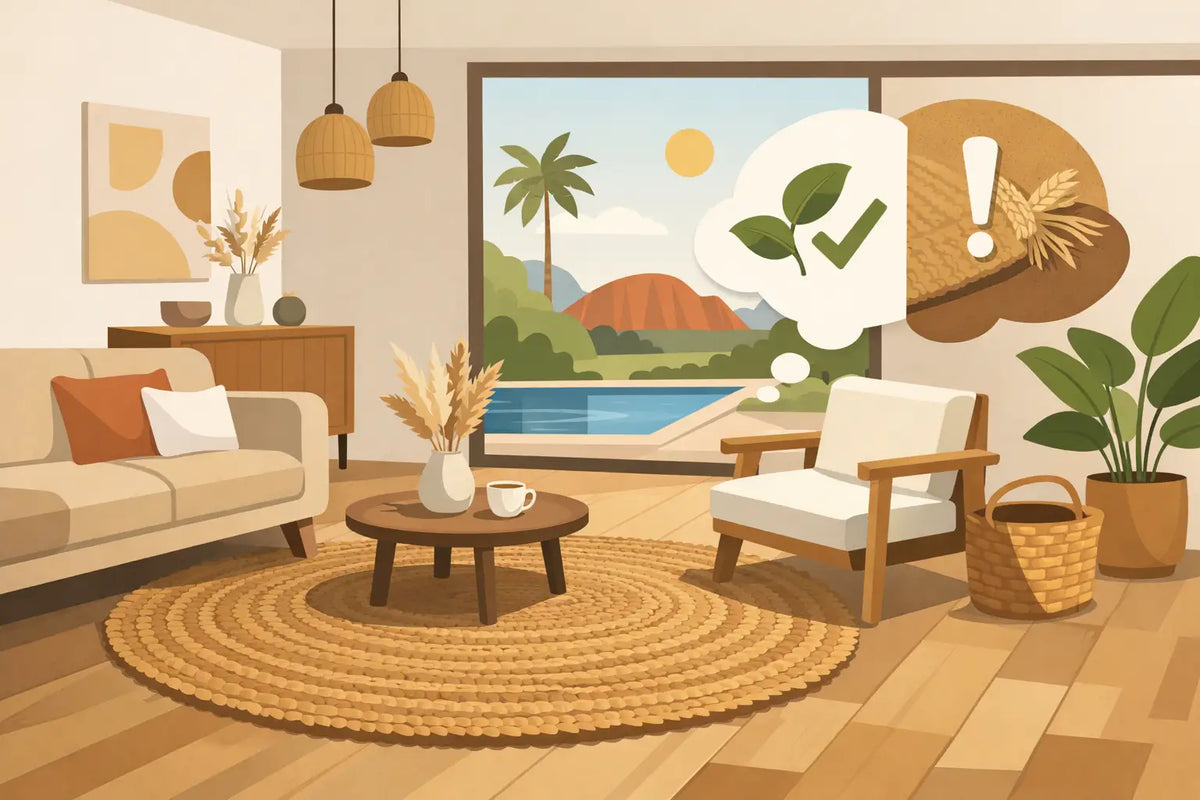
A jute rug can make a room feel finished without making it feel overly styled. Its warm, woven texture suits the relaxed, layered look many Australians love, from coastal living rooms to pared-back bedrooms. But before choosing one, it helps to understand the jute rugs pros and cons - because this beautiful natural fibre has a few practical limits alongside its undeniable charm.
For the right room and household, jute is a hardworking, affordable way to bring softness and organic character underfoot. For a spill-prone dining area, damp entry or very busy family zone, another material may be the better fit.
Why jute rugs are so popular
Jute is a natural vegetable fibre, usually woven into chunky loops, braids or flatweave textures. It has an earthy golden-tan colour that works beautifully with timber, linen, leather, rattan and neutral upholstery. It can also ground a more colourful room without competing with your furniture or artwork.
Unlike highly patterned rugs, jute has a quiet presence. It adds depth through texture rather than colour, which makes it particularly useful when a space feels a little flat or needs a natural focal point. It is equally at home in contemporary, coastal, Scandi, rustic and relaxed traditional interiors.
Jute rug pros: what makes them a smart choice
Natural texture with easy styling appeal
The biggest drawcard is visual. Jute brings a tactile, lived-in quality that synthetic fibres often cannot replicate. A large jute rug can make an open-plan living space feel warmer, while a jute runner gives a plain hallway more personality without overwhelming it.
Its neutral colouring is also wonderfully flexible. You can change cushions, throws and wall colours over time, and the rug will still work. For renters or anyone decorating gradually, that versatility is a real advantage.
A more sustainable material choice
Jute is fast-growing and renewable, so it is often a considered option for households wanting more natural materials at home. A jute rug avoids the glossy, overly uniform finish of some man-made options and has the subtle variations that make natural fibres feel special.
That said, sustainability is not only about fibre type. Consider how well a rug suits the room, how long you expect to keep it and whether its construction is made for your level of use. The most sustainable rug is one that earns a long life in your home.
Good value for a large-scale look
Natural fibre rugs can deliver impressive coverage without the price tag of a similarly sized wool rug. That makes jute especially appealing in bigger living rooms, dining spaces and bedrooms, where the right rug size has a major impact on the overall look.
The weave is often substantial, too. A jute rug can define a furniture zone and add visual weight beneath a sofa, dining table or bed. It feels considered rather than temporary, even in a simple space.
Naturally durable for everyday dry areas
Jute fibres are strong, and a well-made rug can handle regular foot traffic in dry parts of the home. In a lounge room, home office or adult bedroom, it is a practical choice that does not need delicate day-to-day treatment.
A flatter jute weave is generally easier to place under dining chairs and in hallways than a very chunky braided design. Texture matters: the more raised the weave, the more it will catch crumbs, chair legs and the occasional toy wheel.
It layers beautifully
If you love the look of a patterned or plush rug but need to cover a larger area, jute makes an excellent base layer. Place a smaller wool, washable or vintage-style rug over it to add colour and softness while keeping the room grounded.
Layering can be a particularly clever option for homes with pets or children. The jute defines the space, while the smaller top rug handles the cosier, higher-contact area and is easier to clean or replace over time.
Jute rug cons: the trade-offs to know
Moisture is jute's biggest weakness
Jute and water are not great mates. Because the fibres are absorbent, a wet spill can leave a mark, cause staining or create a musty smell if it is not dried quickly and thoroughly. Humid conditions can also affect the fibres over time.
For this reason, jute is not the best choice for bathrooms, laundries or outdoor areas. It also needs careful thought near an external door where wet shoes, umbrellas and muddy paws are part of everyday life. In those spots, a washable, indoor-outdoor or low-pile synthetic rug will usually be more forgiving.
It can shed, especially when new
Some shedding is normal with jute, particularly in the first weeks after unrolling. You may notice small fibres or bits of natural debris on the floor around the rug. Regular gentle vacuuming can help, but avoid a harsh beater bar that may pull at the weave.
Shedding tends to settle, although it may never disappear entirely with a very chunky or loosely woven design. If you need a spotless floor because of crawling babies, allergies or a dark polished surface that shows every fibre, choose a tighter flatweave or consider wool and washable alternatives.
The feel underfoot is firmer than wool
Jute has texture, but it is not plush. Some people love its satisfying, natural feel; others find it a little scratchy when sitting or playing on the floor. It is generally more comfortable in a living room under furniture than as the main soft surface in a child's bedroom or family play space.
A quality rug underlay can make a meaningful difference. It adds a little cushioning, helps prevent slipping and reduces friction between the rug and your flooring. If softness is non-negotiable, however, a wool rug may be worth the extra investment.
Sun and wear can change the finish
Natural fibres develop character, which is part of jute's appeal, but they are not immune to fading and wear. Prolonged direct sun may lighten the colour, while repeated pressure from furniture legs can compress the weave. Rotating the rug every few months helps it wear more evenly.
Pet claws can also catch on open loops. A flatwoven jute rug is often the safer choice for homes with energetic dogs or cats, while a very chunky looped design is better kept for lower-traffic rooms.
Where a jute rug works best
Jute shines in dry, low-to-medium traffic spaces where texture matters as much as practicality. Think living rooms, bedrooms, studies and occasional sitting areas. It is also a strong option beneath a dining table in a calm household where spills are unlikely and everyone is happy to act quickly if one happens.
For a family living room, a jute rug can work well if it sits beneath a coffee table and sofa rather than becoming the main play mat. Choose a dense, flat construction and make peace with a little natural variation. That is the nature of the material, not a fault.
If your home has young children, pets, frequent entertaining or a habit of snacks on the sofa, use jute where it will be admired rather than tested. A washable rug may be the more relaxed choice for the main action zone.
How to care for a jute rug
The golden rule is to keep moisture to a minimum. Blot spills immediately with a clean, dry cloth, working from the outside towards the centre. Do not rub, soak or steam-clean jute. If a spill is substantial, professional advice is the safest next step.
Vacuum regularly on a gentle setting and without an aggressive rotating brush. Lift the rug occasionally to remove grit underneath, as trapped dirt can wear the backing and fibres over time. Use a non-slip underlay to improve comfort, protect your floors and help the rug sit neatly.
For small bits of loose fibre, trim them carefully rather than pulling. Pulling can loosen surrounding strands and make a small imperfection more noticeable. Like timber and linen, jute looks best when you allow it to be natural rather than expecting a perfectly uniform finish.
Is a jute rug right for your home?
Choose jute if you want an affordable natural rug with plenty of texture, a relaxed palette and an easy-to-style look. It is a lovely fit for dry living spaces, bedrooms and homes that favour warm, organic materials. Choose something else if your priority is stain resistance, softness, easy washing or performance in damp and high-mess areas.
The best rug is not simply the one that looks right on screen. It is the one that suits the way your household actually lives. A jute rug can bring beautiful texture to Aussie living - just give it a dry spot, a little care and room to show off its natural character.


Leave a comment
This site is protected by hCaptcha and the hCaptcha Privacy Policy and Terms of Service apply.