


Your dining room should be the heart of the home, yet many Australian open-plan spaces end up feeling like a collection of sharp edges and cold corners. Choosing a round rug dining room layout is the most effective way to break that "boxiness" and create a natural flow that invites people to linger. It's a bold styling choice that instantly softens the room, but it often comes with a side of sizing anxiety. You've likely worried about chairs catching on the edge or the rug looking like a tiny island in a sea of floorboards.
We understand that a rug needs to do more than just look good in a photo; it has to survive Sunday roasts and busy family breakfasts. This guide will help you master the art of sizing and styling to ensure your space feels cohesive and balanced. We'll walk you through the latest 2026 trends in wool and natural fibres, provide the exact measurements for effortless chair movement, and show you how to pick durable materials that handle spills without stress. By the end, you'll have the confidence to transform your dining area into a perfectly finished sanctuary that reflects your personal style.
Key Takeaways
- Learn how to apply the "Golden Rule" of sizing to ensure your dining chairs stay securely on the rug, even when pulled out for guests.
- Discover why a round rug dining room arrangement is the secret to softening the sharp, linear architecture common in modern Australian open-plan homes.
- Identify the most durable fibres, such as wool and flatweave, that offer natural stain resistance and can withstand the daily rigours of family mealtime.
- Master the art of coordinating textures and warm, earthy colour palettes to create a cohesive look that suits both coastal and contemporary interiors.
- Gain professional maintenance strategies for protecting your investment from common spills and the specific wear and tear caused by heavy dining furniture.
Softening the Space: Why a Round Rug Suits Modern Australian Dining Rooms
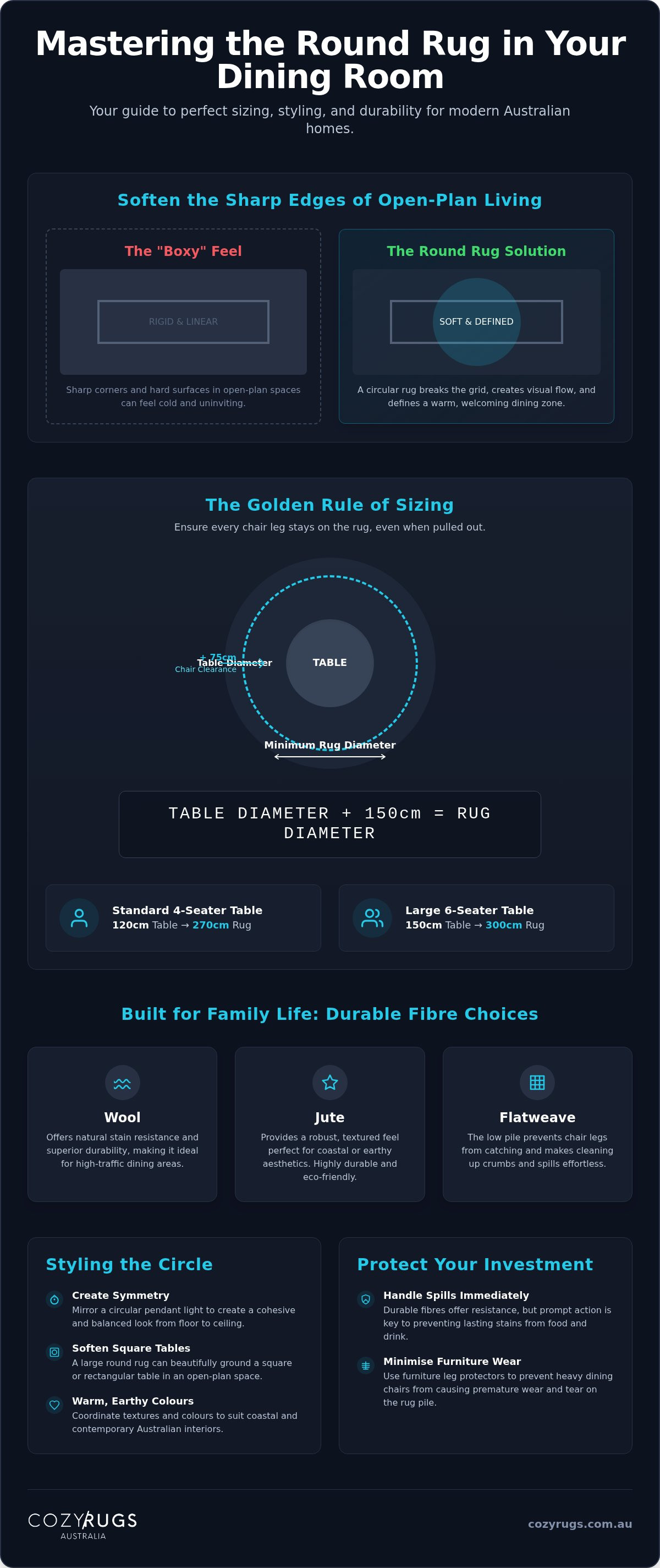
Modern Australian architecture loves a straight line. Think of the standard open-plan layout: rectangular kitchen islands, long dining tables, and expansive timber floors. It's clean and functional, but it can often feel a bit clinical or "boxy." A round rug dining room setup acts as a structural styling tool. It breaks the rigid grid of the room, introducing a soft, organic shape that contrasts with the hard surfaces and sharp corners common in our local homes.
In interior design, we focus heavily on the concept of visual flow. This is the way your eye naturally moves through a space. While rectangular rugs reinforce the boundaries of a room and can sometimes make it feel closed in, a circular rug encourages the eye to move around the furniture. This creates a more inviting, relaxed atmosphere that feels less like a showroom and more like a home. There's also a common myth that round rugs are strictly for round tables. In reality, they work beautifully with square tables by softening the overall silhouette of your dining suite and making the area feel more approachable.
Breaking the "Boxy" Feel of Open-Plan Living
Australian homes frequently feature hard timber floors and large, open-plan layouts that lack natural division. Using round rugs Australia wide has become a favoured technique for creating a dedicated "island" for dining. Instead of the table floating aimlessly between the kitchen and the lounge, the rug provides a clear, curved boundary. It defines the dining zone without the need for physical walls, balancing sharp-edged dining suites with circular textures that feel warm underfoot.
When to Choose Round Over Rectangular
While rectangular rugs are a traditional choice, there are specific scenarios where a circle is simply superior. If you're working with a perfectly square room or a small breakfast nook, a round rug dining room layout prevents the space from looking cramped or overly formal. It's also the ideal partner for circular pendant lights, mirroring the shape from floor to ceiling to create a cohesive sense of symmetry. In a minimalist decor scheme, a round rug acts as a quiet but powerful focal point that grounds the furniture without overwhelming the surrounding floor space.
The Sizing Formula: Calculating the Perfect Diameter for Your Dining Suite
Getting the size right is the difference between a room that feels professionally styled and one that feels "off." The most common mistake we see is the "island effect," where a rug is just large enough to fit the table but too small for the chairs. This isn't just a styling issue; it's a practical one. To master your round rug dining room layout, you must follow the Golden Rule: every chair leg must stay on the rug, even when a guest is pulling their seat out to sit down.
The math is actually quite simple once you know the secret formula. Take your table's diameter and add 150cm. This allows for a 75cm border around the entire perimeter. For example, if you have a standard 120cm 4-seater circular table, you'll need a rug with at least a 270cm diameter. If you're working with a larger 150cm 6-seater, you should be looking at a 300cm rug. Anything smaller creates a frustrating tripping hazard where chair legs constantly catch on the edge of the pile, which can damage both your rug and your floor over time.
The 75cm Rule for Chair Clearance
Why is 75cm the magic number? It’s the average distance needed for a person to comfortably push back from the table. Without this clearance, the back legs of the chair will drop off the rug, making the seat tilt and causing the rug to bunch up when the chair is pushed back in. When measuring your space, ensure this extra width doesn't hit your skirting boards or overlap with a nearby sideboard. For more specific tips on handling tricky room layouts, our Rug Size Guide Australia provides a deeper dive into measuring for success.
Round Rugs Under Rectangular Tables: Does it Work?
It certainly can, provided you go big. A round rug can beautifully ground a slim rectangular suite in a large, open-plan area by softening the long lines of the furniture. The trick is ensuring the rug is wide enough that the "corners" of the table don't feel like they're spilling over the edge. For these expansive spaces, exploring extra large rugs australia wide is often the best path to finding a piece that offers enough scale to feel intentional. If you're still feeling unsure about the numbers, don't forget that we offer free design consultations to help you find the perfect round rug dining room fit for your home.
Wool, Jute, or Flatweave? Comparing Materials for Dining Room Durability
Choosing the right fibre for your round rug dining room is just as critical as getting the size right. This is a high-stakes environment where crumbs, coffee spills, and heavy furniture legs are part of daily life. You need a material that can handle the constant friction of chairs sliding back and forth without fraying or shedding. For this reason, we always recommend low-pile or flatweave options. While a plush, high-pile rug might feel luxurious, it makes moving chairs a constant struggle and traps every stray grain of rice deep within its fibres.
Durability in a high-traffic zone isn't just about how long the rug lasts, but how well it maintains its appearance under pressure. A rug that looks worn after six months of family dinners isn't a good investment. By selecting materials that are naturally resilient, you ensure your dining space remains an inviting sanctuary rather than a maintenance headache.
Wool Rugs: The Natural Choice for Longevity
Many homeowners worry that wool is too precious for a dining space, but wool rugs australia wide are actually the gold standard for durability. Wool fibres contain lanolin, a natural coating that makes them inherently stain-resistant. If you drop a bit of gravy or wine, the liquid tends to sit on the surface for a few moments rather than soaking in immediately, giving you time to blot it away. Wool also has an incredible "bounce back" factor. While synthetic fibres often stay permanently flattened under the weight of heavy timber table legs, wool recovers its shape quickly. It's a common myth that wool is hard to clean; in reality, its natural structure sheds dirt easily with regular vacuuming.
Natural Fibre Rugs: Jute and Sisal in the Dining Room
For that relaxed, coastal aesthetic so popular in our local homes, natural rugs australia made from jute or sisal are hard to beat. These materials are incredibly tough and can handle the heavy-duty friction of chair legs better than almost any other fibre. Jute provides an earthy texture that hides crumbs well, though it is more porous than wool, making it better suited for "dry" dining areas. If you want the low profile of a natural rug with even more practical benefits, a flatweave rug is a fantastic alternative. These have no pile at all, meaning they are virtually trip-free and allow chairs to glide with zero resistance, making them the ultimate choice for busy family households.
Styling the Circle: Co-ordinating Your Rug with Coastal and Modern Decor
Styling a round rug dining room layout is about more than just following a floor plan; it is about setting a mood that reflects your lifestyle. While the shape itself introduces a sense of softness, the textures and colours you choose will define the room's character. In many Australian homes, the dining area is part of a larger, multi-functional space. This means your rug needs to act as a visual anchor that coordinates with your kitchen cabinetry, floor type, and even the view outside your windows. Whether you are aiming for a relaxed beachside vibe or a sharp, city-chic aesthetic, the right circular rug ties these elements together into a cohesive story.
Colour palettes play a massive role in this process. A neutral grounding rug in sandy beige or soft grey allows your furniture to take centre stage, which is ideal if you have a statement dining table. On the other hand, a bold, patterned rug can inject personality into a minimalist room that feels a bit too quiet. When pairing a round rug with other furniture, consider the legs of your chairs. Slim, tapered legs look fantastic against a flatweave texture, while heavier, more solid furniture suites benefit from the visual weight of a thicker wool pile.
The Coastal Australian Aesthetic
The coastal look is a staple of local design, often featuring light-coloured timbers like Tasmanian Oak or Blackbutt. To complement these warm, honey-toned floors, we recommend natural textures like jute or bleached wool. These materials mirror the organic elements of the coast, creating a relaxed, "barefoot" luxury feel. You might even consider how to style traditional rugs within a beachside setting. A faded, traditional Turkish rug in soft blues or corals can add a layer of history and warmth to a modern coastal home without feeling overly formal. The key is to choose refined weaves that don't compete with the chunky, natural textures of your other decor.
Modern Minimalism and the Darren Palmer Collection
For those who prefer a more sophisticated, high-end look, our Darren Palmer Collection offers designer pieces that are perfect for contemporary interiors. In a modern minimalist dining room, grey and charcoal tones work beautifully when paired with black or metallic dining chairs. This creates a sharp, monochromatic contrast that feels incredibly polished. When styling these designer rugs, pay close attention to the "negative space" around the circle. You want at least 20cm to 30cm of visible floorboard between the edge of the rug and the nearest wall or piece of furniture. This breathing room prevents the round rug dining room setup from feeling cluttered and allows the rug's shape to truly shine as a focal point.
Ready to elevate your home with a designer touch? Shop the Darren Palmer Collection today to find a piece that perfectly balances style and durability.
Practical Care: Protecting Your Investment from Spills and Chair Wear
Your round rug dining room choice is a significant investment in your home's comfort and style. To keep it looking its best, you need a proactive maintenance plan that accounts for the unique challenges of a dining space. Unlike a lounge rug that mostly sees foot traffic, a dining rug faces the mechanical stress of chairs sliding and the immediate risk of food and drink spills. Maintaining the beauty of your rug isn't difficult, but it does require a bit of consistency and the right tools.
Before you even place your new rug, consider the foundation. On Australian timber floors, a high-quality rug pad is non-negotiable for both safety and longevity. It prevents the rug from slipping and acts as a shock absorber, reducing the friction between the rug backing and your floorboards. This extra layer also stops fine grit and dust from acting like sandpaper against your floor. To prevent "pitting" or deep indentations from heavy timber tables, we recommend using furniture cups under the table legs to distribute the weight more evenly across the pile.
Managing Chair Friction and Rotation
The area where your chairs sit will always experience more wear than the centre of the rug. Rotating your rug 180 degrees every six months is a simple way to ensure the fibres wear down at the same rate and avoid clear "traffic paths." We also suggest attaching felt or plastic chair glides to the bottom of your dining suite. These allow the chairs to slide smoothly over the rug surface, preventing the "hooking" or pulling that can occur with raw timber or metal legs. Regular rotation also protects your rug from the harsh Australian sun by ensuring that any potential fading occurs evenly across the entire surface.
Emergency Spill Guide for Dining Rugs
When the inevitable Sunday roast spill happens, remember the golden rule: blot, don't rub. Rubbing pushes the liquid deeper into the fibres and can permanently distort the texture of the wool or jute. Use a clean, white cloth or paper towel to absorb as much liquid as possible immediately. For wool, a small amount of lukewarm water with a tiny drop of wool-safe detergent is usually enough to lift most spots. However, jute and other natural fibres are sensitive to moisture, so you should use as little water as possible and dry the area quickly with a hairdryer on a cool setting. If you're dealing with a major red wine spill or a set-in stain, it's often safer to call a professional technician rather than risking a DIY disaster with harsh supermarket chemicals.
Still feeling unsure about which material is right for your busy household? Contact our experts for a free design consultation to find your perfect dining rug.
Elevate Your Home with the Perfect Circular Anchor
Mastering the round rug dining room aesthetic is one of the most rewarding styling projects you can undertake for your home. By prioritising the 75cm chair clearance rule, you ensure your space remains as functional as it is beautiful. Choosing durable fibres like wool or flatweave provides a natural resistance to the daily spills and heavy furniture wear typical of busy Australian households. Whether you are softening a modern open-plan layout or grounding a coastal dining suite, the right rug creates a sense of harmony that rectangular options simply cannot match.
As an Australian owned and operated business, we are committed to helping you find high-quality pieces that stand the test of time. Our collection features everything from sustainable natural rugs to sophisticated designer options. If you are still feeling unsure about measurements or textures, we offer free design consultations to take the guesswork out of your decorating journey. Browse our curated collection of round rugs for Australian dining rooms and discover how easy it is to create a space your family will love for years to come. Your perfectly balanced dining room is just a few clicks away.
Frequently Asked Questions
Can I put a round rug under a rectangular dining table?
Yes, you can absolutely place a round rug dining room setup under a rectangular table. This works best in large, open-plan spaces where you want to soften the long, straight lines of the furniture. The key is ensuring the rug's diameter is wide enough so the table's corners don't look like they are hanging off the edge. It creates a striking, modern look that breaks up the traditional grid layout of a room.
How much larger should a round rug be than the dining table?
Your rug should be at least 150cm larger than the diameter of your table. This allows for a 75cm border on all sides, which is the standard distance needed for a person to push their chair back comfortably. If you choose a rug that is too small, the back legs of the chairs will drop off the edge. This creates a tripping hazard and causes the rug to bunch up over time.
What is the best rug material for a dining room with kids and pets?
Wool and flatweave rugs are the gold standard for households with children or pets. Wool contains natural lanolin, which acts as a protective barrier against spills, while flatweave options have no pile for crumbs to get trapped in. Both materials are incredibly durable and can withstand the heavy-duty friction of daily family meals. They are much easier to maintain than high-pile synthetic options that tend to mat and hold onto odours.
Will a round rug make my small dining room look bigger?
A round rug is a fantastic tool for making a small dining area feel more spacious. Because the curved edges don't reach the corners of the room, they expose more of your timber floors, which creates an illusion of openness. The lack of sharp boundaries helps the furniture feel less cramped in tight quarters. This allows the eye to move freely around the space without being stopped by heavy, rectangular lines.
Do all the chair legs need to stay on the rug when in use?
Yes, all four chair legs must stay on the rug at all times, even when the chair is pulled out for use. If the back legs fall off the edge, the chair becomes unstable and the guest will feel a noticeable tilt. More importantly, constant movement over the edge of the rug will eventually cause the pile to fray or the backing to delaminate. This significantly shortens the lifespan of your investment.
How do I stop my round rug from sliding on timber floors?
The most effective way to stop a round rug dining room from sliding is to use a high-quality rug pad. This is particularly important on timber floors or tiles where the rug can easily shift under the weight of people sitting down. A pad provides extra grip, protects your floor's finish from scratches, and adds a layer of cushioning that makes the rug feel more luxurious and stable underfoot.
Are jute rugs too scratchy for a dining room?
Jute rugs are not typically scratchy in a way that affects a dining experience, as guests usually have their shoes on or feet tucked under the table. They offer a wonderful, earthy texture that is perfect for coastal Australian homes. While they are slightly firmer than wool, their incredible durability under the friction of chair legs makes them a very practical choice. They are best suited for dry dining areas where heavy liquid spills are less likely.
How often should I clean a rug under a dining table?
You should vacuum your dining rug at least once a week to prevent crumbs and grit from settling deep into the fibres. Immediate spot cleaning is essential for any spills to prevent permanent staining. Additionally, we recommend rotating your rug 180 degrees every six months. This ensures that the wear from chair movement and exposure to the sun remains even across the entire surface, keeping your rug looking fresh for longer.

Leave a comment
This site is protected by hCaptcha and the hCaptcha Privacy Policy and Terms of Service apply.