

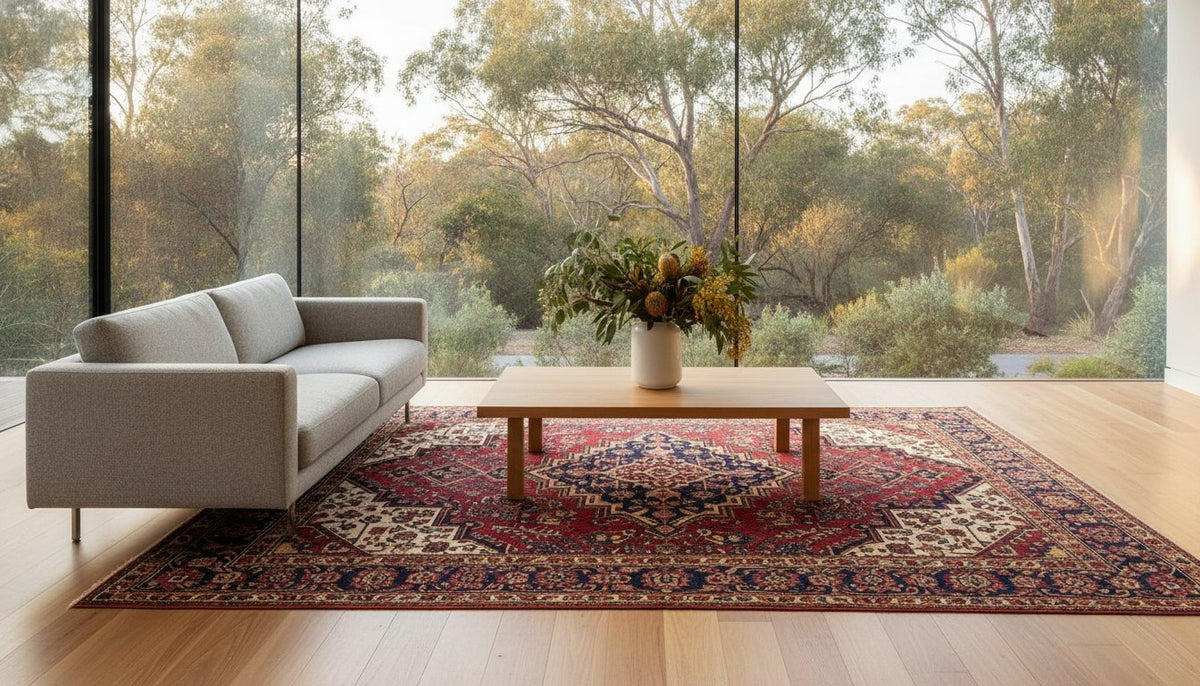
What if that intricate, century-old pattern is actually the missing piece your minimalist living room has been waiting for? Many Australian homeowners feel a bit stuck when it comes to heritage designs, often worrying that a classic pattern will clash with their modern furniture or make the room feel dated. It’s a common concern, especially when you're trying to figure out how to style traditional rugs in a large, open-plan space without losing that sense of contemporary ease.
We agree that getting the balance right is the hardest part of decorating. You want a home that feels warm and soulful, but you also need practical solutions for high-traffic zones and a clear plan for rug sizing so your furniture doesn't look like it's floating. You shouldn't have to choose between a beautiful aesthetic and a durable foundation that can handle the reality of family life.
This guide will show you how to seamlessly integrate traditional Turkish rugs and wool collections into your home for a sophisticated, comfortable look. We'll explore how to choose the right materials to anchor your space and how to mix old-world charm with modern Australian style. By the end, you'll have the confidence to create a cohesive room that feels both curated and lived-in.
Key Takeaways
- Learn to identify the heritage behind medallions and floral motifs to distinguish between Traditional Turkish rugs and other classic patterns.
- Master the 'rule of three' by picking dominant colours from your rug to coordinate your cushions, throws, and artwork for a cohesive look.
- Discover how to style traditional rugs in modern spaces using the 80/20 rule to balance heritage patterns with minimalist furniture.
- Solve the placement puzzle in open-plan homes by understanding when to use 'all legs on' versus 'front legs on' styling for your lounge.
- Find out why wool is the gold standard for longevity, offering a naturally stain-resistant foundation that stands up to heavy foot traffic.
What defines a traditional rug in a modern Australian home?
Think of a traditional rug and you likely picture deep reds, intricate borders, and a grand centre medallion. While these classic features remain, the way we use them in Australia has evolved. A traditional rug is defined by its storied history and specific design motifs, such as floral patterns, arabesques, and geometric shapes. If you are researching What is a traditional rug?, you'll find it's an umbrella term that covers various weaving techniques and cultural histories. In the context of our local homes, these rugs serve as a bridge between the craftsmanship of the past and the clean aesthetics of the present. Traditional rugs are timeless investment pieces that bridge the gap between heritage and contemporary living.
We've noticed a significant shift in how to style traditional rugs recently. While minimalist and coastal interiors used to rely solely on plain textures, homeowners are now craving more character. A heritage pattern provides a focal point that keeps a neutral room from feeling sterile. It's about finding that balance where a Traditional Turkish Rug feels right at home alongside a sleek, modern sofa and a few potted palms.
The hallmark of heritage: Turkish vs Persian styles
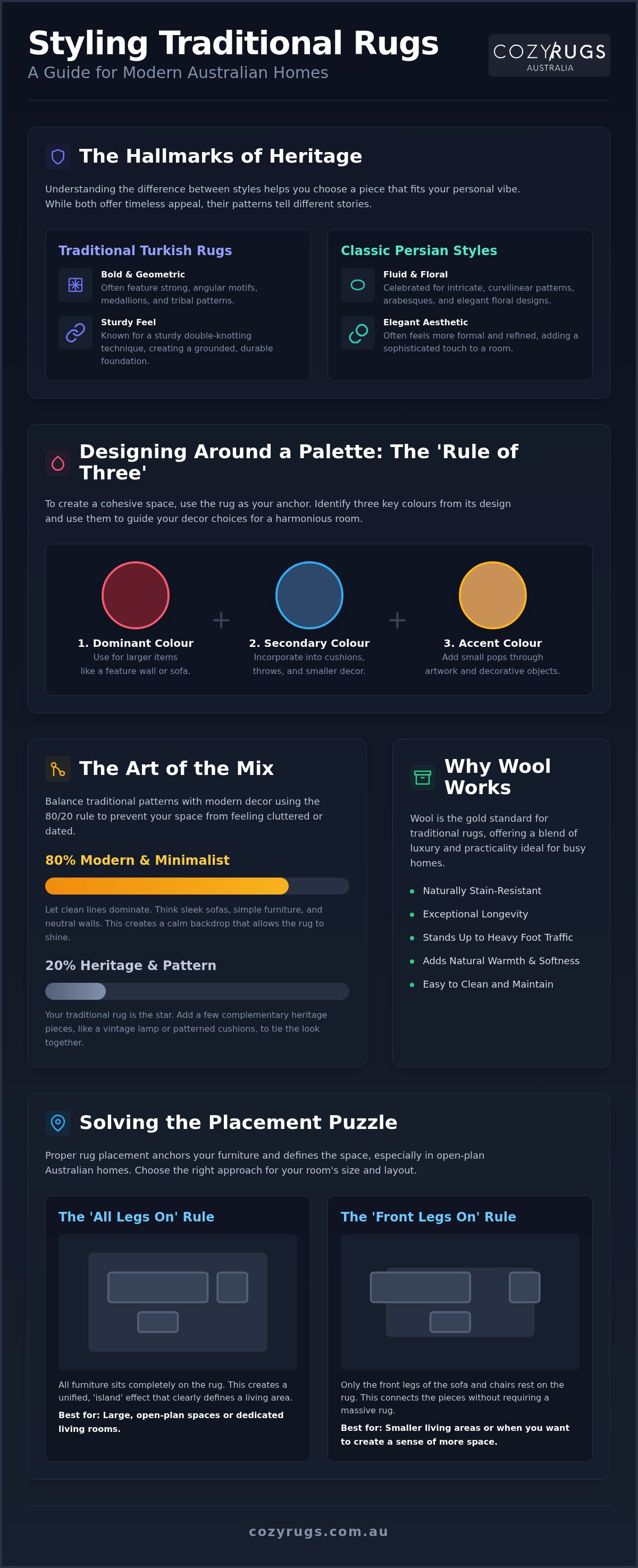
Understanding the difference between styles helps you choose a piece that fits your personal vibe. Traditional Turkish Rugs often feature bold, geometric elements and are known for their sturdy double-knotting technique. They tend to feel a bit more "tribal" and grounded, which is perfect for a relaxed family room. In contrast, Persian styles are celebrated for their fluid, floral designs and curvilinear patterns that feel incredibly elegant. Many Australians are currently gravitating towards the "distressed" or "faded" look. This aesthetic mutes the original vibrant colours, making it much easier to blend a complex pattern into a modern living area without the design feeling overwhelming.
Why traditional rugs work with modern architecture
Modern Australian architecture often celebrates sharp lines, high ceilings, and hard surfaces like polished concrete or timber. While these look stunning, they can sometimes feel a bit cold underfoot. An intricate traditional rug acts as a visual anchor, softening those hard architectural edges and adding much-needed warmth. It brings a sense of "soul" to a white-based room, providing a layer of history that new builds often lack. Knowing how to style traditional rugs effectively starts with appreciating this architectural impact. To understand more about how different textures play a role in your home, you might find The Ultimate Guide to Natural Rugs in Australia a helpful resource for pairing these heritage pieces with other organic materials.
Designing around a palette: The rug as your room’s anchor
How do you stop a multi-coloured rug from feeling messy? The secret lies in identifying your anchor colours. When you're learning how to style traditional rugs, the first step is to look closely at the pattern. Every traditional rug has a dominant background colour and several smaller accent shades hidden in the motifs. Identifying these helps you build a palette that feels intentional rather than accidental.
We recommend the rule of three to create a cohesive space. Pick three distinct colours from the rug's weave. Use the most prominent shade as a guide for larger furniture pieces, then use the two secondary colours for your cushions, throws, and artwork. This creates a visual thread that pulls the entire room together without it feeling over-styled. If your rug has a bold, busy pattern, keep your walls neutral. This prevents visual clutter and lets the rug ground the room, which is especially helpful in Australian homes with high ceilings or floor-to-ceiling windows where space can otherwise feel a bit floaty.
Working with earthy and jewel tones
Deep reds and navies are the backbone of Traditional Turkish Rugs. These rich jewel tones bring an immediate sense of warmth and history to a lounge room. They pair beautifully with common Australian flooring like the honey-hued Tasmanian Oak or the warmer, reddish tones of Spotted Gum. If you prefer a more understated look, neutral-toned traditional rugs provide a sophisticated, soulful minimalist vibe. These pieces offer the texture and pattern of a heritage rug but in a palette of creams, beiges, and soft greys that blend seamlessly into a coastal-inspired home.
The focal point strategy
A traditional rug is more than just floor covering; it's a piece of art. To make the most of it, position your rug to draw the eye toward your room’s best features, like a fireplace or a large window. If you've chosen a rug with a stunning central medallion, be careful with your furniture placement. A glass coffee table is a clever way to keep the medallion visible while still providing a practical surface. If you're feeling unsure about which palette suits your home, our team offers free design consultations to help you find the perfect match.
Choose a rug that pops if your furniture is very simple, or one that blends into the floor if you already have bold art on the walls. By using the rug as your starting point, you ensure that every other design choice feels balanced. This approach prevents the pattern from overwhelming the space while still allowing its heritage character to shine through.
The art of the mix: Pairing traditional patterns with contemporary decor
Ever wondered how to make a centuries-old design look fresh in a brand-new home? The secret to mastering how to style traditional rugs lies in the balance of your room's elements. We often recommend the 80/20 rule. This means keeping 80% of your room modern, with clean-lined furniture and neutral walls, while the remaining 20% is dedicated to traditional accents like your rug. This ratio ensures your space feels curated and intentional rather than cluttered or dated.
Pairing these intricate patterns with modern textures is another way to elevate the look. A plush wool rug feels incredibly luxurious when placed under a sleek leather sofa or paired with soft linen curtains. If you're feeling bold, try contrasting the organic floral motifs of a traditional piece with sharp, geometric artwork on the walls. This creates a gallery-style atmosphere that feels sophisticated and uniquely yours. For those who want a high-end designer finish, looking at pieces from the Darren Palmer Collection can show you exactly how to bridge the gap between heritage patterns and modern Australian luxury.
Traditional meets modern minimalist
Minimalist homes often rely on hard surfaces like polished concrete or pale timber floors. While these look stunning, they can feel a bit cold. A detailed rug adds immediate warmth and helps define specific areas in an open-plan layout. Traditional patterns are also the perfect partner for mid-century modern furniture. The tapered legs of a 1960s-inspired sideboard allow the rug's pattern to flow underneath, preventing the room from feeling heavy. If you're leaning towards a lighter aesthetic, check out our Scandinavian Rugs in Australia Guide for more tips on blending minimalism with comfort.
Coastal traditional: A unique Australian crossover
You don't have to live in a manor to enjoy a heritage design. In beachside homes, we love styling faded, light-blue, or sandy-toned traditional rugs to create a "Global Coastal" vibe. These pieces feel relaxed and sun-drenched, especially when paired with natural materials like jute, rattan, and light oak. By choosing a rug with a washed-out or distressed finish, you get the character of a traditional motif without the heavy formality. It's a great way to add a layer of history to a relaxed, airy home while keeping that quintessential Australian indoor-outdoor feel.
Room-by-room placement: From living areas to hallways
Where you place your rug is just as important as the pattern itself. In modern Australian homes, we often deal with large, multi-functional spaces that can feel a bit empty if not styled correctly. Knowing how to style traditional rugs effectively often starts with using them to define these areas. A well-placed rug acts as a visual boundary, telling the eye exactly where the lounge ends and the dining room begins. This is particularly useful in new builds where the floor plan is completely open.
In the lounge room, the big debate is often about furniture legs. For a grand, luxurious feel, the "all legs on" approach works best. This means your sofa and armchairs sit entirely on the rug, creating a cohesive island of comfort. If your room is a bit tighter, the "front legs on" method is a fantastic alternative. It anchors the furniture to the rug without making the space feel cramped. Don't forget the bedroom, either. Placing a large traditional rug under the bottom two-thirds of your bed creates a soft, heritage-inspired sanctuary that feels incredibly inviting on a cold morning.
Mastering the open-plan layout
Open-plan living is a staple of Australian architecture, but it can be tricky to get right. A common mistake is choosing a rug that's too small, which makes it look like it's floating in the middle of the room. To properly zone a space, your rug should be large enough to comfortably fit your main furniture pieces. This creates a dedicated lounge zone that feels separate from the kitchen or dining area. If you're unsure about the dimensions you need, our Rug Size Guide Australia provides all the measurements you'll need to find the perfect fit for your home.
Traditional runners for Australian hallways
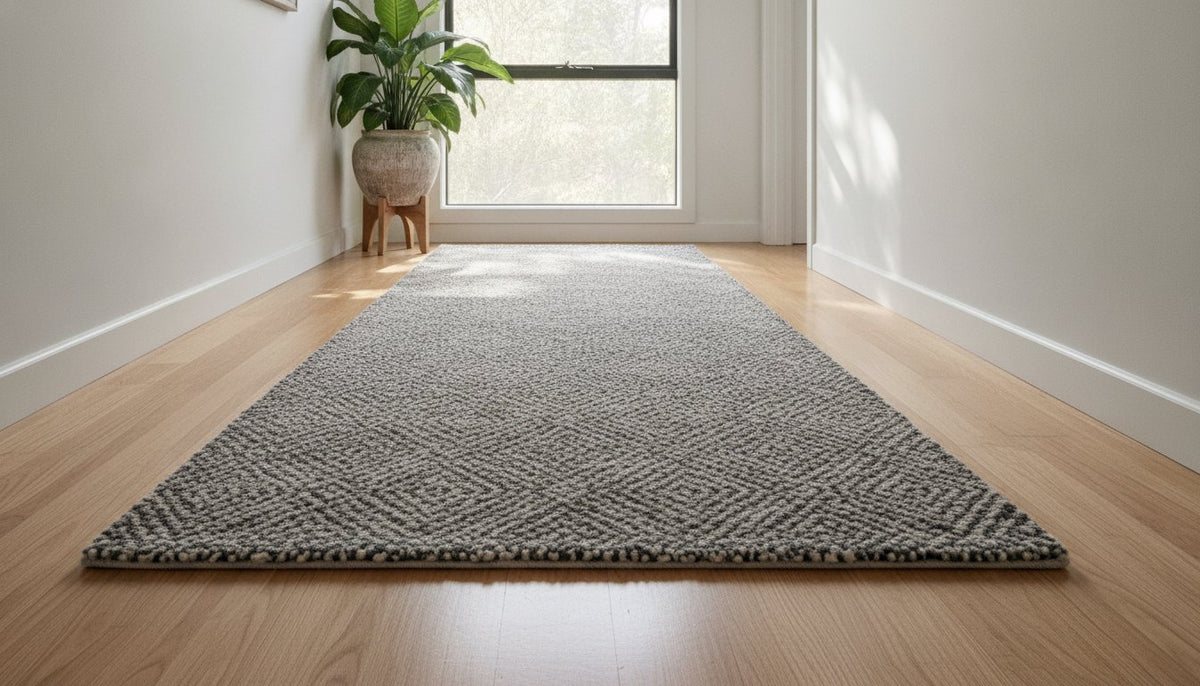
Hallways are the hardest working parts of any home. Traditional runners are a brilliant choice here because their intricate patterns are excellent for hiding the occasional footprint or bit of dust between vacuums. When measuring your corridor, aim to leave a consistent timber border of about 10 to 15 centimetres on all sides. This allows your beautiful floorboards to frame the rug, making the hallway feel wider and more intentional. For more advice on choosing a durable piece for your entryway, take a look at our Hallway Runners Australia Guide.
Ready to transform your home? You can explore our full range of Traditional Turkish Rugs to find the perfect anchor for your space today.
Choosing the right material for longevity and style
Is a traditional rug a practical choice for a busy family home? If you choose the right material, the answer is a resounding yes. Wool is the undisputed gold standard for traditional rugs in Australian homes. It's a natural fibre that offers a level of durability and resilience that synthetic alternatives simply can't match. Because wool fibres are naturally coated in lanolin, they're remarkably stain-resistant, giving you those precious extra seconds to clean up a spill before it sets. Wool also has a natural "crimp" that allows it to bounce back, meaning it won't permanently crush under the weight of a heavy timber dining table or sofa.
When you're looking at how to style traditional rugs for the long term, you need to know how to spot quality. A high-quality rug should feel heavy and dense. You can test this by pressing your thumb into the pile; if you can easily feel the foundation of the rug, the weave might be too loose. Look for a clean finish on the edges and a pattern that's clear and well-defined. To keep your investment looking its best, we recommend rotating your rug 180 degrees every six months. This ensures even wear and prevents one side from fading faster than the other if it sits in a sunny spot near a window.
The benefits of wool rugs
Wool is a powerhouse when it comes to thermoregulation. It's a breathable material that helps keep your home cool during a scorching Australian summer while providing excellent insulation during the winter months. This makes it a smart choice for year-round comfort in any climate. For families with pets or young children, wool is the best choice for traditional styling. It doesn't trap odours as easily as synthetic materials and is naturally flame-retardant. If you're ready to dive deeper into what makes a premium piece, our guide on Wool Rugs Australia: Choosing Quality covers everything you need to know.
Final styling checks before you buy
Before you make your final decision, there are a few practicalities to tick off. Check the pile height of the rug if you're planning to place it near a door. You don't want your beautiful new runner getting caught every time you open the front door. We also strongly recommend using a high-quality rug pad. This won't just keep the rug from slipping; it also provides an extra layer of protection for your timber or tiled floors. If you're still feeling a bit uncertain about which pattern or size will work best, you can use our free design consultation to finalise your choice. We're here to help you find a piece that you'll love for decades to come.
Transform your home with a touch of heritage
Bringing a sense of history into your space doesn't have to feel like a step back in time. By leaning into the 80/20 rule and using the rule of three to guide your colour palette, you now have a clear plan for how to style traditional rugs in a way that feels fresh and intentional. These heritage pieces do more than just cover the floor; they act as a soulful anchor that balances the clean lines of modern Australian architecture with warmth and character.
Choosing a high-quality wool rug ensures your home remains practical for kids and pets while staying comfortable throughout the seasons. If you're still feeling unsure about the right size or pattern for your space, we're here to help. Our team offers free design consultations with our rug experts to ensure you find the perfect fit. With durable wool options for every room and fast shipping across Australia, your dream interior is closer than you think.
Browse our collection of Traditional Turkish Rugs and find your perfect anchor today.
We can't wait to see how you blend these timeless designs into your modern lifestyle. Your home is your sanctuary, and with the right traditional rug, it's going to feel more like you than ever before.
Frequently Asked Questions
Can I put a traditional rug in a modern house?
Yes, you absolutely can. Traditional rugs are a brilliant way to add character and "soul" to a modern Australian home, especially new builds that might feel a bit sterile. The intricate patterns soften the sharp architectural lines of contemporary designs. By following the 80/20 rule, where 80% of your room is modern and 20% is traditional, you create a curated look that feels balanced and intentional rather than dated.
What colour traditional rug should I choose for a dark room?
If your room lacks natural light, look for traditional rugs with a cream, beige, or soft blue base. Faded or distressed patterns are particularly effective because they reflect light rather than absorbing it. Warm, sandy tones can also help a dark space feel more inviting. Avoid very deep reds or navies in small, dark rooms, as these can make the area feel enclosed and heavy underfoot.
How do I mix a traditional rug with a patterned sofa?
The key to mixing patterns is varying the scale. If your sofa has a large, bold floral print, choose a traditional rug with a smaller, tighter motif. If the rug has a grand centre medallion, your sofa pattern should be subtle or textured rather than busy. Keep a consistent colour thread between the two pieces to ensure they feel like part of the same design story rather than competing for attention.
Are traditional rugs out of style in 2026?
Not at all. In 2026, we're seeing a strong shift toward "soulful minimalism" and "Neo-Deco" trends in Australia. Homeowners are moving away from cold, grey palettes toward warmer, nature-inspired tones. Traditional rugs, particularly those in earthy terracotta or olive greens, are more popular than ever. They provide a sense of permanence and craftsmanship that complements the current desire for sustainable, long-lasting furniture and intentional living spaces.
How do I choose the right size traditional rug for my dining room?
Your dining rug needs to be large enough for all chair legs to remain on the rug, even when people are sitting in them. A good rule of thumb is to measure your table and add at least 60 to 90 centimetres to each side. This prevents chairs from catching on the edge of the rug as people get up. A flatweave or low-pile wool rug is usually the best choice for under a dining table.
What is the best way to clean a wool traditional rug?
Regular maintenance is the best way to keep your wool rug looking fresh. Vacuum your rug at least once a week using a suction-only setting; avoid using a heavy beater bar as it can fray the fibres. If you have a spill, blot it immediately with a clean, white cloth rather than rubbing it. For a deeper clean every few years, we recommend checking with a specialist who understands how to handle natural wool fibres.
Can I layer a traditional rug over carpet?
Layering a traditional rug over existing carpet is a fantastic way to add texture and define a specific zone in a large room. It's a popular styling trick for renters who want to hide basic apartment carpet or add some personality to a bedroom. To prevent the rug from "creeping" or bunching up, always use a dedicated rug-to-carpet underlay. This keeps the surface flat and ensures your rug stays exactly where you want it.
Are traditional rugs suitable for homes with pets?
Yes, traditional wool rugs are incredibly pet-friendly. Wool contains natural oils that make it resistant to stains and odours, which is a lifesaver for dog and cat owners. The intricate patterns are also much better at hiding pet hair and the occasional footprint compared to a solid-coloured modern rug. When learning how to style traditional rugs with pets in mind, choosing a piece with a slightly distressed finish can provide extra durability.


Leave a comment
This site is protected by hCaptcha and the hCaptcha Privacy Policy and Terms of Service apply.