

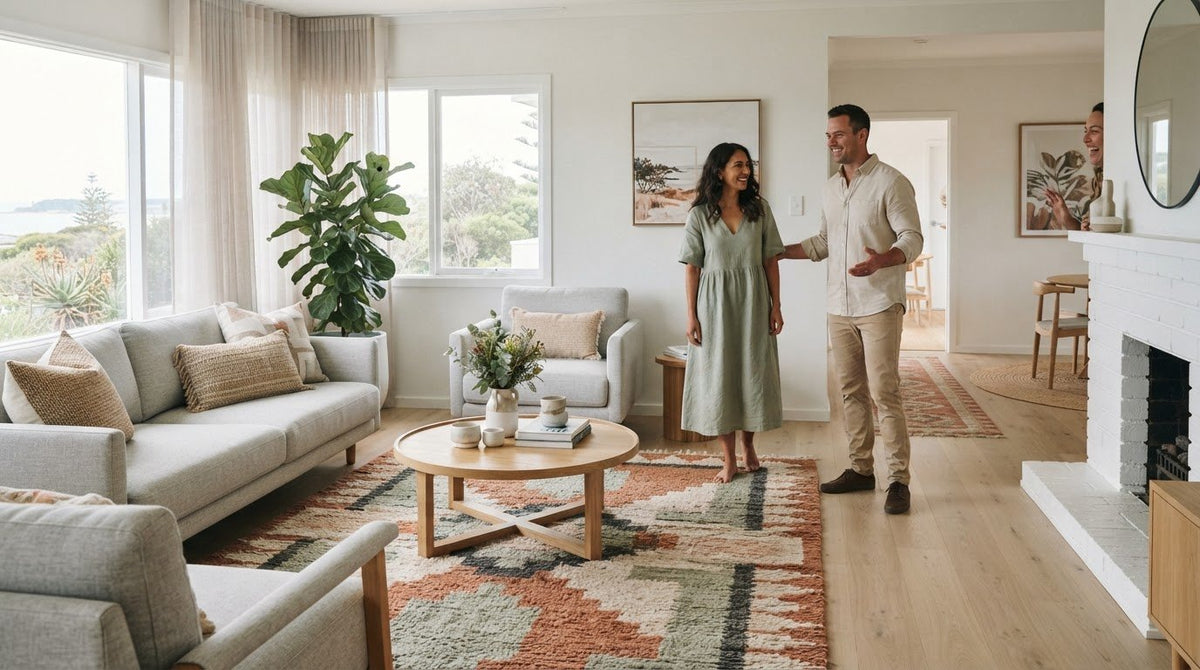
The most memorable rug in a guest-ready home isn’t always the boldest one. Choosing rug styles that impress house guests means balancing colour, texture and comfort with the furniture and finishes you already have. The right rug helps a room feel pulled together without overwhelming it.
A patterned design can bring personality, while a quieter style may be easier to coordinate with your existing décor. Either way, consider how the rug will work with pets, children and busy walkways, not just how it looks when guests arrive. A considered choice can feel inviting and suit everyday life, too.
This guide compares natural, wool, modern and traditional Turkish rugs, as well as flatweaves, round rugs and hallway runners. Use the practical tips on colour, texture and size to narrow down a style for your rooms and hosting habits. Cozy Rugs offers a free design consultation and delivery across Australia to help you find a rug that feels right for welcoming guests and settling in day to day.
Key Takeaways
- Choose rug styles that impress house guests by balancing visual character, comfort and a natural fit with your existing décor.
- Compare modern, traditional Turkish, natural, wool, round and flatweave rugs to find a look that suits your room and hosting style.
- A statement rug can add personality without overwhelming the space when its pattern and colours relate to other features in the room.
- Before choosing a rug, consider the room, the mood you want and how pets, family life and foot traffic affect everyday use.
- Browse by size, colour and pattern, or use a free design consultation to help narrow down your options.
Rug Styles That Impress House Guests: What Makes a Room Feel Welcoming?
You want guests to feel at home, not as if every detail has been carefully staged. Rug styles that impress house guests bring character and comfort while making sense alongside your furniture, colours and daily routine. There’s no single style that works in every home. A good choice feels considered, not overdone.
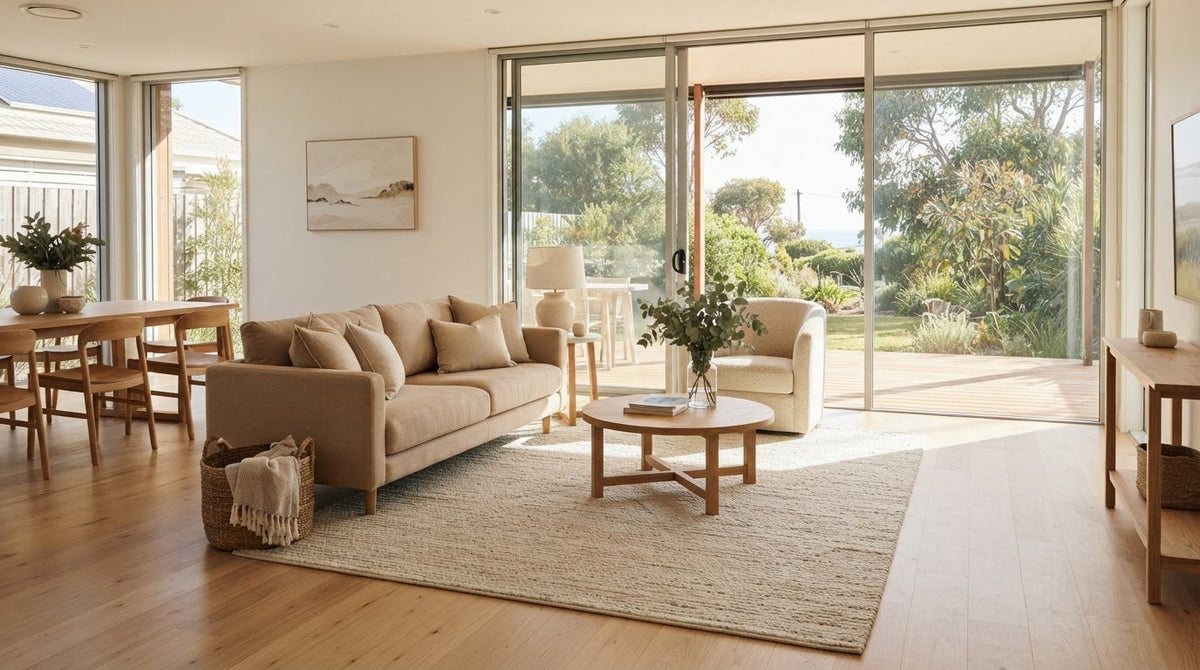
A rug can help a room feel more settled by visually connecting furniture and giving a seating area a clearer centre. In an open-plan home, it can help distinguish the lounge from the dining space without adding a physical divider. A quieter design can link colours that are already in the room, while a more expressive rug can become the focal point. Texture adds another layer, creating visual depth and a welcoming surface underfoot.
How does a rug change the feel of a room?
Think about colour, pattern, shape and texture as separate styling choices. Soft or familiar colours can support a calm mood, while stronger contrast or a detailed pattern draws the eye. A rectangular rug can follow the lines of a seating arrangement; a round rug can soften the look of angular furniture. A woven or textured surface adds interest even when the colour palette is restrained. For background on different types of rugs, including materials and production methods, see Wikipedia’s overview of carpets.
What should you consider before choosing a guest-ready rug?
Start with what’s already in the room. Note the main furniture colours, timber or other finishes, and whether the décor feels relaxed, classic or contemporary. Then think about how guests use the space: where they sit and chat, whether meals are served nearby, and which paths people take through the home. These details help you decide whether the rug should quietly support the room or add more visual interest.
Everyday needs matter, too. Consider pets, children and frequent foot traffic, especially in shared areas or near an entry. A style that suits a quiet corner may be less practical for a busy route through the house. Focus on how the room is used as well as the impression you want to create. The comparison below looks at the mood and room fit of different styles, rather than naming one best choice for everyone.
Six Rug Styles to Impress Guests, from Modern to Traditional
The best choice depends on the room, not a styling rule. Colour, pattern, scale and nearby furniture all shape a rug’s effect. A natural style can feel quiet or textured, while a traditional design can be subtle or expressive. Use this comparison to find a starting point for rug styles that impress house guests and suit the way you live.
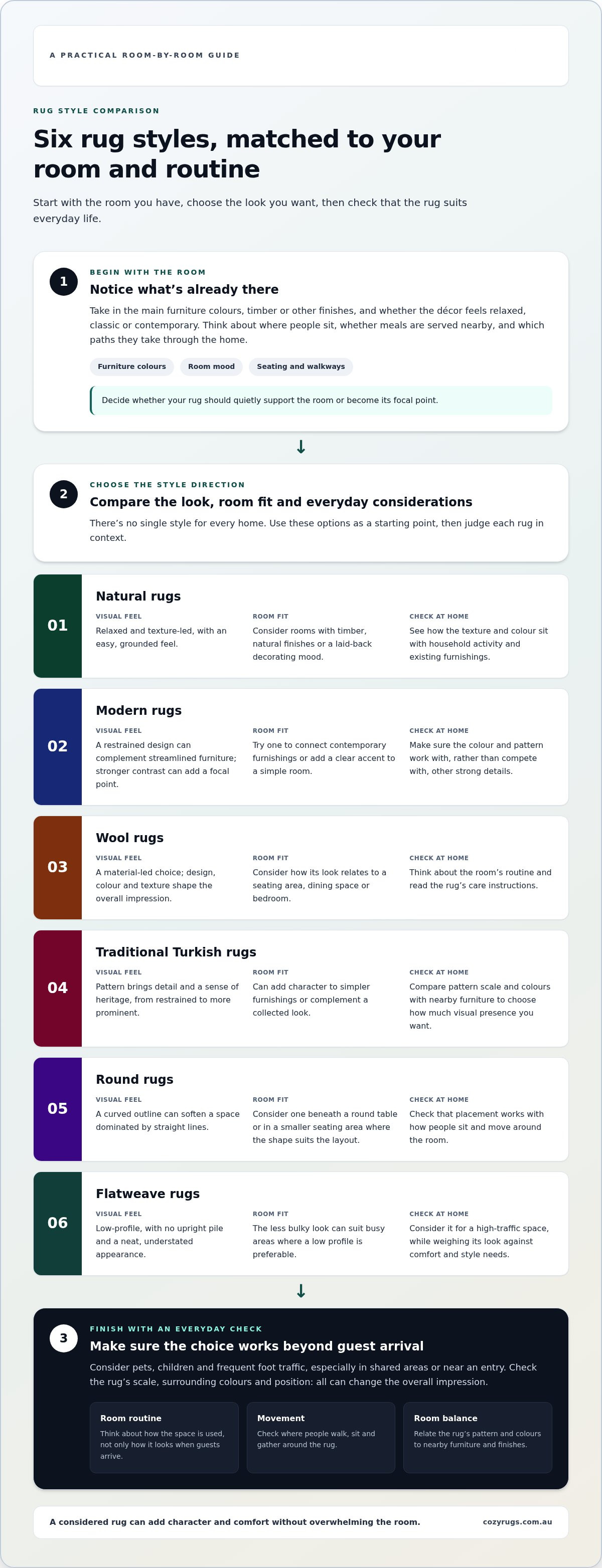
| Style | Visual impression | Room fit | Everyday-use consideration |
|---|---|---|---|
| Natural rugs | A relaxed, texture-led look that can bring an easy, grounded feel. | Consider them in rooms with timber, natural finishes or a laid-back decorating mood. | Check how the texture and colour will sit alongside household activity and existing furnishings. |
| Modern rugs | Depending on the design, they can complement streamlined furniture or add contrast to a simple room. | Try one where you want to connect contemporary furnishings or introduce a clear visual accent. | Check that the colour and pattern work with the room rather than competing with other strong details. |
| Wool rugs | A material-led option, with its overall impression shaped by design, colour and texture. | Choose one by how its look relates to your seating area, dining space or bedroom. | Consider the room’s routine and read the rug’s care instructions when assessing its suitability. |
| Traditional Turkish rugs | Pattern can add detail and a sense of heritage, from restrained to more prominent. | They can bring character to a room with simpler furnishings or complement a collected look. | Compare the pattern scale and colours with nearby furniture to decide how much visual presence you want. |
| Round rugs | The curved outline can soften a space dominated by straight lines. | Consider one beneath a round table or in a smaller seating area where its shape suits the layout. | Check that its placement works with how people sit and move around the room. |
| Flatweave rugs | A flatweave is low-profile, with no upright pile, and has a neat, understated appearance. | Its low profile can suit busy areas where a less bulky look is preferable. | Consider it for a high-traffic space, while weighing its appearance against the room’s comfort and style needs. |
Natural rugs are a useful option if you want texture to do more of the decorating. Modern rugs offer flexibility: a restrained design can sit quietly with streamlined furniture, while stronger contrast can give a plain room a focal point. Wool rugs start with a material choice, so the pattern and colour still determine whether the finished look feels understated or attention-grabbing.
For more pattern, traditional Turkish rugs can bring a heritage-inspired note without requiring the whole room to follow a traditional style. A round rug can break up the straight edges of a sofa or dining setting. Flatweave rugs offer a low-profile option for areas with regular movement. In every case, judge the rug in context: its scale, surrounding colours and position can change the overall impression.
To compare colours and patterns for your own room, browse natural and modern rugs and use your existing furniture and finishes as a guide.
Will a Statement Rug Impress Guests or Overwhelm the Room?
A statement rug can give guests something memorable to notice without making the room feel overdone. The key is connection: its colours, pattern or scale should relate to something already in the space. If it competes with every other feature, the room may feel busy. If it relates to the furniture, artwork or flooring, it can feel like a deliberate part of the design.
Expressive patterns bring energy and draw the eye, but they can be harder to balance with patterned cushions, artwork or upholstery. Quieter designs create a softer backdrop and are usually easier to coordinate with other features, though they may have less presence on their own. Neither approach is automatically better for entertaining. Think about the impression you want and how much attention you’d like the rug to hold.
How can you balance a patterned rug with existing decor?
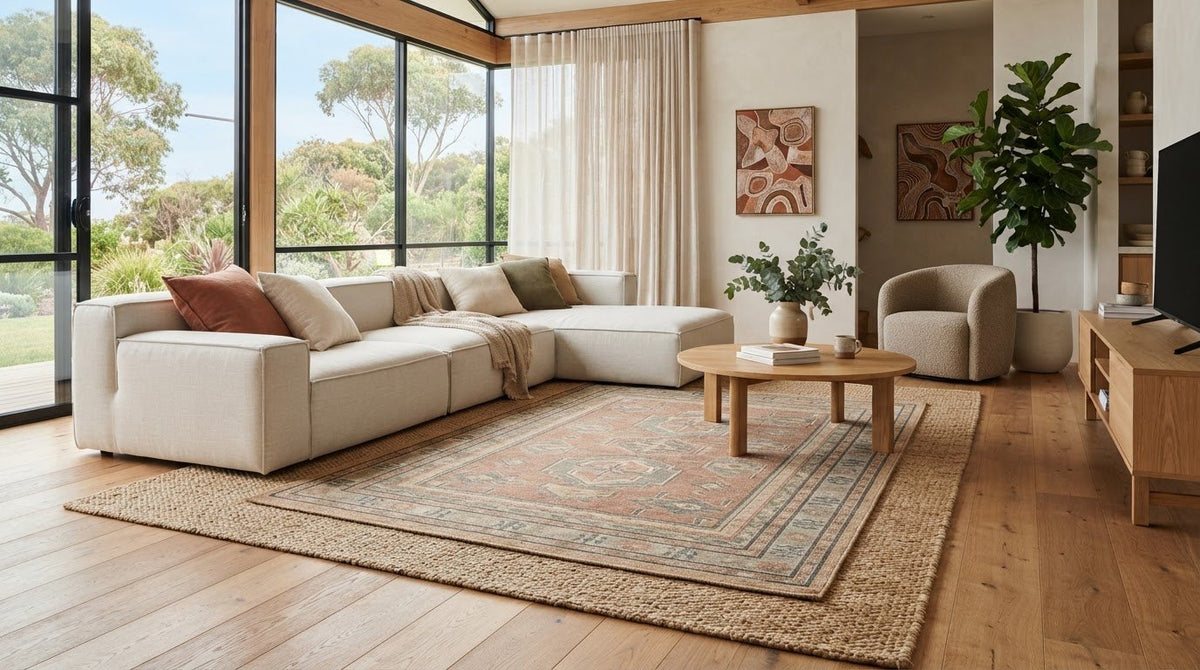
Look at the room as a whole before choosing. If a rug has several colours, repeat one or two in cushions, a throw or artwork to create a visual link. With a detailed pattern, simpler surrounding pieces can give the design breathing room. You don’t need to match everything; a shared colour or complementary tone can be enough to make the combination feel intentional.
Consider what sits around the rug, too. Pale flooring may make a darker design stand out, while darker floors can change how light colours appear. Furniture with strong shapes or patterns adds to the room’s visual weight, as does wall art. Picture the rug alongside these elements rather than judging it on its own. That wider view helps you choose a statement that feels welcoming, not like another feature competing for attention.
Are lighter or darker rugs better for rooms guests use?
Neither palette is a universal winner. Lighter colours can create an airy, open impression, particularly in a room with good natural light. Darker colours may give a space a more grounded or intimate mood. Flooring, window light and the atmosphere you want all affect the result, so consider how the rug will look at different times of day.
Practicality belongs in the decision, too. In a home with pets, children or regular visitors, think about which colours and patterns feel manageable for your household and suit the way the room is used. A varied pattern may appeal for a busy shared area, while a quieter design might suit a more formal sitting room. The rug styles that impress house guests bring the mood you want and feel at home in your everyday space.
How to Choose and Place a Guest-Ready Rug for Everyday Australian Living
A rug needs to suit the room where you welcome people and the way your household uses it between visits. Follow these steps to choose a style that feels inviting without getting in the way of family routines, pets or everyday movement.
- Identify the room. Decide where the rug will sit and what you want it to do. In a living room, it can help define a conversation area. In a dining space, account for how people pull out chairs and move around them. For an elongated entry, a hallway runner can follow the shape of the space.
- Set the mood. Decide whether you want the rug to complement the furniture or act as a focal point. Use the room’s colours, finishes and existing patterns to guide your choice, so the rug feels connected to the rest of the décor.
- Assess everyday use. Think about where people walk, where children play and whether pets spend time in the room. If guests move between an indoor living area and an outdoor entertaining space, consider how the rug’s colours and style relate to both areas, while keeping it suited to its intended indoor setting. A busy route calls for a style and material you feel comfortable living with every day.
- Check the fit. Measure the area you have in mind, then mark the proposed rug footprint on the floor with removable tape or paper. Walk around it and check its position beside furniture, doorways and pathways before making your choice.
How do you match a rug to the way guests use the room?
In a conversation area, position the rug so the seating feels like one arrangement rather than separate pieces. For dining, consider chair movement as well as the table’s position, so the rug’s footprint works while people sit down and stand up. Entry spaces have different needs: a hallway runner suits a long, narrow area and can create a clear visual path into the home.
How can you check rug size and placement before choosing?
Measuring and marking the outline helps you see whether the rug feels balanced and leaves comfortable routes through the room. If you’re layering a rug over carpet, the 30cm border rule suggests leaving about 30cm of the underlying carpet visible around it for a balanced look. For room-specific dimensions and placement examples, use a rug size guide before settling on a size.
Take your room measurements and preferred placement into account as you browse, or use Cozy Rugs’ free design consultation to narrow down suitable styles. These checks make it easier to choose a rug that welcomes guests and works with everyday Australian living.
Find Your Guest-Ready Rug Style with Cozy Rugs
The right rug should suit the room you’re styling and the way you welcome people into your home. If you’re drawn to texture, natural rugs and wool rugs offer material-led options. Modern rugs can complement streamlined décor or bring contrast to a simpler setting, while traditional Turkish rugs can add pattern and a sense of heritage. The overall effect depends on each rug’s colour and design, and how it works with your furnishings.
Shape and construction can help narrow the choice, too. A round rug may suit a seating area or table where curved lines feel at home. Flatweave rugs offer a low-profile style to consider for a busy part of the house, while hallway runners suit elongated spaces such as an entry passage. Think about the room’s proportions and routines alongside the look you want, rather than choosing on appearance alone.
Which Cozy Rugs options could suit your hosting style?
Start with the impression you want guests to take away. For a relaxed, texture-focused room, compare natural and wool rugs. If you prefer a cleaner, more contemporary feel, look at modern rugs; for more decorative detail, explore traditional Turkish rugs. Round rugs, flatweave rugs and hallway runners each bring a different shape or format, so consider where they’ll sit and how people move through the space.
What is a simple next step towards choosing your rug?
Make a shortlist based on the room, the size you need, colours already present and whether you want a quiet design or a stronger pattern. Add the practical details: how often the area is used, whether pets or children share it, and how guests move around the furniture. These preferences give you a clearer way to compare options without expecting one style to suit every home.
If you’re weighing up a few choices, a free design consultation can help you narrow them down. Cozy Rugs offers delivery across Australia. Browse online by size, colour and pattern to compare options for your room and hosting routine. The rug styles that impress house guests are the ones that make visitors feel welcome while fitting naturally into everyday life.
Explore rugs by size, colour and pattern
Choose a Rug That Feels Right at Home
A welcoming rug doesn’t need to dominate a room. The best rug styles that impress house guests balance visual character with the colours and furniture you already have, while suiting how your household lives. Natural, modern, traditional Turkish, wool, round and flatweave styles each offer a different starting point. The right one depends on your room, your taste and the impression you want to create.
Before choosing, consider where the rug will sit, how guests move through the space and whether pets, children or regular foot traffic shape your everyday needs. Measure the area and picture the rug in place so its size and style feel like a natural fit.
To narrow down your options, browse by size, colour and pattern or use a free design consultation to compare styles. Cozy Rugs offers delivery across Australia. Explore rug styles at Cozy Rugs and find a welcoming look that feels right for your home.
Frequently Asked Questions
What type of rug makes a living room feel welcoming to guests?
A rug that connects visually with your seating and suits the room’s mood can help a living room feel settled and inviting. Natural or wool rugs may appeal if you’re drawn to texture, while a modern or traditional Turkish design can add more visual character. Consider how the rug’s colour, pattern and size work with the sofa, chairs and flooring. The rug styles that impress house guests are the ones that feel at home in your space.
Can a bold rug work in a small room?
Yes, a bold rug can work in a small room if you give it space to be the main feature. Consider how its pattern and colours relate to the furniture, walls and flooring. If the rug is visually detailed, simpler surrounding pieces can help the room feel balanced. Before choosing, mark the proposed footprint on the floor to see how much space it occupies and whether pathways remain clear.
How do I choose a rug style that suits my furniture?
Start with the colours, shapes and overall mood of your existing furniture. A modern rug may sit comfortably with streamlined pieces, while a traditional Turkish design can introduce pattern beside simpler furnishings. Natural and wool rugs offer material-led options, with their effect shaped by colour and design. You don’t need to match every detail. Repeating a colour from the rug in a cushion or artwork can help bring the room together.
Are flatweave rugs a good choice for areas where guests walk often?
A flatweave is a low-profile rug type with no upright pile, making it thin and dense, and suitable for high-traffic areas. Its low profile may be worth considering for an entry or shared space where people regularly pass through. Think about the room’s style and household routine, too. Read the rug’s care instructions and consider how its colour and pattern will look alongside nearby flooring and furniture.
Should the rug match the curtains and cushions?
No, the rug doesn’t need to match curtains and cushions exactly. Aim for a sense of connection instead: repeat a colour or choose tones that sit comfortably together. If your cushions or curtains have a strong pattern, a quieter rug may balance them; a patterned rug can add interest to plainer furnishings. Look at the full room together, including flooring and artwork, rather than choosing each item in isolation.
What rug style works best for a home with pets and children?
There isn’t one style that suits every family or pet-owning household. Consider how the room is used, where people and pets move most, and which colours or patterns feel practical for your routine. A flatweave is one low-profile option to consider for a busy area. Read the care instructions for any rug you’re considering, and choose a style that feels comfortable alongside your family’s everyday activities.
How do I choose the right rug size for entertaining?
Measure the area you want the rug to define, then mark its proposed footprint on the floor to check the fit. In a living room, consider how it relates to the seating arrangement and walking paths. In a dining area, allow for chairs to move as guests sit down and stand up. A rug size guide can help with room-specific dimensions and placement ideas before you decide.

Leave a comment
This site is protected by hCaptcha and the hCaptcha Privacy Policy and Terms of Service apply.