

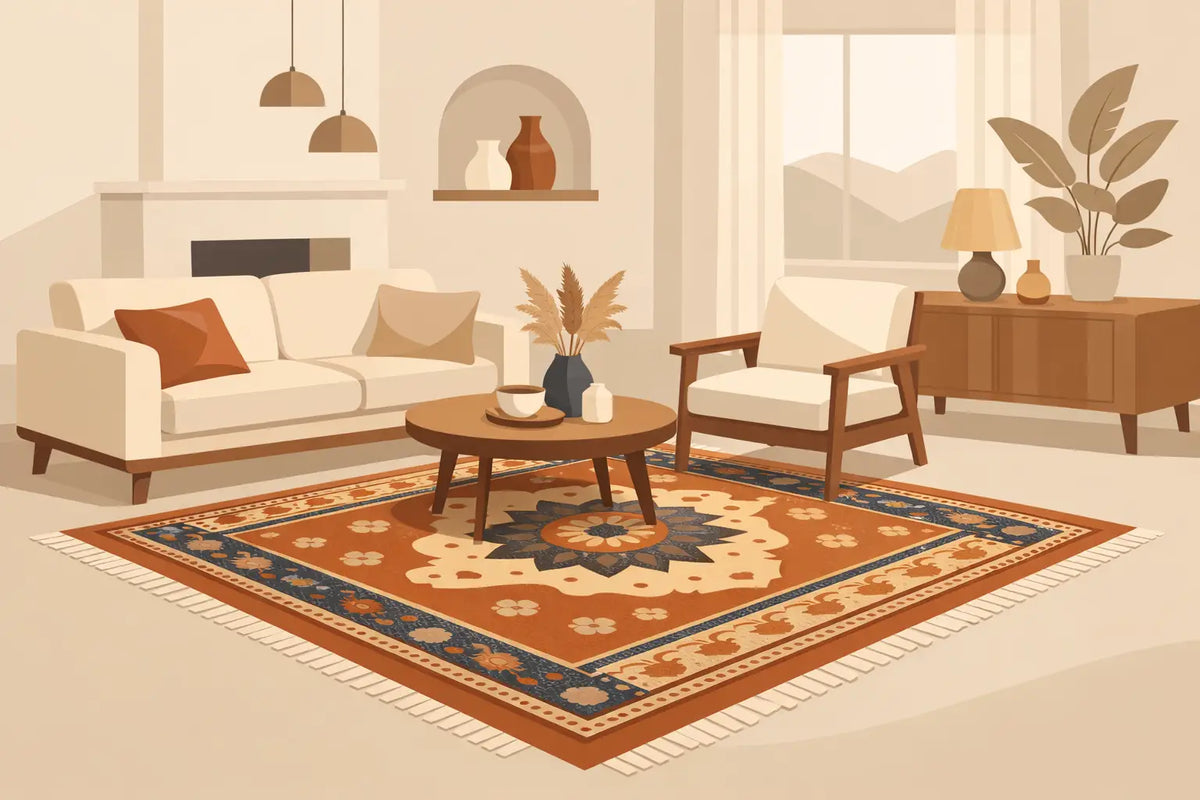
A traditional rug can make a living room feel considered before you have changed a single cushion. Rich borders, detailed motifs and softly layered colour bring a sense of history to contemporary furniture, older homes and everything in between. The best traditional rugs for living rooms do more than look beautiful: they define the seating area, soften hard flooring and stand up to the daily rhythm of Aussie living.
Traditional does not have to mean formal, dark or difficult to style. A faded Persian-inspired design can sit brilliantly with a linen sofa and timber coffee table, while a bolder red or navy rug gives a neutral room real presence. The key is choosing a design, size and material that suit the way your household actually lives.
Why traditional rugs work so well in living rooms
A traditional rug gives a room an instant focal point without demanding matching furniture or overly styled shelves. Its pattern adds depth, which is especially helpful in spaces with plain walls, a simple sofa or lots of smooth surfaces such as floorboards, tiles and glass.
They are also wonderfully forgiving. A detailed design is better at disguising the odd crumb, bit of pet hair or light mark than a plain, pale rug. That does not make it maintenance-free, but it can make everyday life feel a little less precious - a welcome quality in a busy family room.
Traditional patterns are often more flexible than people expect. Deep jewel tones create drama in a heritage home, while washed blues, clay, oat and muted charcoal work beautifully in coastal, Scandi, transitional and modern Australian interiors. If your room already has strong architectural features, a quieter vintage-look design can add warmth without competing for attention.
Start with the right rug size
Size is where a living room either comes together or feels slightly off. A rug that is too small can leave the furniture looking as though it is floating around the room, even when every other choice is spot on. When in doubt, go larger rather than smaller, provided there is enough clear floor around the edge of the space.
For a main seating zone
In most living rooms, the front legs of the sofa and armchairs should sit on the rug. This anchors the arrangement and creates a connected, generous feel. A 200 x 300 cm rug is a popular starting point for an average-sized lounge, while 250 x 350 cm or larger often suits open-plan rooms and generous sectionals.
If your seating area is compact, a 160 x 230 cm rug can work, but make sure it reaches under the front of the sofa rather than sitting alone in the middle like an island. Measure the furniture layout, not just the room. Painter's tape on the floor is a simple way to see the footprint before you buy.
For open-plan homes
Traditional rugs are particularly useful in open-plan spaces because they give the lounge its own visual boundary. Choose a size that holds the sofa, chairs and coffee table within one defined zone. Leave a consistent strip of floor visible around the rug where possible, rather than squeezing it hard against cabinetry or a dining setting.
A large rug can feel like a bigger investment, but it usually delivers a more polished result and gives furniture room to breathe. A smaller option may be the better call if you are renting, working with an awkward layout or need to keep doors and walkways clear.
Choose colours that suit your room, not just the trend
Traditional rugs tend to carry several colours, so they can tie together a room that has developed over time. Start by identifying one or two shades already in your space: the sofa, curtains, artwork, timber tones or a favourite accent chair. Look for a rug that repeats those colours in a subtle way rather than trying to match every tone exactly.
For a calm living room, consider soft ivory, sand, smoky blue, sage or faded terracotta. These shades bring the character of a traditional pattern while keeping the overall mood relaxed. In homes with light timber floors and plenty of natural light, warmer reds, rust and tobacco can stop the room from feeling washed out.
Navy, charcoal and burgundy traditional rugs offer greater contrast and are practical in high-traffic areas. They can ground a pale sofa beautifully, though they may feel heavy in a small or low-light room. If you love the look but need more brightness, choose a design with a lighter field colour and a darker border instead.
Match the pile to real life
The feel underfoot matters, but so does how the rug handles your household. Living rooms are often the most-used part of the home, so material and construction deserve as much attention as colour.
Wool for lasting comfort
Wool is a classic choice for traditional designs. It feels warm and substantial, naturally resists dirt and has a little spring underfoot, making it a lovely option for a lounge where people gather, stretch out and spend time. Quality wool rugs can last for years with sensible care, though they usually cost more upfront and may shed lightly when new.
Low-pile synthetics for busy homes
Polypropylene and other synthetic fibres are a practical choice for families, pet owners and homes where spills are part of the furniture. They are generally easier to clean, often more affordable and available in detailed traditional patterns that suit everyday styling. A low pile is also easier for vacuuming and better for homes with robot vacuums, although it will not have quite the same natural softness or depth as wool.
Flatweaves for a relaxed finish
Flatweave traditional rugs work well when you want pattern without bulk. They suit warmer climates, casual living spaces and rooms with doors that need clearance. They can move more easily than heavier rugs, so a good rug underlay is worth adding for safety, cushioning and a neater finish.
Make an old-world pattern feel fresh
The easiest way to keep traditional style current is through contrast. Pair an ornate rug with clean-lined furniture, simple curtains and a few tactile materials such as boucle, linen, leather or oak. Let the rug provide the detail, then keep the rest of the room edited rather than adding competing patterns everywhere.
That said, matching does not need to be strict. A striped cushion, floral artwork or checked throw can work with a traditional rug when the colours relate and one pattern is clearly more dominant. Think layered, not cluttered.
If you have inherited furniture or live in a character-filled home, a traditional rug can connect old and new with very little effort. Under a modern curved sofa, it creates a collected look. In a room with a vintage timber sideboard, it can feel entirely at home. This versatility is why the style remains a favourite well beyond passing trends.
Care tips that protect the investment
Vacuum your rug regularly using a setting suited to its pile, and attend to spills promptly by blotting rather than rubbing. Rotate it every few months so foot traffic and sunlight are spread more evenly. For heavier furniture, use rug-safe pads beneath legs to reduce dents and help the pile recover.
A rug underlay is also a smart addition on timber, tile or polished concrete. It helps prevent slipping, adds a little comfort and reduces friction between the rug and floor. For wool and delicate constructions, follow the care guidance provided with the rug and arrange professional cleaning when a deeper refresh is needed.
At Cosy Rugs, the most inviting living rooms are rarely the ones that look untouched. They are the ones with a rug that grounds the space, feels good underfoot and is ready for movie nights, visitors and everyday mess. Choose the traditional design that makes you want to put the kettle on, settle in and stay awhile.


Leave a comment
This site is protected by hCaptcha and the hCaptcha Privacy Policy and Terms of Service apply.