

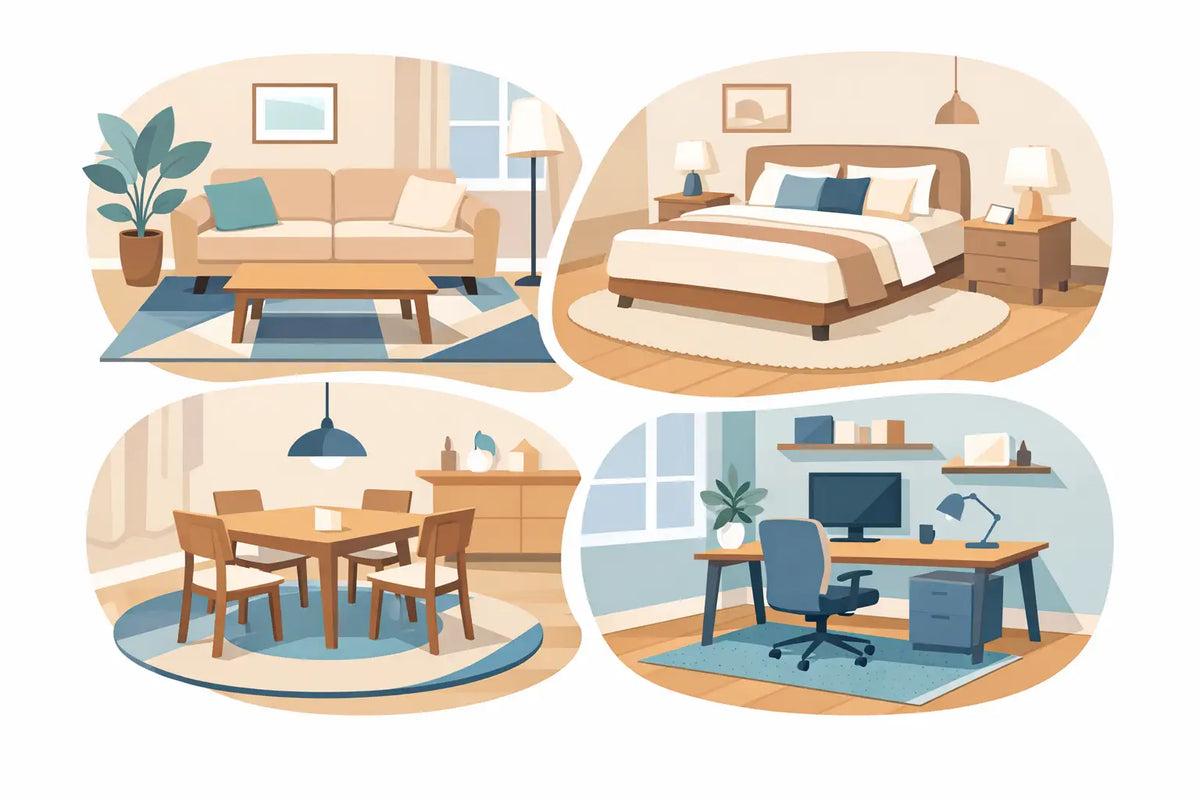
A rug can make a room look finished in five minutes - or slightly off every time you walk past it. If you have been wondering where to place a rug, the answer usually comes down to two things: what the room needs to function well, and what you want it to feel like.
The right rug placement can make a compact lounge feel larger, help a dining setting sit properly, soften a bedroom, or bring shape to an open-plan space. The wrong placement often comes from choosing a rug that is too small, then floating it in the middle with no connection to the furniture. That is the mistake most people notice first.
Where to place a rug starts with the furniture
Before you think about colour, pattern or pile, look at the furniture footprint. A rug should usually anchor the main pieces in a room, not drift around them. That does not always mean every leg needs to sit on the rug, but it should feel visually connected to the setting.
In practical terms, rug placement works best when it follows the shape of how you live. In a busy family room, that might mean enough rug under the sofa and coffee table to stop the area feeling chopped up. In a bedroom, it might mean softness underfoot where you actually step each morning. Good styling is not just about symmetry - it is about real life.
Living room rug placement
The living room is where rug placement matters most because the rug usually defines the whole zone. In most Australian homes, the best look is to place the front legs of the sofa and armchairs on the rug. This creates a cohesive seating area without needing an oversized piece that swallows the room.
If your lounge room is generous in size, you can go larger and fit all furniture legs on the rug. This works beautifully in open-plan homes where you want the living area to feel grounded and separate from the dining or kitchen zone. A larger rug often makes the room feel more considered, not more crowded.
If the room is small, resist the temptation to go too tiny. A rug that only fits under the coffee table often makes the whole space feel undersized. It is usually better to choose a rug large enough to slide at least partly under the sofa.
How much floor should show?
Aim to leave a visible border of flooring around the rug, often around 20 to 40 cm depending on the room size. That border helps the rug feel intentional. If the rug nearly touches every wall, it can read more like carpet than a styled piece.
There are exceptions. In apartments or smaller living zones, you may need to work with tighter proportions. The key is balance. The rug should frame the furniture grouping, not fight with the room edges.
Where to place a rug under a dining table
Dining rugs look fantastic, but only when the size is right. The rug should extend well beyond the table so chairs stay on the rug even when pulled out. If not, chair legs catch on the edge, which gets annoying very quickly.
As a guide, allow enough extra rug on each side for both the table and the movement around it. Round tables usually pair best with round rugs, while rectangular tables generally sit more naturally on rectangular rugs. Matching the shape creates a cleaner, more settled look.
Material matters here too. Flatweaves, low-pile styles and washable rugs are often the easiest choice for dining spaces because they handle crumbs, movement and everyday mess without fuss. For Aussie living, especially with kids or regular entertaining, practical finishes make a big difference.
Bedroom rug placement that feels balanced
Bedrooms are less about traffic flow and more about comfort. The most popular option is to place a large rug under the bed so it extends out on both sides and at the foot. This gives you softness where you need it and helps the bed feel anchored rather than dropped into the room.
A common layout is to position the rug under the lower two-thirds of the bed, leaving the top section and bedside tables off the rug. This tends to look balanced and avoids wasting rug under the headboard where it is barely seen.
If a large rug is not practical, runners on either side of the bed can work beautifully. They are especially useful in smaller bedrooms or guest rooms where you still want warmth and texture without covering too much floor.
Should bedside tables sit on the rug?
It depends on the size of the rug and the look you want. If the rug is large enough to fit the whole bed and bedside tables comfortably, that can feel polished and luxurious. If not, it is better to keep the tables off rather than forcing a size that looks awkward.
The main thing is that the rug should extend enough to feel generous. A rug that stops too close to the bed edge can make the room feel pinched.
Hallways and entryways
In hallways, placement is simpler but still worth getting right. A runner should follow the length of the space while leaving some floor visible around the edges. Too wide, and it feels cramped. Too narrow, and it can look like an afterthought.
Entryways benefit from a rug that welcomes people in without blocking the door swing. This is where low-pile, flatweave or durable washable options really shine. They handle foot traffic better and are easier to keep looking fresh.
If your front door opens directly over the rug, check clearance before you commit. It sounds obvious, but it catches plenty of people out.
Rugs in open-plan spaces
Open-plan homes can be tricky because furniture is often arranged in zones rather than separate rooms. This is where a rug becomes a visual organiser. It helps define the living area, reading nook or home office without needing walls.
In these spaces, placement should follow each zone rather than the room as a whole. For example, your living room rug should sit under the lounge setting, not float halfway between the sofa and dining table. Likewise, a rug under a desk should be large enough that the chair can move without constantly slipping off the edge.
Layering can also work well in larger rooms. A natural fibre rug under a softer patterned rug can add texture and dimension, especially in relaxed, coastal or contemporary interiors. The trade-off is maintenance - layered rugs look beautiful, but they can require a bit more straightening and cleaning.
Outdoor rug placement
Outdoor rugs are one of the easiest ways to make a patio or balcony feel like part of the home. The same rules apply as indoors: anchor the furniture, keep the layout connected, and choose a size that suits the zone.
Under an outdoor dining setting, make sure the rug extends beyond the chairs. In a seating area, the front legs of lounges and occasional chairs should generally sit on the rug. This makes the setup feel finished rather than scattered.
Because outdoor areas deal with weather, dirt and heavy use, placement should also consider drainage and care. Look for materials built for real life, especially if the space gets full sun, regular rain or plenty of sandy feet.
Common rug placement mistakes
The biggest mistake is choosing a rug based only on what is in stock in a smaller size, rather than what the room actually needs. A too-small rug can make beautiful furniture look disconnected.
Another common issue is centring the rug in the room instead of centring it around the furniture. In most cases, the furniture arrangement should decide the rug position, not the walls.
It is also easy to ignore everyday use. High-pile rugs feel plush in the right spot, but they are not ideal under dining chairs or in hard-working entryways. Jute and wool can be brilliant choices, but the best placement depends on how much wear the area gets and how low-maintenance you need it to be.
A quick way to test where to place a rug
If you are unsure, mark out the rug size on the floor with masking tape before buying. It gives you an instant read on whether the proportions make sense and whether key furniture pieces will sit where they should.
This simple step can save a lot of guesswork, especially when shopping online. It helps you see whether the rug will define the room properly, leave enough floor showing, and support the way you actually use the space.
A well-placed rug does more than fill an empty patch of floor. It gives the room structure, warmth and a sense that everything belongs - which is exactly what great styling should do.


Leave a comment
This site is protected by hCaptcha and the hCaptcha Privacy Policy and Terms of Service apply.