


A round rug can fix a room that feels too boxy, too flat or just a bit unfinished. The best round rug styling ideas do more than add softness underfoot - they shift the whole balance of a space, helping furniture feel more intentional and making everyday rooms look properly pulled together.
Why round rug styling ideas work so well
Most homes are built around straight lines. Sofas, cabinetry, dining tables and bed frames all tend to be square or rectangular, so a round rug brings in contrast straight away. That contrast is what makes it useful, not just decorative.
In open-plan Aussie living, a round shape can also help define a zone without making it feel heavy. It softens hard edges, improves flow and often makes a compact room feel less rigid. That said, a round rug is not the right choice for every layout. If your furniture arrangement is very linear or your room is long and narrow, a rectangular rug may still do the harder working job.
Start with the room shape, not just the rug
One of the most common styling mistakes is picking a round rug because it looks charming on its own, then trying to force it into a room that wants a different shape. A round rug works best when it either echoes another curved element or intentionally breaks up a space full of angles.
If your room already has a round coffee table, curved armchair, arched mirror or soft architectural details, a round rug will usually feel natural. If everything in the room is sharply structured, the rug becomes the visual relief. Both approaches can work, but you want that contrast to feel considered rather than random.
Size matters too. A round rug that is too small tends to float awkwardly and can make the room feel pieced together. In most settings, you want the rug to connect with key furniture rather than sit alone like an island.
Round rug styling ideas for the living room
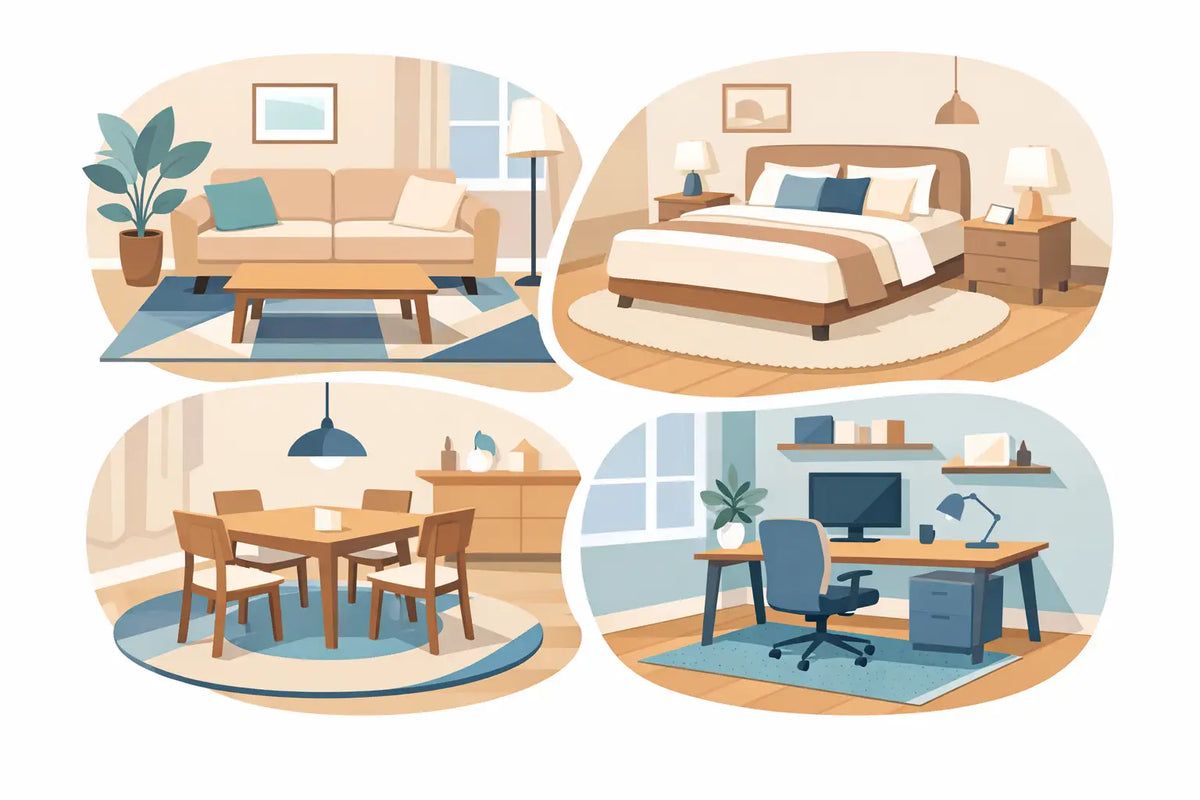
The living room is where round rugs often make the biggest visual impact. They are especially effective in seating areas that need a softer focal point.
Use one under a round or curved coffee table
This is the easiest pairing because the shapes naturally relate to each other. A round rug under a circular coffee table creates a tidy centre point and gives the whole seating area a more relaxed feel. In family homes, this can be a smart way to soften a room that has timber flooring, sharp-edged cabinetry and a big television wall.
Keep scale in check. The rug should extend well beyond the coffee table so it reads as part of the furniture setting, not just a mat under one item.
Try it in a small conversation zone
If you have two accent chairs by a window, fireplace or bookshelf, a round rug can anchor that smaller nook beautifully. It stops the area from looking like leftover furniture and turns it into a defined retreat for reading, chatting or a quiet cuppa.
This works particularly well in apartments or smaller homes where every zone needs to earn its keep.
Soften a boxy room
In living rooms filled with rectangular seating, a round rug can break up the repetition. It brings movement into the layout and helps the room feel less formal. Wool and flatweave options are especially good here because they add texture without making the floor space feel bulky.
Styling a round rug in the bedroom
Bedrooms suit round rugs when you want softness and a lighter visual touch than a large rectangular rug can offer.
Place one beside the bed, not always under it
A full rug under the bed is not the only option. One of the more practical round rug styling ideas is to place a round rug off-centre beside the bed or near a reading chair. It gives you comfort underfoot where you actually step and adds shape without covering half the room.
This is a great option for renters or anyone styling a smaller bedroom where a standard large rug might feel too dominant.
Use it to highlight a corner
An empty bedroom corner can quickly become a dumping ground for bags, washing or whatever else lands there. A round rug helps claim that space for something better - a chair, a small side table, a floor lamp or even a woven basket setup.
Natural fibres like jute work well if you want a casual, coastal or earthy look. A softer pile feels more luxurious in main bedrooms where comfort is the priority.
In the dining room, shape matching matters
A round rug in the dining room can look fantastic, but this is where sizing errors show up fast.
Pair a round rug with a round dining table
This is the most natural match. The rug should be large enough that dining chairs stay on the rug even when pulled out. If the edge lands halfway under a chair, the room will feel awkward and everyday use becomes annoying.
Round dining rugs work especially well in breakfast nooks and smaller dining zones where you want to keep the room open and easy to move around.
Be cautious with rectangular tables
You can put a round rug under a rectangular dining table, but it depends on proportions. In some cases it creates a nice layered contrast. In others it makes the setting feel mismatched. If the table is long and the room is narrow, a rectangular rug is usually the safer choice.
Entryways, hall corners and awkward spots
Some of the best uses for round rugs are the places where rectangular rugs feel too expected.
A round rug in an entry can make the space feel welcoming straight away, especially under a pendant or beside a statement console. In wider hall corners or under a bench, it helps soften transitional areas that often get overlooked.
If you are styling an apartment foyer or small landing, a washable or low-pile option is worth considering. These spaces cop plenty of traffic, and practicality matters just as much as looks.
Choose material with real life in mind
Good styling is not only about shape and colour. The right material changes how a rug performs in your home.
For busy living spaces, low-pile wool and flatweaves are easy to place because they sit neatly under furniture and handle daily use well. For relaxed bedrooms, a softer pile adds comfort and warmth. Jute and natural weaves bring beautiful texture, though they can be less forgiving in areas prone to spills. Washable rugs are a smart pick for kids' rooms, entryways or homes with pets where life is rarely pristine.
This is where style and practicality need to meet in the middle. The most beautiful rug in the wrong material will not feel like a good buy six months in.
Colour and pattern can change the mood
Neutral round rugs are versatile because they add shape without competing with furniture. Cream, beige, grey and earthy tones work well if your room already has plenty going on. They are also easier to move from one room to another later.
If the space feels flat, a patterned round rug can do more of the decorative heavy lifting. Traditional motifs add character to classic interiors, while modern abstract designs help contemporary rooms feel less stark. In homes built for real life, darker tones and mixed patterns are often more forgiving than very pale plain rugs.
A few placement rules that make a big difference
A round rug generally looks best when it has breathing room around it. In most rooms, leave visible flooring around the outer edge so the shape is clear. If too much of the rug disappears under furniture, you lose the effect that makes it special.
It also helps to think about sightlines. When you walk into the room, the rug should feel like part of the layout, not a surprise element dropped in at the last minute. Before buying, mark the size on the floor with painter's tape if you can. It is one of the easiest ways to avoid choosing a rug that is too small.
For shoppers wanting a style-led option that still feels practical, Cosy Rugs makes it easier to compare shapes, materials and room-ready designs without overcomplicating the decision.
When a round rug is the wrong call
Not every space needs one, and that is worth saying. If your room is very narrow, heavily furnished or already full of curves, a round rug can start to feel fussy. The same goes for layouts where you need strong directionality, like a long dining room or hallway.
Sometimes the smartest styling move is choosing the rug shape that supports the room rather than trying to make a feature out of it. A round rug should solve a problem or improve the feel of the space. If it does neither, keep looking.
The right round rug adds softness, shape and a sense that the room has been thought through properly. Start with the layout, choose a size that connects to the furniture, and let the rug bring balance rather than clutter. That is usually when the room starts to feel easy, settled and genuinely lived in.

Leave a comment
This site is protected by hCaptcha and the hCaptcha Privacy Policy and Terms of Service apply.