

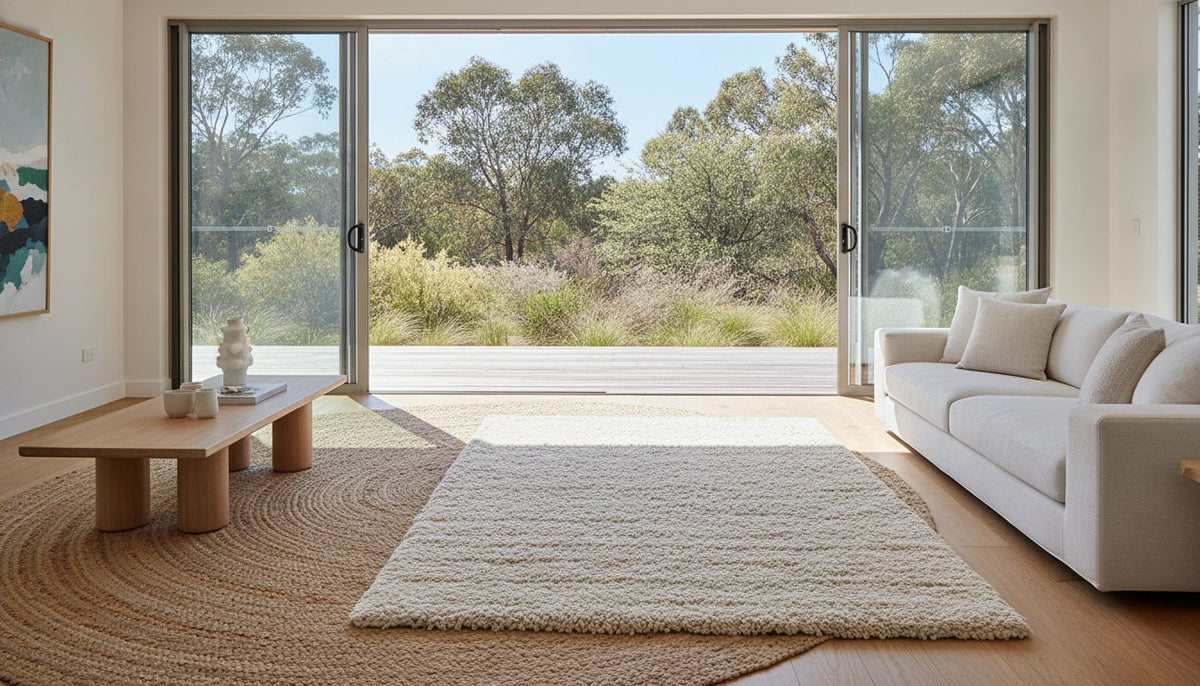
Have you ever found yourself staring at a beautiful jute rug online, only to wonder if your kids will complain it feels like walking on a giant scouring pad? It's a common worry for Australian families trying to balance a trendy coastal look with actual household comfort. Choosing between wool vs jute rugs often feels like a toss-up between the rugged, organic charm of natural plant fibres and the luxurious, bouncy warmth of sheep's wool. You want a piece that looks stunning, but you also need it to survive the reality of muddy paws and high-traffic hallways.
We understand that a quality rug is a significant investment for your home. You're likely looking for a floor covering that will last ten years or more without becoming a constant headache to keep clean. In this guide, we'll demystify the conflicting advice about shedding and scratchiness to help you pick the right material for your specific lifestyle. We will explore how each fibre handles Aussie humidity, which one is truly best for hiding pet hair, and where exactly to place them so your home stays cosy and functional for the long haul.
Key Takeaways
- Understand the core differences between protein-based wool and vegetable-based jute to match the right fibre to your home's specific foot traffic.
- Discover why wool is the superior choice for comfort in bedrooms and nurseries, especially when looking for a soft surface for children to play on.
- Navigate the wool vs jute rugs debate by learning which material handles the harsh Australian UV rays best to prevent premature fading.
- Get practical advice on choosing easy-to-clean textures that effectively hide pet hair and stand up to the rigours of a busy family dining room.
- Use our five-step decision framework to assess the "barefoot factor" and ensure your new rug provides lasting satisfaction for a decade or more.
Understanding the Basics: Wool vs Jute Rugs in Australian Homes
Choosing a new rug usually starts with a colour palette, but the material you pick actually dictates how your room feels and functions for years. In Australian homes, where we deal with everything from tropical humidity to biting southern winters, the material choice is vital. Deciding between wool vs jute rugs isn't just about the price tag; it's about matching the fibre's personality to your daily routine. Natural fibres breathe, which is a massive advantage in our local climate. Unlike plastic based synthetics that can feel sticky in the heat or trap stale odours, wool and jute work with your home's environment to maintain a fresher atmosphere.
Material choice matters more than colour because while a shade might go out of fashion or clash with a new cushion set, the physical performance of the fibre determines if you'll be replacing the rug in two years or twenty. A rug is the literal foundation of your room. If the foundation fails to handle your foot traffic or the harsh Aussie sun, the whole design falls apart. Understanding the cellular makeup of these fibres helps you make a choice that lasts.
The Premium Resilience of Wool
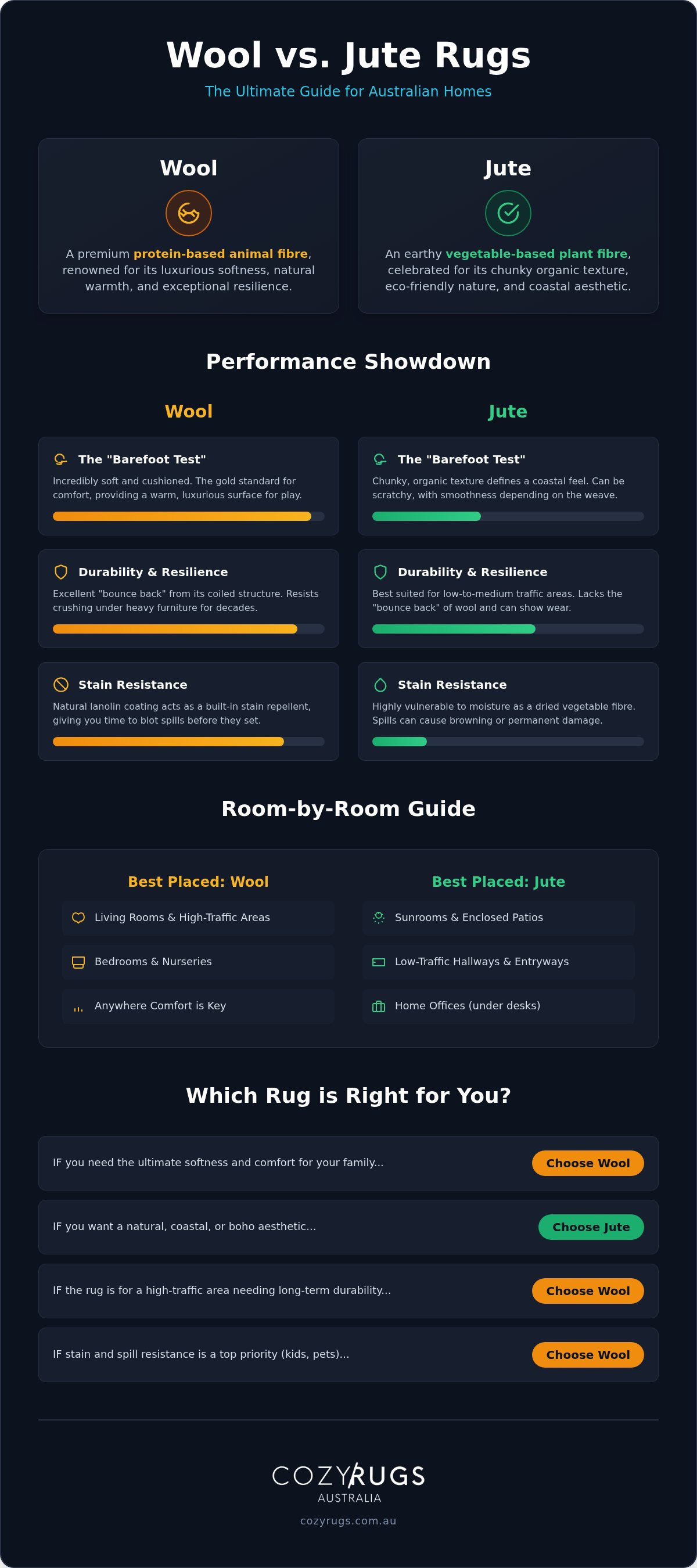
Wool is a protein based animal fibre that acts like a high tech insulator. It has a natural "memory" thanks to its coiled structure, meaning it resists crushing even under a heavy modular sofa. This "bounce back" factor is why wool rugs look fresh for decades. Every fibre is also coated in a thin layer of natural lanolin. This isn't just a fun fact; it's a built-in stain repellant that gives you a few extra seconds to grab a towel when someone spills their morning flat white. For Aussie homes, wool is a thermal powerhouse. It keeps the floor cool during a 40 degree January afternoon while trapping warmth when the winter chill sets in.
The Earthy Charm of Jute
If you're chasing that relaxed, coastal vibe, jute is likely at the top of your list. Often called the "golden fibre," jute is a vegetable fibre harvested from the skin of the jute plant. For those interested in the history of this material, you can find a comprehensive overview of jute to see why it's been a staple in global textiles for centuries. In a modern home, it's an eco-warrior favourite because it's biodegradable and low impact to produce. It offers a chunky, organic texture that defines the Hamptons or boho look. While it's generally the more budget friendly entry point for natural floor coverings, it brings a grounded, raw aesthetic that synthetics can't replicate.
Performance Showdown: Durability, Comfort, and Maintenance
When you're weighing up wool vs jute rugs, the decision often comes down to what your feet feel first thing in the morning. In Australia, our indoor-outdoor lifestyle means we spend a lot of time barefoot, making the tactile experience of a rug just as important as its visual appeal. While both materials are celebrated for being natural, they perform very differently under the pressure of a busy household.
One reality of natural fibres is the "shedding" phase. New wool rugs typically release loose fibres for the first three to six months, which is a sign of a healthy, high-quality product rather than a defect. Jute, on the other hand, tends to shed small plant fragments or "dust" over time. Regular vacuuming with a flat head attachment (avoiding the beater brush) keeps both materials looking their best without damaging the weave.
Tactile Comfort and Underfoot Feel
The "barefoot test" is where wool truly shines. It's the gold standard for nurseries and bedrooms because of its incredible softness and give. Kids and pets naturally gravitate toward wool because it provides a cushioned surface for play. While jute has a reputation for being "scratchy," this depends heavily on the weave; a fine boucle jute will feel much smoother than a chunky braided variety. Pile density refers to how closely the individual fibres are packed together within the rug's backing, and a higher density always translates to better comfort and better sound insulation for your home.
Stain Resistance and Longevity
There's a common misconception that wool is difficult to maintain, but it's actually one of the easiest fibres to spot-clean. According to this authoritative guide to wool, the fibre has a unique scale-like outer structure that prevents liquids from soaking in immediately. This gives you a vital window to blot away spills before they become permanent. Jute is far more vulnerable to moisture; because it's a dried vegetable fibre, it can turn brown or lose its shape if it gets too wet, so you should never "wet clean" a jute rug.
In terms of lifespan, wool is a clear winner for those looking for a long-term investment. A well-cared-for wool rug can easily last 15 years or more, whereas a jute rug typically reaches the end of its life after five to eight years in a high-traffic area. If you're looking for a piece that stays plush and resilient through a decade of family life, you might want to explore our premium wool collection to see the difference for yourself.
Room-by-Room Guide: Which Fibre Suits Your Space?
Choosing the right foundation for your room often depends on the type of flooring already in your home. Many modern Australian builds feature sleek polished concrete or stunning spotted gum floorboards. While these look incredible, they can feel cold underfoot and create an echo in open-plan spaces. When weighing up wool vs jute rugs for these areas, wool is the undisputed champion for acoustic dampening and thermal comfort. It acts as a natural insulator, softening the hard lines of a modern room while making it feel significantly more "homey."
The Lounge and Open-Plan Living
Your main living area is the heart of the home, usually seeing the most action from kids, pets, and guests. Wool is the gold standard here because it retains its shape even when heavy lounge suites are placed on top. If you're chasing a coastal or Hamptons aesthetic, you don't have to choose just one material. A popular design trick is layering: use a large, affordable jute rug as a textured base to define the zone, then place a smaller, plush wool rug on top where your feet actually rest. This provides that organic look without sacrificing the softness you want when watching a movie. For specific placement tips on different floor types, our Rug Size Guide Australia offers practical advice for every layout.
In the dining room, the "slide factor" is vital. You need a fibre that allows dining chairs to move back and forth without catching or bunching. A tight-loop wool or a high-quality flatweave is often superior to chunky jute in this space. While jute looks beautiful, its uneven surface can make chairs feel wobbly, and food spills are much harder to lift from its thirsty vegetable fibres compared to wool's naturally protective lanolin coating.
High-Traffic Zones and Runners
Hallways and entries are the front lines of your home. They deal with "Aussie grit"-the sand, dirt, and dust tracked in from the backyard or the beach. A chunky jute runner is a fantastic "dirt trap" that hides a lot of debris within its weave. However, if your household includes a large dog or toddlers prone to the "hallway sprint," you might find jute a bit slippery on timber floors. In these cases, a flatweave wool runner provides better grip and won't fray as easily under the pressure of sharp claws or toy trucks. For a deeper look at managing these busy thoroughfares, check out our Hallway Runners Australia Guide to find the most durable options for your family.
The Decision Framework: 5 Questions to Ask Before You Buy
Choosing between wool vs jute rugs shouldn't feel like a guessing game. While we've looked at how these fibres perform in different rooms, making the final call requires a quick audit of your specific lifestyle. Every Australian home is different, and what works for a coastal rental might not suit a heritage family home in the suburbs. Use these five questions to narrow down your choice and ensure your new floor covering organises your space effectively without adding to your weekend chores.
- Who is actually using the floor? If you have toddlers crawling or you enjoy sitting on the floor to play board games, the "barefoot factor" makes wool the clear winner.
- How much sunlight does the room get? Our harsh Aussie UV rays can be brutal on natural fibres. Wool generally resists fading better than jute, which can become brittle and lose its golden hue if left in direct afternoon sun.
- Is the area prone to moisture? Jute acts like a natural sponge. If you're styling a room near a bathroom or a laundry, wool's natural lanolin coating provides a much-needed barrier against humidity.
- Are you looking for a "forever" rug? Consider if this is a long-term investment for your family home or a "for now" piece for a temporary rental.
- What is the surface underneath? Both materials can slide on polished timber or tiles. Factor in the cost of a quality underlay to provide extra grip and protect your floorboards.
Lifestyle and Pet Compatibility
Pet owners need to be particularly careful with their fibre selection. Many jute rugs feature a loop-pile construction, which can be a nightmare if you have cats. Their claws can easily snag the loops, leading to unsightly pulls that are difficult to repair. Wool rugs, especially those with a dense cut pile, are much more resilient to zoomies and scratching. The dense nature of wool also helps to trap pet dander and hair on the surface rather than letting it settle deep into the backing, making it much easier to remove with a quick vacuum.
Maximising Your Investment
When you look at the initial price, jute often seems like the more attractive option. However, savvy homeowners look at the "cost per year." Because a quality wool rug can last three times longer than a jute alternative, the annual cost of ownership is often lower. Wool is the ultimate choice for those wanting to invest in long-term home comfort. If you're still feeling unsure about the process, our Buy Rugs Online Australia Guide provides a stress-free framework for selecting the perfect piece from the comfort of your lounge room.
Top Wool Recommendations from the Cozy Rugs Collection
If you've decided that the long-term resilience of wool outweighs the raw appeal of jute, selecting a specific style is the next step in your home improvement journey. While the wool vs jute rugs debate often focuses on material properties, the actual design of a wool rug allows for a much broader range of artistic expression. High-quality wool collections, like those from B&C and Ted Baker, offer a level of craftsmanship that synthetic or basic plant-fibre rugs simply can't match. When browsing, always look for the "pure new wool" label. This signifies that the wool has come straight from the sheep and hasn't been recycled, ensuring you get the full benefit of its natural elasticity and lanolin protection.
The B&C Twinset Divina series is a standout for those prioritising underfoot luxury. With an exact pile height of 17mm, these rugs provide a deep, cushioned feel that is perfect for master bedrooms or formal lounge rooms. It feels incredible. This level of density ensures the rug remains a focal point for years, resisting the crushing that often plagues thinner alternatives.
Contemporary Textures and Neutral Tones
For many Australian homeowners, the "modern Scandi" look is the ultimate goal. This style relies on subtle, neutral palettes and interesting physical textures. The B&C Grain 013504 and 013505 are excellent examples of this trend, featuring unique raised designs that add depth to a room without needing loud colours. If you prefer a more understated finish, the B&C Tumble 013601 flatweave rug offers a stunning blend of gold and ivory tones. It provides the organic warmth of a natural fibre with a much smoother, more refined finish than most jute options.
Statement Patterns and Designer Flair
Sometimes a room needs a bold centrepiece to tie all the elements together. The Ted Baker Emerging Lobster is a true mosaic loop pile masterpiece, offering a sophisticated pattern that works beautifully as a bedroom centrepiece. For those who love a bit of colour, the B&C Twinset Divina 013406 uses multi-coloured hues and bold stripes to define a zone within a larger open-plan space. These designer pieces prove that choosing wool doesn't mean you have to stick to traditional styles, especially when the wool vs jute rugs comparison has already shown you the durability benefits of animal fibres. You can browse the full Wool Rug collection at Cozy Rugs to find a piece that matches your unique personality and lifestyle requirements.
Step Into Lasting Comfort
Deciding on wool vs jute rugs isn't just about the immediate look; it's about how your home feels five or ten years from now. You've seen that while jute brings an earthy, coastal charm that's perfect for a quick style refresh, wool remains the ultimate investment for family comfort. It offers superior stain resistance and that essential "bounce back" factor that keeps your living room looking plush even after years of foot traffic. Whether you need the organic texture of a flatweave or the deep luxury of a 17mm pile, the right choice will anchor your room and support your daily routine.
At Cozy Rugs, we have over 380 premium wool designs ready to transform your space. If you're still feeling stuck, our team offers free expert design consultations to help you find the ideal match for your specific floor type and lifestyle. We also provide nationwide Australian shipping on all orders to ensure your new rug arrives safely at your door. Find your perfect "forever" rug in our Wool Collection today and enjoy the natural warmth that only a quality fibre can provide. Your feet will definitely thank you for it.
Frequently Asked Questions
Is wool or jute better for people with allergies?
Wool is generally the superior choice for allergy sufferers because it acts as a natural air filter. The microscopic scales on wool fibres trap dust and common allergens like pollen, preventing them from circulating in your breathing zone until you vacuum them away. Jute is a plant-based material that can sometimes release fine organic dust as the fibres break down over time, which may irritate those with sensitive respiratory systems.
How do I stop my jute rug from feeling scratchy?
While you cannot change the inherent texture of the plant, you can significantly improve the experience by using a premium felt underlay. This adds a layer of compression that makes the rug feel much softer underfoot. If the texture is still too firm, consider choosing a "fine boucle" weave rather than a chunky braid. Another common Australian styling trick is layering a plush wool rug over a larger jute base to get the look without the grit.
Can I use a wool rug in a high-traffic hallway?
Yes, wool is incredibly resilient in busy thoroughfares due to its natural "crimp" which acts like a tiny spring. This allows the fibres to withstand thousands of footfalls without losing their shape or becoming matted. For the best results in an entry or hallway, select a flatweave or low-pile wool runner. These styles are easier to vacuum and won't catch on the bottom of swinging doors as easily as thicker alternatives.
What happens if I get a jute rug wet?
Moisture is the primary enemy of jute because it is a highly absorbent vegetable fibre. If a jute rug stays damp, it can undergo "cellulosic browning," where the fibres release natural oils that leave permanent brown stains on the surface. Getting it too wet can also lead to mould growth or cause the rug to shrink and lose its rectangular shape. Always blot spills immediately with a clean, dry towel and avoid using steam cleaners.
Do wool rugs shed more than jute rugs?
New wool rugs undergo a "settling" period where loose fibres rise to the surface, but this typically tapers off within the first few months of use. Jute rugs don't shed in the same way, but they do produce "pith," which is a fine, sand-like dust that settles underneath the rug as the plant fibres rub against the floor. When comparing wool vs jute rugs, regular vacuuming with a suction-only setting is the best way to manage both types of natural debris.
Which material is better for homes with pets?
Wool is almost always better for pet owners because it is much easier to clean and resists odours. The natural lanolin coating provides a barrier against liquid accidents, giving you time to clean them before they sink into the backing. Jute's porous nature means it can trap smells and stains more permanently. Furthermore, wool's dense pile is less likely to be damaged by zoomies or scratching compared to the loose, loopy weaves found in many jute designs.
Is a wool rug worth the extra cost compared to jute?
Investing in wool is worth the cost if you plan to stay in your home for more than a few years. While the initial price is higher, wool retains its aesthetic value and physical comfort much longer than plant fibres. A jute rug often needs replacing after five years as the fibres become brittle and frayed. In contrast, a well-maintained wool rug remains a beautiful, functional asset for fifteen years or more, offering better long-term value.
Which fibre is more resistant to fading in the Australian sun?
Wool has a much higher natural resistance to UV damage than jute. The protein structure of wool fibres is naturally adept at absorbing UV rays without breaking down or losing colour rapidly. Jute is a dried plant material that becomes brittle and "sun-bleached" quite quickly when placed in front of large, north-facing windows. If your room is flooded with direct sunlight, choosing wool vs jute rugs will lead you to wool for a more durable and colour-fast solution.


Leave a comment
This site is protected by hCaptcha and the hCaptcha Privacy Policy and Terms of Service apply.