


Have you ever spent weeks hunting for the perfect rug, only to lay it down and realise it looks like a tiny, lonely island floating in the middle of your lounge room? It is a common frustration for many Australians trying to balance the airy feel of a modern home with the need for distinct, comfortable zones. You want your dining area to feel separate from your relaxation space, but you definitely don't want them to look like they belong in two different houses.
We understand that matching patterns and sizes in a large area can feel a bit overwhelming. Finding the best rugs for open plan living is actually about creating a smart visual dialogue between your spaces rather than just making everything identical. In this 2026 guide, we will show you how to use texture, colour, and scale to define your home's layout. You will learn how to stop those annoying echoes on hard floors, choose the right materials for high-traffic spots, and gain the confidence to mix different styles like a professional designer.
Key Takeaways
- Learn how to use the best rugs for open plan living to create "rooms within rooms" and reduce noise in large, echoed spaces.
- Master the "cousins, not twins" rule to coordinate different patterns and colours while maintaining a cohesive look.
- Understand why wool rugs are ideal for lounge comfort and sound absorption, while natural fibres better suit high-traffic dining zones.
- Discover the correct sizing techniques to avoid the "postage stamp" effect and ensure your furniture feels properly anchored.
- Explore how to achieve a professionally curated designer look using layering and premium collections tailored for Australian homes.
The Art of Zoning: Why Rugs are Essential for Open Plan Living
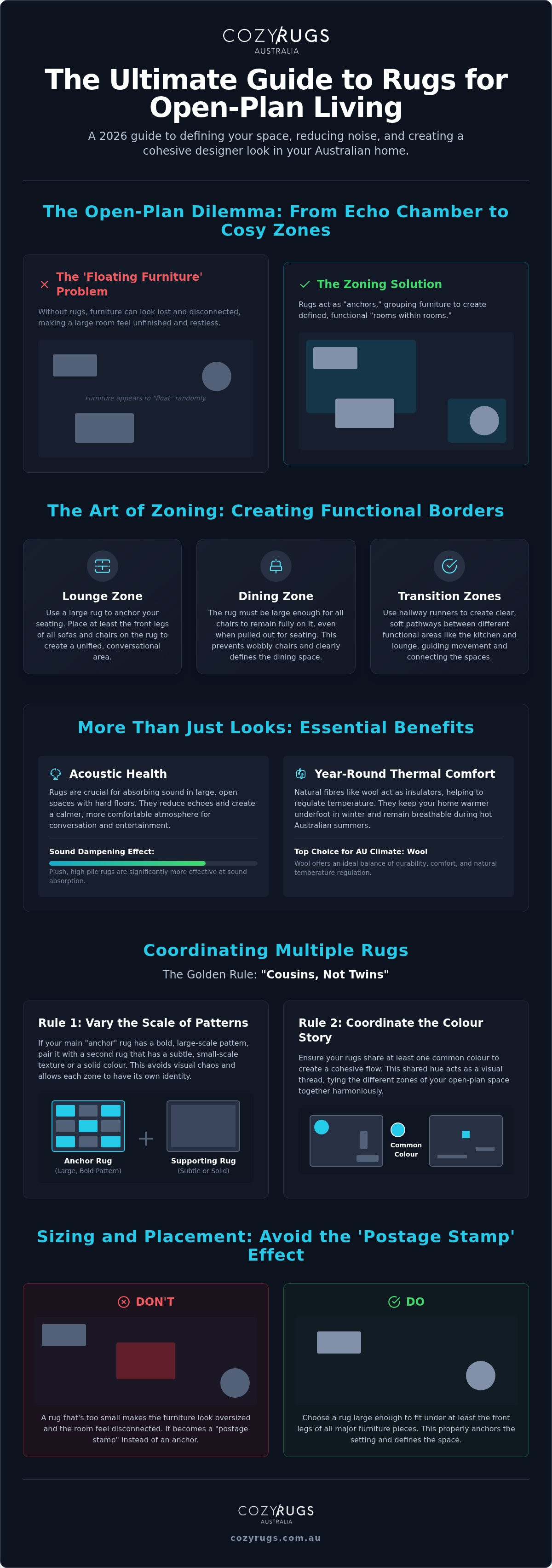
Open plan living is a hallmark of the modern Australian home. It is great for entertaining, but it can often leave your living space feeling a bit like a sports hall. The best rugs for open plan living are the secret to fixing this. Zoning is essentially the art of using floor coverings to create "rooms within rooms" without the need for permanent walls. It provides a sense of psychological comfort; we naturally feel more at ease when our furniture is "grounded" on a defined surface. When furniture just sits in the middle of a vast floor, it can look like it's "floating," which makes the room feel unfinished and restless. By choosing the right rugs, you create a visual flow that leads the eye gently from the kitchen to the lounge, making the whole house feel organised and intentional.
Creating Functional Borders Without Walls
To anchor a lounge area properly, you will usually need a large area rug. This piece acts as the foundation for your seating, pulling the sofas and coffee table into one unified group. In the dining zone, the requirements are different. The rug must be large enough to encompass the entire dining suite, including the chairs when they are pushed out. This prevents chairs from wobbling on the edge of the rug and clearly defines where dinner happens. You can use hallway runners to act as paths that connect the kitchen to the main living zones, providing a soft transition.
- Lounge Zone: Use a rug that fits under at least the front legs of all seating to pull the furniture together.
- Dining Zone: Ensure the rug extends far enough so chairs stay on the rug even when guests are seated.
- Transition Zones: Use runners to create a "pathway" that guides movement between different functional areas.
Acoustics and Thermal Comfort in AU Homes
Many of us love the look of polished concrete or timber floors, but they come with a catch. They can be incredibly loud and feel a bit chilly underfoot. Large rugs are essential for acoustic health in open plan spaces. They absorb sound waves that would otherwise bounce off hard surfaces, which stops that annoying echo during family dinners or while watching TV. The pile height you choose plays a big role here; a plush pile is much better at sound dampening than a thin, flatweave option. If you want the best performance for the Australian climate, wool rugs australia are a top-tier choice. Wool is a natural insulator that helps regulate temperature, keeping your home cosy during a crisp winter while remaining breathable when the summer heat kicks in. It is a practical, durable solution for a busy household.
Coordinating Multiple Rugs: How to Pair Patterns and Colours
Choosing more than one rug for a single large space can feel like a high-stakes puzzle. You don't want your home to look like a showroom where everything is perfectly matched; however, you also don't want a chaotic clash. The "Golden Rule" we always recommend is that your rugs should be "cousins, not twins." This means they should share at least one common trait, like a specific colour or material, but differ in their pattern or texture. This subtle connection creates harmony without being boring or predictable.
Start by identifying your "Anchor Rug." This is usually the largest or most vibrant piece, typically placed in the lounge room. Once you've chosen this foundation, every other floor covering in the open plan area should compliment it. To keep the space feeling airy and expansive, use tonal variation. Instead of sticking to one flat shade, look for the best rugs for open plan living that offer a range of similar hues. This adds depth without cluttering the visual field or making the room feel closed in.
Rule 1: Vary the Scale of Patterns
If your anchor rug features a bold, large-scale geometric design, your second rug should be much quieter. Pairing two identical patterns or scales creates a visual "vibration" that can be quite jarring to the eye. Instead, try a subtle, tight-weave solid or a very small-scale texture for the dining area. You can find plenty of living room rug ideas australia that showcase how to balance a hero pattern with a supporting piece. This approach ensures the eye has a place to rest between the different zones of your home.
Rule 2: Coordinate the Colour Story
A successful colour story relies on a common thread. If your lounge rug has flecks of "Cool Grey," ensure your dining rug or hallway runner features that same grey, even if the primary colour is different. We often suggest the "Inverted Palette" trick. If your main rug is mostly "Warm Oat" with "Terracotta" accents, look for a second rug that is mostly "Terracotta" with "Warm Oat" details. This creates an instant, professional connection. When working with Australian timber like the blonde tones of Blackbutt or the deep reds of Jarrah, use neutral rugs as a "buffer" to prevent the colours from competing with your flooring. If you are feeling a bit stuck on which shades to pair, our team offers free design consultations to help you find the perfect match for your home.
Material Matters: The Best Rug Fibres for High-Traffic Open Zones
In a large open plan home, the floor takes a real beating. While the lounge is for relaxing, the dining area is for living, which usually means crumbs, spills, and the constant movement of chairs. Selecting the best rugs for open plan living requires a strategic look at different fibres. You need something plush and inviting where you rest, but something tough and resilient where you eat and walk. Matching the material to the specific function of each zone is the secret to a home that stays looking fresh for years.
Wool: The Premium Choice for Lounge Zones
Wool is often considered the gold standard for Australian living rooms. It offers incredible "bounce back" properties, meaning the pile won't permanently flatten under the weight of a heavy modular sofa or coffee table. It is also a natural champion when it comes to maintenance. Wool fibres have a protective lanolin coating that acts as a natural barrier, preventing liquids from soaking in immediately and giving you a vital window to blot away spills. For families with kids or pets, wool rugs australia provide a soft, safe surface that handles the chaos of daily life while maintaining a high-end look.
Natural Fibres for Coastal and Transition Areas
If your home features that classic Australian indoor-outdoor flow, natural rugs australia are your best friend. Materials like jute and sisal are incredibly hardy, making them perfect for entryways or transition zones between the kitchen and the alfresco area. They bring an earthy, organic texture that complements coastal, bohemian, and Hamptons-style interiors beautifully. While they are durable, they can be a bit tricky in high-spill zones like a breakfast nook. If you choose a natural rug for an area where food is served, stick to a tighter weave that won't trap crumbs as easily as a chunky loop might.
For the dining zone itself, flatweave rugs are a total game-changer. Because they have no pile, dining chairs can glide back and forth without catching or bunching the fabric. They are much easier to vacuum and keep clean than a shaggy or thick-pile rug. When you combine a flatweave in the dining area with a plush wool rug in the lounge, you create a sophisticated contrast that clearly defines each space's purpose. It is a practical way to manage the different needs of your home without sacrificing style.
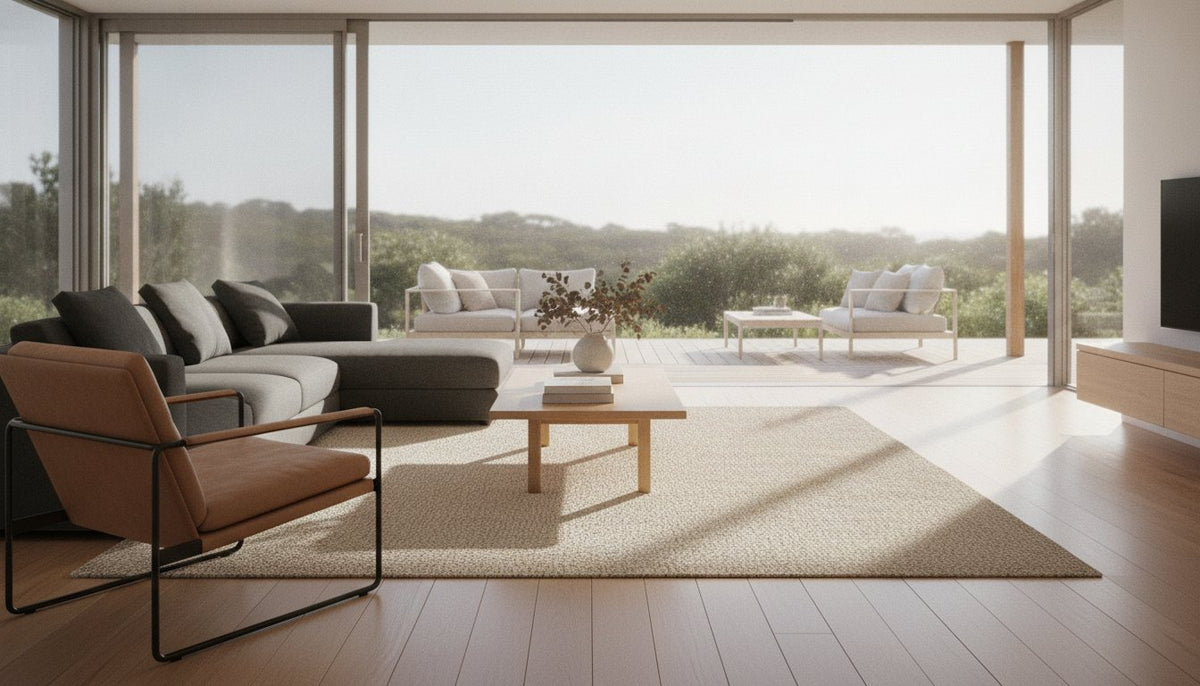
Sizing and Placement: Finding the Best Rugs for Open Plan Layouts
Getting the size right is often the difference between a room that feels professionally designed and one that feels slightly "off." Sizing is the most common hurdle for homeowners. When you pick a rug that is too small, it creates the "postage stamp" effect. This makes your furniture look like it is floating in space and actually shrinks the perceived size of your room. The best rugs for open plan living should be large enough to comfortably accommodate your furniture and define the zone with confidence.
In the lounge, you generally have two main choices for placement. The "All Legs On" approach creates a very luxurious, high-end feel because it encapsulates the entire seating group. However, the "Front Legs Only" method is much more common in Australian homes. It keeps the furniture connected and grounded while allowing you to use a standard-sized rug that doesn't overwhelm the space. Both methods work well, provided the rug extends at least 20cm beyond the sides of your sofa to create a sense of scale.
Sizing Guide for Common AU Zones
Australian homes often feature large modular sofas or expansive dining suites. To ensure your space feels balanced, follow these general sizing rules for common furniture configurations:
- 6-Seater Dining: You will usually need a rug that is at least 2.4m x 3.3m.
- 10-Seater Dining: Aim for a minimum of 3m x 4m to ensure all chairs remain on the rug.
- L-Shaped Modular Sofa: The rug should be wide enough to tuck under the front legs of both sections of the "L" with some extra width on the ends.
For the dining area, always use the "Dining Chair Test." You need at least 60cm of rug extending beyond the edge of the table on all sides. This ensures that when guests pull their chairs out to sit down, the back legs stay on the rug. To connect these larger zones, hallway runners australia are a perfect tool to guide movement through the open plan without cluttering the floor.
The "Negative Space" Rule
While rugs are essential, you shouldn't try to cover every centimetre of your floor. Leaving a gap of 20cm to 30cm of bare timber or tile between your rugs is vital. This "negative space" acts as a visual frame, allowing your flooring to shine while clearly separating the lounge from the dining area. It also maintains the airy flow that makes open plan living so desirable. Try to align your rugs with architectural features; for example, centre your lounge rug with the fireplace or align the dining rug with your large sliding doors. This creates a sense of symmetry that feels calm and intentional. If you are struggling to visualise how these sizes will work in your home, you can view our collection of rug sizes to find the right fit for your layout.
Final Touches: Creating a Cohesive Australian Home with Cozy Rugs
Once you have sorted out your zoning and materials, the final step is adding those designer touches that make a house feel like a home. Finding the best rugs for open plan living often comes down to these final styling decisions. In Australia, we often have beautiful, hard flooring like timber or tile that can feel a bit clinical if left bare. The best rugs for open plan living are not just functional; they are the layers that add personality, warmth, and a sense of completeness to your space. By focusing on the details, you can turn a large, echoing area into a series of intimate, connected spaces that reflect your personal style.
The Designer Perspective: Darren Palmer Collection
If you want a professionally curated look without the designer price tag, the Darren Palmer collection is a fantastic place to start. These pieces are specifically designed with the contemporary Australian aesthetic in mind, focusing on earthy tones and sophisticated textures. The beauty of this range is that the pieces are designed to work together. You can easily pair a chunky wool rug in the lounge with a sleek flatweave from the same collection in the dining area. This ensures your home feels coordinated and cohesive without looking like a carbon copy. Mixing different textures within a single collection is a foolproof way to achieve that high-end "layered" look that interior designers love.
Layering is another trick that can elevate your space. If you have a large, neutral base rug but want to add a bit of flair, try placing a smaller hide or a patterned rug on top. This works particularly well in the lounge area to define the coffee table zone. It adds an extra layer of comfort and visual interest without overwhelming the rest of the open plan layout. Just remember to keep the bottom rug relatively flat to avoid any tripping hazards.
Don't forget the underlay. On timber or tile floors, rugs can easily slip and slide, which is a major hazard in a busy home. A quality underlay doesn't just keep your rug in place; it also provides extra cushioning and protects the underside of the rug from wear and tear. This simple addition can significantly extend the life of your investment while keeping your family safe.
Expert Help at Your Fingertips
We know that choosing the right combination can still feel a bit daunting. That's why we offer a free design consultation service. You can send us photos of your open plan area, and our team will provide personalised advice on which rugs will work best for your specific layout and colour scheme. It's like having a friendly expert right there in the room with you. Before you make your final choice, run through this quick 3-step checklist:
- Measure twice: Did you leave 20-30cm of floor space between your rug zones?
- Check the material: Is your dining rug a flatweave for easy chair movement?
- Coordinate the colours: Do your rugs share a common "cousin" hue?
When you're ready to transform your space, you can browse our full range of modern area rugs to find the perfect pieces for your home.
Start Transforming Your Open Plan Space Today
Creating a home that feels both open and intimate is all about the details underfoot. You now have the tools to choose the best rugs for open plan living by balancing size, material, and colour coordination. Remember that successful zoning depends on choosing rugs that are "cousins, not twins" and ensuring your lounge furniture is properly grounded rather than floating. By opting for durable wool in relaxation zones and practical flatweaves for dining areas, you can manage noise and spills while maintaining a beautiful aesthetic.
If you're still feeling a little unsure about which patterns will pair best in your unique layout, our team is here to help. We offer free design consultations to take the guesswork out of your styling journey. Plus, with free shipping Australia-wide, it's never been easier to refresh your home with our specialised collections. Explore the Darren Palmer Collection for a curated open-plan look and start creating the cohesive Australian home you've always wanted. We can't wait to see how you bring your vision to life.
Frequently Asked Questions
Should rugs in an open plan living area match?
No, your rugs don't need to be identical; in fact, matching them perfectly can often look a bit flat. The goal is to find pieces that feel like "cousins" rather than "twins." You might choose rugs that share a similar colour palette but feature different patterns or textures. This approach helps you find the best rugs for open plan living by creating harmony while allowing each zone to have its own unique personality.
How do I choose two rugs for the same room?
Start by selecting your "anchor rug" for the largest area, which is usually the lounge. Once you've chosen this piece, look for a second rug that picks up a secondary colour from the first one. It is important to vary the scale of the patterns; if one rug has a bold geometric print, the other should be a solid colour or have a very subtle, small-scale texture to avoid a jarring visual clash.
What is the best rug material for a high-traffic dining and living area?
Wool is widely considered the best choice for Australian homes due to its natural durability and stain resistance. It is perfect for lounge areas where you want comfort and sound absorption. For the dining area, a flatweave rug is often more practical as it allows chairs to slide easily. If you are looking for the best rugs for open plan living in high-traffic areas, natural fibres like jute or sisal offer incredible resilience.
How much space should be between rugs in an open floor plan?
You should aim to leave roughly 20cm to 30cm of bare floor visible between your rugs. This "negative space" acts as a frame for each zone, preventing the room from looking cluttered or like it is covered in wall-to-wall carpet. Maintaining this gap allows your timber or tile flooring to provide a natural border, which helps the eye distinguish between the separate functional areas while keeping the overall layout feeling airy and expansive.
Can I use a round rug in an open plan living space?
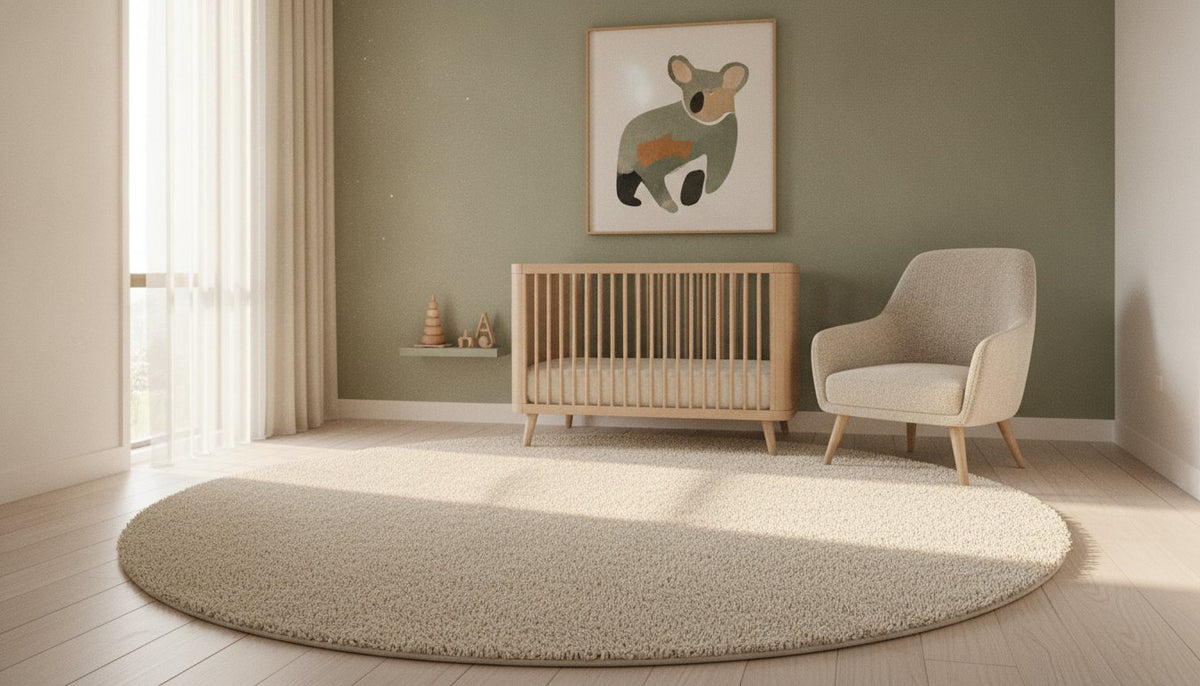
Absolutely, round rugs are a fantastic tool for breaking up the sharp, linear lines often found in modern open plan layouts. They work particularly well for creating small, intimate nooks, such as a reading corner or a play area for the kids. A round rug can also look stunning under a circular dining table, helping to soften the space and add a touch of visual interest that contrasts beautifully with rectangular furniture in the lounge.
How do I stop my rugs from moving on timber floors?
The most effective way to prevent rugs from sliding on timber or tile floors is to use a high-quality rug underlay. Not only does this keep your rugs safely in place, but it also adds an extra layer of cushioning for comfort. Using an underlay is a smart move for the longevity of your floor coverings, as it reduces friction between the rug and the hard floor, preventing premature wear and protecting your floor's finish.
What size rug do I need for an 8-seater dining table?
For an 8-seater dining table, you will typically need a rug that is at least 2.4m x 3.3m, though 3m x 4m is often better for larger suites. The golden rule is to ensure the rug extends at least 60cm beyond the table edge on all sides. This ensures that when guests pull their chairs out to sit down, the back legs stay firmly on the rug rather than catching on the edge and bunching.
How do I coordinate a patterned rug with a plain one?
To coordinate a patterned rug with a plain one, ensure they share a common colour thread. For example, if your patterned rug has flecks of oat, choose a plain rug in that exact oat shade. To keep the plain rug from looking too simple, look for one with an interesting texture, like a chunky wool weave. This creates a sophisticated visual link between the two zones without the pieces competing for attention in your home.

Leave a comment
This site is protected by hCaptcha and the hCaptcha Privacy Policy and Terms of Service apply.