

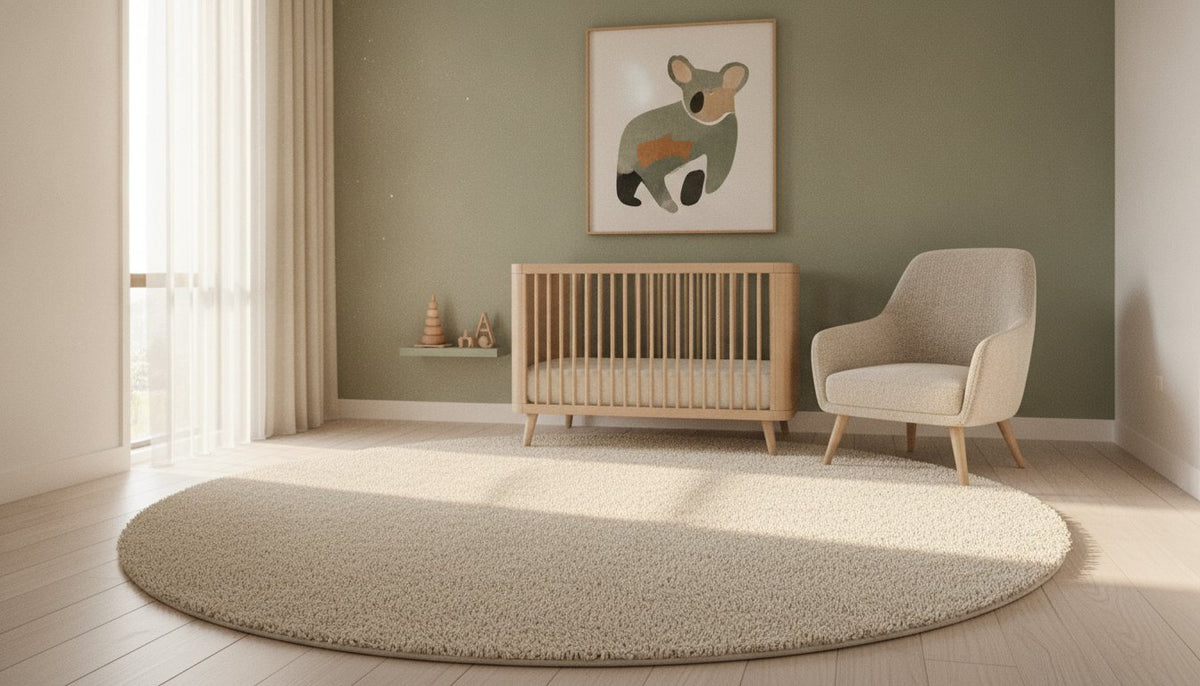
What if the secret to a perfectly balanced nursery isn't another piece of furniture, but a simple change in shape? Most parents default to standard rectangles, yet a round rug nursery layout often provides the soft, organic flow that rigid corners just can't match. It's about more than just aesthetics; it's about creating a dedicated zone for tummy time and late-night cuddles that feels intentional and calm.
We know the mental load of preparing for a new bub is huge. You're likely worried about choosing a material that won't irritate sensitive skin, or perhaps you're staring at a tape measure wondering if a rug will actually fit under that rocking chair without bunching up. It's completely normal to feel a bit overwhelmed by the technical side of decorating when you just want a space that's safe and inviting. This guide is here to help you choose a durable rug that survives the inevitable spills while keeping your little one's comfort at the centre of the design.
You'll discover expert tips on selecting high-quality wool and natural fibres, the best ways to position your rug for maximum safety, and how to pick the right size to anchor your furniture beautifully.
Key Takeaways
- Learn how circular shapes soften the sharp lines of cots and create intentional zones for play and bonding.
- Discover why wool and natural fibres are the gold standard for a round rug nursery, offering both durability and comfort for your little one.
- Master the "Off-Centre" rule for rug placement and find the ideal dimensions to anchor your furniture without cluttering the room.
- Get inspired by trending nursery themes and learn practical tips for handling inevitable milk spills and mishaps.
Why Choose a Round Rug for Your Nursery?
Standard Australian bedrooms often follow a rigid, linear grid. When you add a cot, a change table, and a chest of drawers, the room can quickly start to feel like a collection of hard corners and boxy shapes. Choosing a round rug nursery layout is one of the easiest ways to disrupt this visual monotony. By introducing a curve into a room full of straight lines, you instantly soften the aesthetic and create a more inviting environment for your bub. It's a simple design trick that makes the space feel curated rather than just cluttered with furniture.
Historically, the history and purpose of a nursery was purely functional; however, today’s parents want a space that feels like a cohesive sanctuary. A circular rug draws the eye toward the centre of the room, acting as a focal point that unifies the disparate pieces of furniture. This is particularly helpful in smaller Australian nurseries where a large rectangular rug might feel cramped or cut off by the walls. Because a round rug leaves more of the floor visible at the corners, it creates an illusion of more space, making even a compact room feel airy and open.
Softening the Room Architecture
Most Australian homes are built with right angles in mind. While this is great for structural integrity, it can feel a bit clinical in a space meant for rest. Curves naturally signal a sense of calm and flow, which is exactly what sleep-deprived parents need during those 2 am feeds. A round rug helps to anchor furniture that might otherwise feel like it's floating in the middle of the room. Instead of the furniture looking disjointed, the rug provides a soft base that ties the cot and the nursing chair together into a single, harmonious design.
The Practicality of Circular Zoning
Think of your nursery as a series of different zones for sleep, care, and play. A round rug is the perfect tool for defining these boundaries without the need for physical dividers. You can use a smaller 120cm rug to create a dedicated tummy time zone, giving your baby a soft, safe perimeter to explore. Alternatively, placing a rug beneath a rocking chair creates a cosy nook that feels separate from the sleeping area. Round rugs act as a visual island that grounds specific activities within the nursery's broader layout. This zoning makes the room feel organised and purposeful, ensuring every square metre is used effectively.
Selecting the Best Materials for a Bub-Friendly Floor
When your bub starts rolling and crawling, the nursery floor becomes their entire world. You need a material that is soft enough for delicate skin but tough enough to handle the occasional nappy leak or spit-up. Finding the right round rug nursery material means balancing these practical needs with a style that suits your home's aesthetic. It isn't just about the look; it's about creating a safe, hygienic surface where your little one can reach their first milestones.
The Case for Wool Rugs in Australia
Wool is often considered the gold standard for nurseries. It possesses incredible natural thermoregulation, which is vital in our varied climate. It keeps the floor warm during chilly winter mornings and remains breathable and cool when the summer heat kicks in. High-quality wool rugs australia parents often choose also contain lanolin. This natural coating provides a built-in layer of stain resistance, giving you a few extra seconds to grab a cloth before a spill soaks in. Plus, wool is naturally hypoallergenic and flame-resistant, making it a very safe choice for a sleep environment.
Natural and Eco-Friendly Options
If you're aiming for a coastal or boho look, you might be considering natural rugs australia made from jute or sisal. While some traditional weaves can be a bit scratchy for a crawling baby, look for "soft-weave" jute or cotton blends. These offer that earthy, organic texture without the rough feel against sensitive knees. For added safety on timber or tiled floors, always pair these with a high-quality non-slip underlay. It prevents the rug from sliding during a midnight feed and adds a necessary layer of cushioning for those inevitable tumbles.
Cotton rugs are another fantastic lightweight alternative. They are generally easier to spot-clean and can be a great choice for a dedicated play zone where mess is more likely. Regardless of the material you prefer, check for low-shedding options. You don't want your little one inhaling loose fibres during tummy time. Choosing rugs with low VOCs (Volatile Organic Compounds) ensures the air quality in the nursery remains clean and safe for developing lungs. If you're feeling unsure about which texture will work best for your space, you can explore our nursery-friendly collection to find a balance of comfort and durability.
Safety is about more than just a soft surface. When a baby is at the crawling stage, they are in constant contact with the floor. This is why non-toxic materials are non-negotiable. Avoiding synthetic backings that might off-gas is a smart move for any parent. A well-chosen rug should provide peace of mind as much as it provides style, acting as a reliable foundation for your baby's earliest years of exploration.
5 Inspiring Nursery Themes Styled with Round Rugs
Choosing a theme is often the most exciting part of preparing for a new arrival. A round rug nursery design allows you to anchor your chosen aesthetic without the rug feeling like it's taking over the entire room. Whether you prefer a calm, quiet space or something more vibrant, the right circular rug acts as the finishing touch that brings your vision to life. It’s not just about matching colours; it’s about using texture and shape to tell a story.
- The Modern Coastal Nursery: Think sun-bleached creams and light oak furniture. A cream round rug adds a layer of softness that mimics the feel of sand underfoot.
- The Whimsical Woodland: Use earthy greens and deep forest tones. A rug with a plush, moss-like texture can make the floor feel like a magical clearing in the woods.
- The Gender-Neutral Minimalist: Clean lines and monochrome circles. Grey or charcoal tones provide a sophisticated base that grows with your child into their toddler years.
- The Australiana Theme: Warm ochres and natural wool fibres. This look celebrates our local landscape with rust-coloured accents and durable, high-quality materials.
- The Playful Pop: Multicoloured spots or bold geometric shapes. These rugs do more than look good; they provide visual stimulation that helps a bub’s developing eyesight.
Styling the Coastal and Natural Look
To recreate a coastal vibe, pair a cream or ivory round rug with rattan storage baskets and light timber furniture. This combination feels light and airy, perfect for an Australian summer. The perfect colour palette for a 2026 Australian coastal nursery features sun-bleached creams, muted sage, and warm driftwood tones that mimic our local landscape. If you want more depth, try layering a small, high-pile round rug over a larger flatweave natural rug. This creates a tactile, interesting space that feels incredibly cozy during those late-night feeding sessions.
Modern and Minimalist Approaches
Minimalism doesn't have to feel cold. In a bright white room, a grey round rug provides a necessary "grounding" effect that keeps the space from feeling too clinical. Look for rugs with subtle geometric patterns, such as a simple border or a concentric circle design. These add visual interest without cluttering the room. To keep the space feeling warm, focus on the quality of the fibres. A thick wool rug provides a soft, cushioned surface that balances out the sharp, clean lines of modern nursery furniture, ensuring the room remains a sanctuary for both you and your baby.
Sizing and Placement: Getting the Layout Right
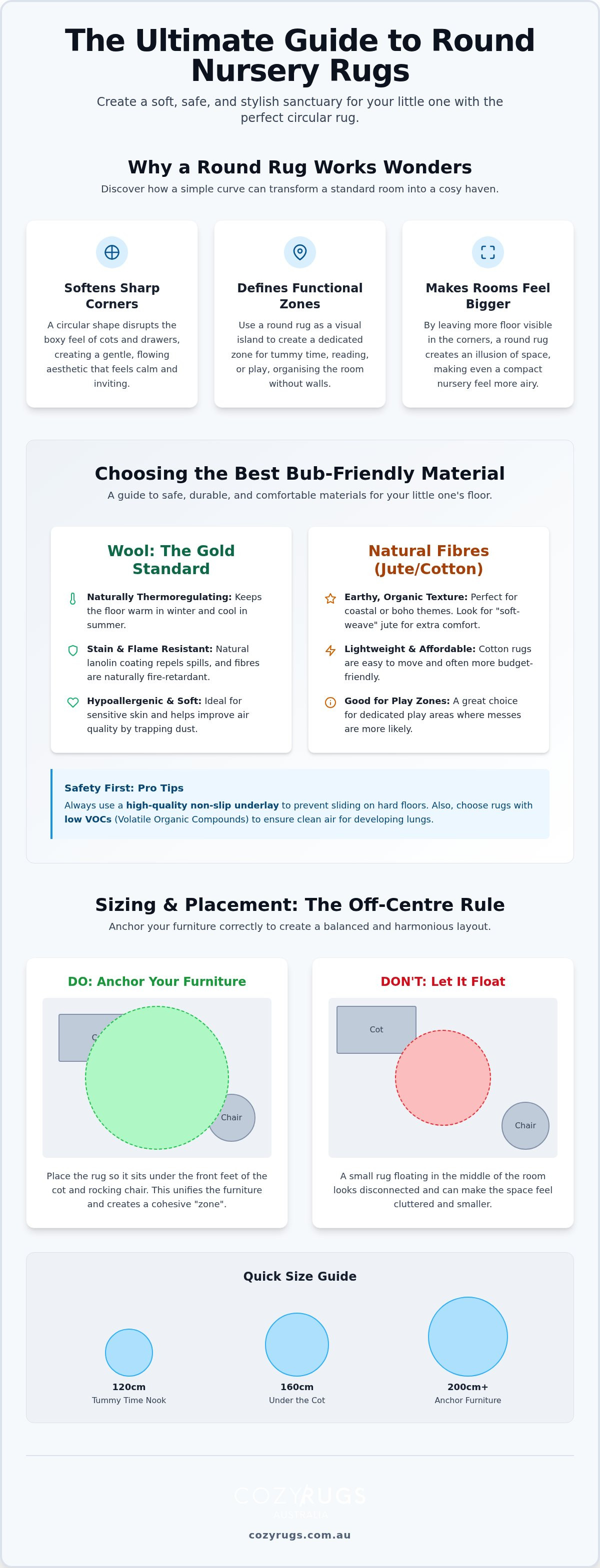
Once you've settled on your preferred material and theme, the next hurdle is figuring out where the rug actually goes. Getting the scale right is the difference between a room that feels professionally designed and one that feels a bit disjointed. Standard sizes for a round rug nursery typically include 120cm, 150cm, and 200cm diameters. Choosing between them depends entirely on your floor plan and how much furniture you need to anchor. It is about more than just filling a gap; it's about creating a stable foundation for your daily routine.
The "Off-Centre" rule is a favourite trick among interior designers. You don't always need to plonk the rug directly in the middle of the room. Placing it slightly to one side, perhaps tucked partially under the cot or the rocking chair, creates a sense of movement and flow. If you are placing it under a cot, aim to have at least 60cm to 90cm of the rug visible. This ensures the circular shape is still recognisable and provides a soft landing spot for your feet when you're lifting the bub out for a midnight feed.
Measuring Your Nursery Space
A common mistake is choosing a rug that looks like a floating postage stamp in the middle of the room. If the rug is too small, it can make the nursery feel fragmented. To avoid this, refer to our rug size guide australia for precise dimensions that suit standard Australian bedroom sizes. Always leave about 30cm to 45cm of "breathing room" between the edge of the rug and the walls. This gap allows the floorboards or carpet underneath to frame the rug, making the room feel larger and more balanced.
Furniture Placement Strategies
Safety and stability are non-negotiable when positioning furniture on a plush pile. If you're using a rocking chair, ensure all legs sit comfortably on the rug to prevent any wobbling. For those living in modern apartments, you might be carving out a nursery nook within an open plan living area. In these multi-use spaces, a round rug acts as a visual boundary that separates the baby's zone from the rest of the house. You can even coordinate it with your main living room rug to keep the home’s aesthetic consistent. Just remember to check that the edges aren't creating a trip hazard near heavy furniture. If you need a hand deciding which diameter works for your specific layout, you can book a free design consultation with our team to get it exactly right.
Practical Care and Finding Your Perfect Nursery Rug
Life with a new bub is inevitably messy. Between spilt milk, nappy mishaps, and the general chaos of playtime, your floor takes a lot of heat. Maintaining your round rug nursery investment doesn't have to be a secondary full-time job. With a few practical habits, you can keep the space looking fresh and hygienic without spending hours on your hands and knees. It’s all about working smarter, not harder, so you can spend more time focusing on your little one.
One of the biggest debates in modern nursery design is the rise of machine-washable rugs. While the idea of throwing a rug in the wash sounds like a dream, it often comes at a cost to the rug's structural integrity. Frequent machine washing can break down the backing and cause the fibres to lose their soft, plush feel. For high-quality wool or natural rugs, professional cleaning every year or two is a much better path for longevity. It preserves the natural lanolin in wool and ensures the rug stays flat and safe on your floor for years to come.
Maintenance for Busy Parents
Choosing the right pile height is your first line of defence. A medium pile is the "Goldilocks" of nursery flooring; it’s soft enough for tummy time but low enough that your vacuum can actually reach the dust and allergens trapped at the base. Aim to vacuum once or twice a week using a suction-only head. Brushes can sometimes pull at the loops of a woven rug, leading to premature wear.
Don't forget the "rotate rule" either. Every six months, give your rug a 180-degree turn. This ensures that the heavy legs of the cot or the constant rocking of a nursing chair don't create permanent indents or uneven wear patterns in just one area. If a spill does happen, blot it immediately with a clean, dry cloth. Avoid the urge to scrub, as this just pushes the liquid deeper into the fibres. A simple mixture of white vinegar and lukewarm water is a fantastic natural cleaner that’s safe for both babies and pets.
The Cozy Rugs Difference
We understand that every Australian home is different. You might be styling a sun-drenched room in Queensland or a cosy, insulated nursery in Tasmania. Our team acts as a friendly expert to help you navigate these choices. We offer a free design consultation to take the guesswork out of sizing and material selection, ensuring you get a piece that truly fits your lifestyle. We're committed to providing durable, high-quality materials that stand up to the rigours of family life while looking stunning.
Ready to create a beautiful, safe sanctuary for your bub? Browse our collection of round nursery rugs today and discover how the right shape can transform your space. With national Australia-wide delivery, your perfect nursery rug is only a few clicks away.
Ready to Create Your Bub's Perfect Sanctuary?
Designing a space that is both visually stunning and safe for your little one is an exciting milestone. By opting for a round rug nursery design, you have chosen a smart way to soften the rigid lines of traditional furniture while creating a cosy, dedicated zone for bonding. Keep in mind that the most successful layouts prioritise high-quality natural and wool fibres that offer both comfort for tummy time and long-term durability for high-traffic play.
If you're still weighing up which size or material will best suit your home's unique layout, our team is ready to assist. We offer free design consultations to help you navigate the process with confidence. With our commitment to premium materials and national Australia-wide delivery, finding a rug that survives spills and play has never been easier. You are almost there; it's time to put the finishing touches on a room you'll both love for years to come.
Explore Our Soft and Durable Round Nursery Rugs
Frequently Asked Questions
Is a round rug better for a small nursery?
A round rug is often a superior choice for a small room because it creates a sense of flow and openness. Unlike rectangular rugs that can feel like they are pushing against the walls, a circular shape leaves the corners of the floor visible. This visual trick makes a compact round rug nursery layout feel significantly larger and less cluttered. It is a practical way to soften the rigid lines of furniture.
How do I clean a wool round rug after a spill?
Act quickly by blotting the spill with a clean, dry cloth to absorb as much liquid as possible. Never scrub the fibres; this can damage the wool's natural structure and push the stain deeper. For common mishaps like milk or juice, use a mixture of lukewarm water and a small amount of white vinegar. If the spill is significant, we recommend seeking professional advice rather than attempting a full machine wash at home.
What size round rug fits under a standard cot?
For a standard Australian cot, a 150cm or 200cm round rug nursery layout works best. A 150cm rug allows the front legs of the cot to sit on the pile while leaving plenty of soft surface area for you to stand on. If you have a larger room, a 200cm rug provides a more generous border. This ensures the rug acts as a stable anchor for the furniture rather than looking like a small, floating island.
Can I put a round rug on top of carpet in a nursery?
You can certainly layer a round rug over existing carpet to add texture and protect high-traffic zones. This is a popular styling choice in Australian rentals where you might want to hide a neutral carpet or add a pop of colour. To prevent the rug from travelling or bunching up, always use a high-quality rug-to-carpet underlay. This keeps the surface flat and safe for both you and your crawling bub.
Are jute rugs too rough for a baby to crawl on?
Traditional jute can feel a bit coarse on a baby's sensitive knees and hands. However, many modern natural rugs are now available in soft-weave varieties or cotton-jute blends that are much gentler. If you love the organic look of natural fibres, we suggest placing a smaller, plush wool rug on top of the jute in the dedicated play area. This gives you the aesthetic you want without compromising on your baby's comfort.
Should a round rug be centred in the middle of the room?
A round rug does not always need to be centred in the middle of the nursery. Placing it off-centre can often make a room look more balanced and intentionally designed. You might choose to anchor the rug under the front legs of a rocking chair or partially beneath the cot to create a specific zone. This approach helps define different areas for sleeping, feeding, and playing while maintaining a calm, cohesive flow.
What is the best rug pile height for a nursery?
A medium pile height, typically between 10mm and 15mm, is the ideal choice for most nurseries. It provides enough cushioning for tummy time and those first wobbly steps while remaining easy to vacuum. Very high-pile or shag rugs can sometimes trap small toys or allergens, making them harder to keep hygienic. A medium-pile wool rug offers the perfect balance of underfoot comfort and practical, everyday maintenance for busy Australian parents.


Leave a comment
This site is protected by hCaptcha and the hCaptcha Privacy Policy and Terms of Service apply.