

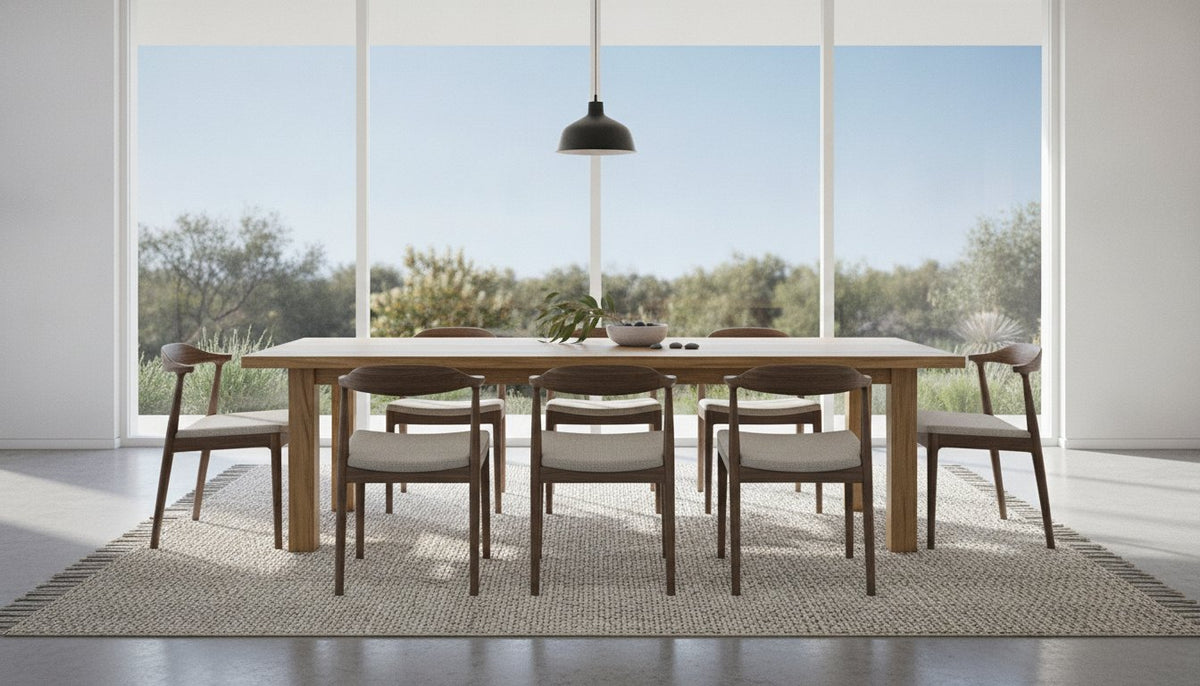
Have you ever hosted a Sunday roast only to watch your guests struggle as their chair legs caught on the edge of the carpet? It's a frustrating but common Aussie decorating mishap that usually happens when the rug under dining table size is just a few centimetres too small. While we often focus on the colour or pattern, the physical footprint of the rug is what truly determines if your room feels like a designer masterpiece or a cluttered, disconnected afterthought.
We know you want a home that feels welcoming and effortless, where the kids can pull out their chairs without a hitch and the dining zone feels clearly defined in your open-plan living area. This guide will teach you exactly how to measure your space and select a rug that stands up to daily family life. We'll explore the essential "chair path" rules, the best dimensions for standard Australian tables, and why durable materials like those in the Darren Palmer Collection are the secret to a functional, professionally styled home.
Key Takeaways
- Learn the "Golden Rule" of measuring, adding a 60cm to 70cm buffer so chairs stay firmly on the rug when guests sit back.
- Discover why flatweave and low-pile wool rugs are the gold standard for easy chair movement and simple crumb management.
- Master how to calculate the ideal rug under dining table size to avoid the "postage stamp" look and make your room feel balanced.
- Find out how to zone open-plan spaces by anchoring your dining suite with a rug that defines the area without needing walls.
- See how to match rug shapes to your table, whether you're styling a formal rectangular setting or a social round table.
Why Getting Your Rug Under Dining Table Size Right Matters
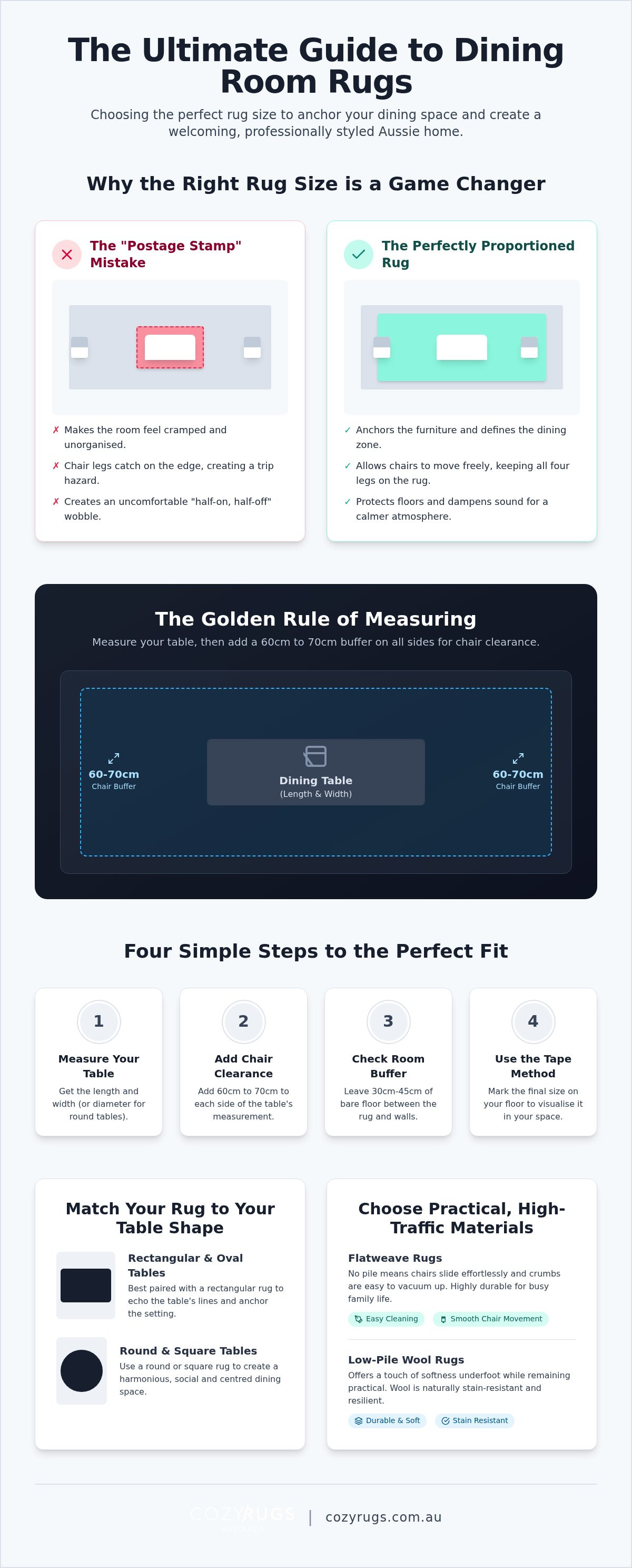
Choosing the right rug under dining table size is about more than just matching a colour to your placemats. It's the foundation of a room's layout. A common mistake in many Australian homes is choosing a rug that's too small, creating what designers call the "postage stamp" effect. This happens when a tiny rug sits under a large table, making a spacious room feel cramped and unorganised. Instead of anchoring the space, a small rug floats aimlessly, making the furniture look oversized. Getting the rug under dining table size right is the simplest way to make your home feel balanced and intentional.
The most important factor isn't actually the table itself; it's the "Chair Test." You need to consider the physical movement of your guests. When someone pushes their chair back to stand up, all four legs should remain firmly on the rug. If the back legs drop off the edge, it creates a frustrating experience. Beyond comfort, rugs provide essential protection for your flooring. Whether you have beautiful Jarrah floorboards or modern polished concrete, heavy dining chairs can cause permanent scratches. A sturdy rug acts as a shield, preserving your home's value while adding a soft layer of texture. Understanding Carpet and rug basics can help you see how different constructions handle this weight over time.
The Safety and Comfort Factor
Nobody enjoys the "half-on, half-off" chair wobble. When a rug is too small, chairs sit at an angle, which is both uncomfortable and distracting during a meal. This isn't just about comfort; it's a safety issue. Rug edges that sit right in the path of a moving chair become trip hazards as they bunch up or curl over time. Additionally, many Australian homes feature high ceilings and open-plan designs that tend to echo. A generous rug provides vital sound dampening, absorbing the clatter of cutlery and conversation to create a more intimate atmosphere.
Visual Proportions and Aesthetics
A well-sized rug creates a sense of luxury and completeness. It acts as a visual anchor, centring the dining suite within the wider room layout. In modern open-plan houses, this is particularly useful for "zoning" without the need for physical walls. It tells the eye exactly where the dining area starts and ends. If you're feeling unsure about how this fits into the rest of your home, our Rug Size Guide Australia offers a broader overview for every room. Getting the proportions right ensures your dining space looks professionally styled and intentionally designed.
How to Measure Your Dining Area: The Golden Rule
Measuring up for your rug under dining table size shouldn't feel like a high-school maths exam. It's actually quite straightforward once you know the "Golden Rule". Most people make the mistake of only measuring the table itself, but the rug needs to accommodate the life that happens around it. If you only account for the timber or glass footprint, you'll end up with a rug that feels like an island in a sea of floorboards.
To get it right, follow these four simple steps:
- Step 1: Measure the length and width of your dining table. For round tables, measure the diameter across the widest point.
- Step 2: Add the "Chair Clearance". This is the essential 60cm to 70cm buffer on all sides of the table.
- Step 3: Consider the "Room Buffer". Try to leave 30cm to 45cm of bare floor between the edge of the rug and your walls to let the room breathe.
- Step 4: Use the "Tape Method". Grab some painter’s tape and mark out the rug's footprint on your floor. It's the best way to visualise how the rug under dining table size will actually look in your space.
The 60cm Rule Explained
Why is 60cm the magic number? It's the average distance a person needs to comfortably pull out a chair and sit down without the back legs slipping off the edge. Chair Clearance is the distance needed for a chair to remain fully on the rug when in use. While you might be able to drop to 45cm in a very tight dining nook, sticking to the 60cm rule ensures a much more premium feel. If you're still unsure about the dimensions, our experts offer free design consultations to help you pick the right fit with confidence.
Accounting for Sideboards and Furniture
Many Australian dining rooms feature a buffet, sideboard, or console. When you're measuring, you need to ensure the rug doesn't awkwardly overlap with the legs of these pieces. Ideally, you want at least 10cm of floor visible between the rug edge and other furniture. If your dining area is an L-shaped nook or tucked into a corner, focus on centring the rug under the table rather than the room's walls. This creates a dedicated "zone" that feels intentional and organised, even in quirky architectural layouts.
Matching Rug Shapes and Table Capacities
Selecting the right rug under dining table size often starts with geometry. Generally, you want the rug to echo the shape of your furniture to create a sense of order and balance. A rectangular table pairs beautifully with a rectangular rug, while a round table feels right at home on a circular one. This symmetry helps the dining suite feel grounded and deliberate within the room. Rectangular tables remain the most popular choice for Australian homes, especially in formal dining rooms or long, open-plan areas. Square tables offer a modern, architectural look and work best with square rugs to maintain that clean, geometric harmony. Round tables are fantastic for smaller spaces or creating a convivial centre for conversation, as they soften the sharp angles of a room.
Getting the rug under dining table size right means matching the capacity of your table to the scale of the rug. If the rug is too small for the number of seats, your dining area will look cluttered and feel physically restricted. To make your selection easier, we have put together a quick cheat sheet for the ideal rug under dining table size based on standard Australian furniture dimensions. These recommendations ensure you have enough clearance for every guest to move comfortably.
Rug Sizes for Common Australian Table Settings
Use these dimensions as a starting point for your measurements. These sizes account for the standard 60cm chair clearance needed on all sides.
- 6-Seater Table (approx. 180cm x 90cm): This common family size requires a 240cm x 330cm rug for ideal clearance and visual balance.
- 8-Seater Table (approx. 210cm x 100cm): These larger entertaining sets are best paired with a 270cm x 360cm or larger area rug.
- 10-Seater Table (approx. 240cm x 110cm): For grand dining rooms, you will likely need a 300cm x 400cm rug to anchor the massive footprint.
- Round 4-6 Seater (approx. 120cm-150cm diameter): Look for a 240cm round rug to keep chairs on the pile even when guests sit back.
When to Break the Rules: Round Rugs under Square Tables
While matching shapes is the standard, sometimes breaking the rules creates a stunning visual result. Using a round rug in the dining room can actually help a square table feel less rigid. This is a clever styling trick for rooms that feel a bit too boxy or architectural. It draws the eye to the centre of the room and creates a softer, more inviting atmosphere for Sunday lunch.
If you go this route, the diameter is your most critical measurement. You must ensure the circle is wide enough to cover the diagonal distance of the chair pull-out path. If the rug is too small, the chairs will constantly catch on the curved edge, which ruins both the aesthetic and the functionality. Keep the balance by choosing a pattern that complements the table's material, ensuring your bold choice feels like a styled decision rather than a sizing mistake.
Material and Pile Height: Practicality for High-Traffic Dining
Selecting the perfect rug under dining table size is only half the battle. If you choose a plush, high-pile shag rug, you'll quickly find that even the most accurately measured dimensions won't save you from the frustration of stuck chairs and trapped crumbs. In a high-traffic zone like the dining room, the material and pile height are the real "make or break" factors for long-term satisfaction. You need a surface that is thin enough for chair legs to glide over but durable enough to withstand the weight of a heavy timber table and the occasional dropped fork.
Flatweave and low-pile options are the gold standard for Australian dining spaces. They offer a smooth, dense surface that makes crumb management much easier. Unlike deep-pile carpets that swallow up every bit of debris, a low-pile rug allows you to vacuum or sweep away mess in seconds. When you're weighing up your options, you can explore our full range of dining-ready rugs to find a style that balances these practical needs with your personal aesthetic.
The Best Materials for Dining Spills
Spills are an inevitable part of family life, especially during a lively Sunday roast. Choosing wool rugs is often the smartest move for premium dining areas. Wool contains natural lanolin, a wax that acts as a built-in stain repellant. This gives you a small window of time to blot away liquids before they soak into the fibres. Wool is also incredibly resilient, meaning it won't permanently flatten under the weight of your table legs.
For a more relaxed, coastal feel, natural rugs made from jute or sisal are popular across Australia. These are exceptionally hard-wearing and provide a lovely organic texture. If you have young kids or pets, modern synthetic rugs made from heat-set polypropylene are a fantastic alternative. They are virtually non-shedding and can handle more vigorous cleaning without losing their colour or shape.
Why Pile Height Matters for Chairs
The "Chair Glide" is a critical part of a functional dining room. We recommend a pile height between 5mm and 8mm. This height provides enough cushioning to feel soft underfoot while remaining thin enough for chairs to slide effortlessly. High-pile or "shag" rugs should be avoided at all costs in this room. The long fibres catch on chair legs, making it difficult for guests to tuck themselves in, and they quickly become a magnet for dust and food particles.
The Darren Palmer Collection is a perfect example of how to get this balance right. These designs often utilise sophisticated textures and premium materials while keeping the pile height low and practical. This ensures your rug under dining table size looks like a designer choice while functioning perfectly for everyday use. By prioritising a low-profile construction, you ensure your dining space remains as easy to maintain as it is beautiful to look at.
Styling Tips for Open-Plan Australian Living Spaces
Open-plan living is a hallmark of the modern Australian home, but it often leaves us wondering where the dining room ends and the lounge begins. Using the right rug under dining table size is the most effective way to "zone" your space without building a single wall. It creates a dedicated island for your furniture, anchoring the dining suite so it doesn't look like it's floating in the middle of a vast room. This visual boundary is essential for making a large, multi-use area feel cosy and well-organised.
Coordinating your dining rug with the rest of your home is where the fun begins. You don't need to choose identical rugs; in fact, a bit of variety often adds more character to your interior. Instead, look for a common colour thread or a similar design language to tie the spaces together. If you're currently rethinking your entire layout, checking out some living room rug ideas can help you find a complementary style that flows naturally from the sofa to the dining table.
Creating Visual Harmony
Achieving a designer look is all about balance. A great trick is to mix textures while keeping the palette consistent. For example, you might have a plush wool rug in the lounge for comfort and a durable, flatweave version in the dining area for practicality. Using neutral tones allows your furniture to remain the hero of the space, while subtle patterns or darker flecks are fantastic for camouflaging the inevitable crumbs and minor spills that come with family life. This approach ensures your home looks styled but remains entirely liveable.
Practical Maintenance for Dining Zones
Once you've landed on the ideal rug under dining table size, a little bit of care goes a long way in preserving your investment. We recommend rotating your rug every 6 months. This ensures the wear from chair movement and foot traffic is distributed evenly, preventing "paths" from forming in the pile over time. To keep things safe, always use a rug pad to prevent the rug from "creeping" or bunching on slippery timber and tile floors. We suggest using a low-profile rug pad to add a layer of protection for your floor without adding excessive height that might catch on chair legs.
For those dealing with particularly large or tricky layouts, our guide on the best rugs for open plan living offers more advanced tips on layering and placement to help you master your home's flow with confidence.
Ready to Anchor Your Dining Space with Style
Mastering your dining room layout starts with understanding the physical space your guests actually use. By sticking to the golden rule of a 60cm to 70cm buffer, you ensure that every chair stays firmly on the pile, protecting your floors and your guests' comfort. Choosing the right rug under dining table size isn't just about the numbers; it's about selecting a durable, low-pile material that can handle the bustle of family meals while beautifully defining your home's open-plan zones.
Ready to transform your space? Whether you're looking for the natural resilience of wool or a textured flatweave design, we're here to help you get it right the first time. We offer free design consultations to help you measure with precision, and we provide nationwide shipping across Australia on our entire range. Browse our curated collection of Dining Room Rugs at Cozy Rugs to find a piece that brings both style and effortless functionality to your table. You're now equipped with the expert knowledge to create a dining area that feels as good as it looks.
Frequently Asked Questions
What is the most common mistake when choosing a dining room rug size?
The most frequent error is choosing a rug that's too small for the furniture. This creates the "postage stamp" effect where the table looks like it's floating. When the rug under dining table size is insufficient, chair legs drop off the edge when guests stand up. This causes a frustrating wobble and can even damage your floorboards. Always aim for that essential 60cm to 70cm buffer to keep every chair leg safely on the pile.
Can a dining room rug be too big for the space?
While a generous rug feels luxurious, it is possible to go too far. If a rug touches the skirting boards or overlaps with other furniture like sideboards, it can make your dining area feel cramped. You should ideally leave a "room buffer" of at least 30cm of bare floor between the rug and the walls. This gap allows your flooring to frame the rug, maintaining a sense of space and architectural balance.
How much floor should show around a rug under a dining table?
Designers generally recommend leaving between 30cm and 45cm of visible flooring around the perimeter of your rug. This gap prevents the room from looking like it has wall-to-wall carpet, which can feel dated. In smaller Australian homes, you might drop this to 20cm, but keeping some floor visible is vital. It helps define the dining zone as a distinct "island" within your open-plan living area, making the layout feel intentional and airy.
Is a round rug or rectangular rug better for a small dining room?
In a compact space, a round rug is often the superior choice. Because it lacks sharp corners, it occupies less visual volume than a rectangular rug of the same width. This makes the room feel less crowded and allows for better flow in tight thoroughfares. A round rug also softens the boxy feel of small apartments, creating a convivial centre that draws people in while keeping the floor area looking open.
Should the rug match the shape of the dining table exactly?
While matching the rug shape to the table usually creates the best geometric harmony, it isn't a strict requirement. A rectangular rug is the standard for long tables, but you can successfully pair a round rug with a square table to break up rigid lines. The key is ensuring the rug under dining table size remains large enough to accommodate the chair pull-out distance, regardless of whether the shapes match perfectly or provide a stylish contrast.
What rug material is easiest to clean under a dining table?
Low-pile wool is widely considered the easiest premium material to maintain. Wool contains natural lanolin, which helps repel liquids and gives you time to blot away spills before they stain. For busy households with pets or young children, heat-set polypropylene is another excellent choice. These synthetic fibres are durable and can handle more vigorous cleaning. Both options work best in a flatweave or low-pile construction to prevent crumbs from getting trapped deep in the fibres.
How do I stop my dining chairs from catching on the rug edges?
Catching usually happens because the rug is either too small or the pile is too high. Ensure your rug extends 60cm beyond the table edge so the chair legs never leave the surface. Additionally, stick to a pile height of 5mm to 8mm for a smooth glide. Using a low-profile rug pad is also helpful; it keeps the rug taut and prevents the edges from curling or bunching up as chairs move back and forth.
Do I need a rug under my dining table if I have timber floors?
Timber floors are beautiful but vulnerable to the constant friction of chair legs. A rug is essential for preventing deep scratches and scuff marks that can be expensive to repair. Beyond protection, rugs provide vital sound absorption in homes with hard surfaces, reducing the "clatter" of dinner parties. They also add a layer of warmth underfoot during cooler months, making your dining area feel much more inviting for long, relaxed Sunday lunches.


Leave a comment
This site is protected by hCaptcha and the hCaptcha Privacy Policy and Terms of Service apply.